


- 13 Views
- 21 Min Read
- (0) Comment
A strong Uganda safari route is not just a list of famous parks. It is a carefully sequenced journey that balances primate trekking, savannah wildlife, boat safaris, dramatic landscapes, cultural encounters, driving time, permits, and lodge availability. The best safari highlights in Uganda are spread across different ecosystems, which is exactly what makes the country so rewarding when the route is planned well.
For 2026 travel, the smartest itineraries prioritize a few exceptional experiences rather than trying to rush everywhere. Below is a practical guide to the Uganda safari highlights that truly deserve a place on your route, plus how to combine them by trip length, budget, comfort level, and travel season.
Table of Contents
- What Makes a Uganda Safari Route Different
- Gorilla Trekking in Bwindi or Mgahinga
- Why This Highlight Earns Top Priority
- Practical Routing and Permit Notes
- Chimpanzee Tracking in Kibale Forest
- How to Plan the Chimpanzee Highlight
- Classic Big Game in Queen Elizabeth National Park
- Kazinga Channel Boat Safari
- Ishasha Tree-Climbing Lions
- Murchison Falls National Park: Water, Wildlife, and Drama
- Game Drives and the Nile Boat Cruise
- Ziwa Rhino Sanctuary and the Big Five Link
- Kidepo Valley for Remote Wilderness
- Lake Mburo as a Soft Landing or Final Stop
- Cultural and Community Experiences Worth Building In
- How to Prioritize Safari Highlights by Trip Length
- 5 to 7 Days
- 8 to 10 Days
- 11 to 14 Days or More
- Budget Snapshot for Uganda Safari Highlights
- Suggested Highlight-Focused Uganda Safari Routes
- Planning Tips for a Smoother 2026 Safari
- Frequently Asked Questions
- Plan Your Uganda Safari Highlights with PawMac Safaris
What Makes a Uganda Safari Route Different
Uganda is exceptional because it allows travelers to combine experiences that often require separate trips elsewhere. In one well-designed itinerary, you can trek mountain gorillas, track chimpanzees, search for lions and elephants, cruise along wildlife-rich waterways, walk near rhinos at a sanctuary, and finish with cultural encounters in communities shaped by the same landscapes you have explored.
The key is route discipline. Uganda rewards travelers who understand that the country’s safari highlights are connected by real travel time, not just map distance. A gorilla trekking day in Bwindi Impenetrable National Park is powerful enough to stand alone, but it becomes even stronger when paired with the right preceding and following stops. Kibale Forest works beautifully before Queen Elizabeth National Park. Murchison Falls pairs naturally with Ziwa Rhino Sanctuary. Lake Mburo can soften a return journey toward Entebbe.
If you are still deciding how ambitious your route should be, PawMac Safaris has a detailed guide on how to choose the right safari tours in Uganda based on time, budget, and travel style. This article focuses specifically on the highlights that deserve consideration once you are building the route itself.
| Uganda safari highlight | Best for | Minimum time to do it well | Key cost factor |
|---|---|---|---|
| Bwindi or Mgahinga gorilla trekking | Once-in-a-lifetime primate encounter | 3 days from Entebbe by road, ideally longer | Gorilla permit, lodge location, transport |
| Kibale chimpanzee tracking | Primate behavior and forest biodiversity | 2 days when combined with western route | Chimpanzee permit and forest lodge choice |
| Queen Elizabeth National Park | Savannah wildlife, boat safari, varied scenery | 2 to 3 days | Park fees, boat cruise, Ishasha routing |
| Murchison Falls National Park | Big game, Nile cruise, waterfall landscapes | 3 days from Entebbe or Kampala | Park fees, boat cruise, vehicle distance |
| Ziwa Rhino Sanctuary | Completing the Big Five in Uganda | Half day to 1 day | Rhino tracking fee and routing north |
| Kidepo Valley National Park | Remote wilderness and dramatic landscapes | 4 days by road, shorter by air | Long-distance transport or domestic flight |
| Lake Mburo National Park | Short safari, walking safari, easy routing | 1 to 2 days | Activity choice and lodge category |
Gorilla Trekking in Bwindi or Mgahinga
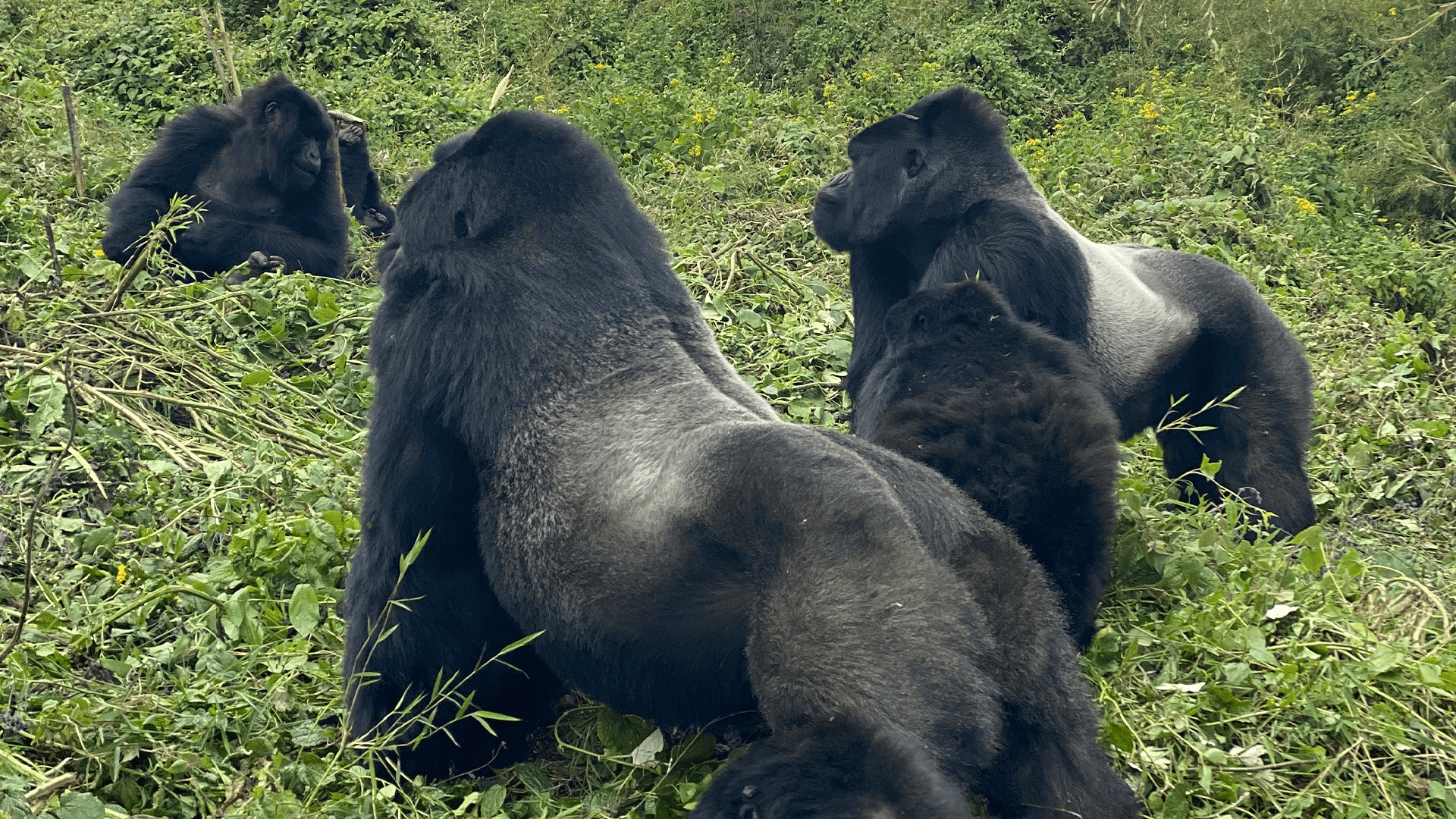
No Uganda safari highlight carries more emotional weight than gorilla trekking. Uganda is one of the few places on earth where travelers can encounter endangered mountain gorillas in their natural forest habitat, guided by trained ranger teams and regulated by strict permit systems.
Bwindi Impenetrable National Park is the most famous gorilla trekking destination in Uganda, with several trekking sectors, including Buhoma, Ruhija, Rushaga, and Nkuringo. Each sector has its own access routes, lodge options, terrain profile, and permit availability. Mgahinga Gorilla National Park, smaller and scenically striking, sits in the Virunga Mountains and is often loved by travelers who prefer a quieter atmosphere and volcanic backdrops.
Why This Highlight Earns Top Priority
Gorilla trekking is not a typical game-viewing activity. The experience begins with a briefing, continues into dense forest with ranger guides and trackers, and culminates in a highly controlled one-hour viewing window once the gorilla family is located. The pace depends on the gorillas’ movement, the terrain, and the trekking sector. Some treks can be relatively moderate, while others require several hours on steep, muddy trails.
That uncertainty is part of the privilege. The encounter feels earned. You are not observing wildlife from a distance across open plains; you are standing quietly in a living forest, listening to vegetation shift as a silverback, females, juveniles, and infants move through their day.
For high-intent travelers, gorilla trekking also shapes the rest of the budget. For foreign non-residents, Uganda gorilla permits are commonly budgeted at about US$800 per person. Foreign resident and East African citizen rates differ. Permits should be secured early, especially for peak months such as June to September and December to February.
Practical Routing and Permit Notes
The sector matters. A permit for Rushaga does not mean you can trek from Buhoma. Your lodge and transport plan should match your confirmed trekking sector, otherwise you risk long pre-dawn transfers on rough roads. This is one of the reasons expert planning is valuable: gorilla trekking logistics are not difficult when handled correctly, but they can be frustrating if permits, lodges, and routing are booked separately without coordination.
Plan Your Uganda Safari with Local Experts
 WhatsApp Us
Budget travelers should not assume the permit is the only major expense. The gorilla region sits far from Entebbe by road, usually requiring a full travel day each way unless you use scheduled or charter flights. Midrange travelers should plan for comfortable lodges near the assigned sector, while luxury travelers may choose premium forest lodges that can range from several hundred to well over US$1,000 per person per night depending on season, exclusivity, and inclusions.
PawMac Safaris helps travelers align gorilla permits, accommodation standards, 4×4 routing, and the wider safari sequence so the trek becomes the centerpiece of the journey rather than a logistical headache.
Chimpanzee Tracking in Kibale Forest
If gorillas are the emotional summit of many Uganda safaris, chimpanzees are often the most energetic forest encounter. Kibale National Park is widely regarded as Uganda’s premier chimpanzee tracking destination, with a strong reputation for reliable sightings and rich primate diversity.
A chimpanzee trek is usually more vocal, mobile, and fast-moving than a gorilla trek. Chimpanzees call through the canopy, drum on tree buttresses, feed high above the trail, and sometimes move quickly through the forest. The experience is thrilling because it feels dynamic. You may hear the community before you see it, then follow ranger guidance as the forest comes alive around you.
How to Plan the Chimpanzee Highlight
Kibale fits naturally into a western Uganda route. Many travelers move from Entebbe or Kampala toward Fort Portal and Kibale, then continue south toward Queen Elizabeth National Park and Bwindi. This sequence reduces backtracking and creates a powerful primate-to-savannah rhythm.
For 2026 planning, foreign non-resident chimpanzee tracking permits in Kibale are commonly budgeted at about US$250 per person. The chimpanzee habituation experience, where available, costs more and offers a longer time in the forest with a community under habituation. Travelers should confirm current permit pricing and availability during booking, as official tariffs can change.
Kibale also pairs well with Bigodi Wetland Sanctuary, community walks, birding, and crater lake scenery near Fort Portal. These additions are not filler activities. They help slow the route, support local livelihoods, and give travelers a fuller sense of western Uganda beyond the headline primate trek.
Classic Big Game in Queen Elizabeth National Park
Queen Elizabeth National Park is one of Uganda’s most versatile safari highlights because it combines open savannah, crater lakes, wetlands, forest edges, and the Kazinga Channel. It is also geographically useful, sitting between Kibale and Bwindi on many western routes.
Wildlife viewing can include elephants, buffalo, hippos, crocodiles, antelopes, warthogs, hyenas, and, with luck and good guiding, lions and leopards. The park’s strength is not only its species list but its variety of habitats. A morning game drive can feel completely different from an afternoon boat safari, and the Ishasha sector adds another layer for travelers continuing toward Bwindi.
Kazinga Channel Boat Safari
The Kazinga Channel is one of the most reliable wildlife-viewing boat experiences in Uganda. The waterway connects Lake Edward and Lake George, attracting dense concentrations of hippos, crocodiles, buffalo, elephants, waterbirds, and other wildlife along the banks.
This is a highlight worth protecting in the itinerary. Do not treat it as an optional extra if you are already in Queen Elizabeth National Park. The boat safari offers close, calm, and highly photogenic sightings that contrast beautifully with game drives. It is also excellent for travelers who want a less physically demanding experience between trekking days.
Boat cruise costs vary by operator, schedule, and category, but travelers often budget around US$30 to US$40 per person for standard shared boat experiences, with private or premium arrangements costing more. Park entry fees, vehicle fees, and guide costs are separate considerations.
Ishasha Tree-Climbing Lions
The Ishasha sector in southern Queen Elizabeth National Park is famous for tree-climbing lions, often seen resting in fig trees during the heat of the day. Sightings are never guaranteed, but the possibility makes Ishasha one of Uganda’s most distinctive savannah highlights.
Ishasha is especially valuable when routed between the main Queen Elizabeth area and Bwindi. Instead of rushing directly south, travelers can spend a night in or near Ishasha, enjoy a game drive, and then continue toward the gorilla region. This makes the journey feel like part of the safari rather than just a transfer.

Murchison Falls National Park: Water, Wildlife, and Drama
Murchison Falls National Park deserves a place on many Uganda routes because it delivers big landscapes as well as wildlife. The Nile squeezes through a narrow rock gap at the falls, creating one of the country’s most dramatic natural scenes. Downstream, the river becomes a wildlife corridor, while the northern savannah supports game drives with giraffes, elephants, buffalo, antelopes, lions, and other species.
For travelers who want a classic safari atmosphere without giving up Uganda’s unique river drama, Murchison is a strong choice. It also works particularly well for shorter itineraries that cannot reach Bwindi, and for longer itineraries that aim to include both Big Five components and primates.
Game Drives and the Nile Boat Cruise
A well-planned Murchison visit usually includes at least one morning game drive and one boat cruise toward the base of the falls. The boat experience is a major highlight, with hippos, crocodiles, birds, and animals coming down to drink along the riverbanks. Some itineraries also include a hike to the top of the falls, depending on water levels, schedule, and traveler fitness.
Murchison is often reached by road from Entebbe or Kampala, with Ziwa Rhino Sanctuary included en route. This makes it one of the best regions for travelers who want the feel of a traditional game safari plus a distinctive Ugandan landmark.
Budget-wise, expect park entrance fees, ferry logistics where applicable, boat cruise fees, vehicle costs, guide services, and accommodation to shape the total. Midrange lodge-based Murchison safaris can offer excellent value, while high-end lodges raise the comfort level significantly through location, room quality, dining, and guiding standards.
Ziwa Rhino Sanctuary and the Big Five Link
Uganda’s Big Five story is different from destinations where all five are found inside one national park. In Uganda, rhino tracking is usually done at Ziwa Rhino Sanctuary, commonly added on the route to or from Murchison Falls National Park. Lions, leopards, elephants, and buffalo can then be sought in national parks such as Murchison Falls and Queen Elizabeth.
Ziwa is not just a checklist stop. Rhino tracking on foot gives travelers a grounded, conservation-focused experience with trained guides. It adds context to Uganda’s wildlife recovery story and breaks up the road journey north.
Travelers building a Big Five-focused route should allow enough time rather than squeezing Ziwa into an already rushed day. If your goal is to include rhinos, Murchison, Queen Elizabeth, and primates, a route of at least 10 to 12 days usually feels more balanced. For more detail on sequencing, see PawMac Safaris’ guide on planning a Big Five safari in Uganda without missing key stops.
Kidepo Valley for Remote Wilderness
Kidepo Valley National Park is one of Uganda’s most rewarding highlights for travelers who value remoteness, open landscapes, and a sense of frontier wilderness. Located in the far northeast, Kidepo is not a casual add-on for most routes. It requires time, a domestic flight, or a willingness to undertake long road travel.
That commitment is exactly why it appeals to certain travelers. Kidepo offers sweeping valleys, rugged mountains, fewer vehicles, and a very different safari atmosphere from western Uganda. Wildlife can include buffalo, elephants, giraffes, zebras, lions, hyenas, and various dry-country species. The scenery alone can justify the journey for photographers and repeat safari travelers.
Kidepo is best added to longer Uganda safaris or designed as a focused northern wilderness route. It is not usually the first stop to prioritize if this is your only chance to see gorillas, but it becomes highly compelling for travelers with 12 to 14 days or more, or those returning to Uganda for a deeper experience.
Lake Mburo as a Soft Landing or Final Stop
Lake Mburo National Park is sometimes underestimated because it is smaller than Uganda’s more famous parks. That is exactly why it can be valuable. Its location between western Uganda and Entebbe makes it a practical final safari stop, especially after gorilla trekking in Bwindi or Mgahinga.
Lake Mburo offers zebras, impalas, elands, buffalo, hippos, birds, and scenic lake landscapes. Depending on arrangements, activities may include game drives, boat trips, walking safaris, horseback safaris, or cycling near the park. Its lower-intensity rhythm works well at the end of a demanding route.
For first-time travelers, Lake Mburo can also serve as a gentle introduction to Uganda’s landscapes before heading deeper west. For returning travelers, it is a relaxed way to add variety without committing to another long detour.
Cultural and Community Experiences Worth Building In
The strongest Uganda safari routes leave room for people as well as wildlife. Cultural and community experiences can be woven into the itinerary around Bwindi, Kibale, Queen Elizabeth, Lake Mburo, and other regions. These may include guided village walks, coffee experiences, traditional music and dance, craft visits, wetland community projects, or time with local guides who explain how communities live alongside protected areas.
These experiences should be chosen thoughtfully. The best ones are respectful, locally guided, and not rushed between major wildlife activities. A cultural visit after a trek or before a transfer can deepen the journey, but it should not feel like a token stop.
For premium travelers, cultural quality matters as much as lodge quality. Private guiding, smaller group formats, appropriate timing, and clear expectations help create meaningful encounters. For budget travelers, community experiences can add immense value without dramatically increasing the total trip cost.
This is also the stage where broader pre-trip organization matters. Business owners and private clients planning extended travel often need to settle administrative responsibilities before going offline in remote safari areas. For UAE-based corporate needs, transparent support with company structuring and compliance through Alldren can be useful pre-travel housekeeping, alongside essentials such as insurance, payment approvals, and document preparation.
How to Prioritize Safari Highlights by Trip Length
Not every highlight belongs on every route. A short safari should be selective. A long safari should still avoid unnecessary zigzags. The right choice depends on your non-negotiable experience, physical comfort, preferred pace, and total budget.
5 to 7 Days
With 5 to 7 days, prioritize one main theme and build around it. If gorilla trekking is the dream, focus on Bwindi or Mgahinga and add Lake Mburo or a brief Queen Elizabeth stop if routing allows. If classic game viewing is more important, choose Murchison Falls with Ziwa Rhino Sanctuary, or Queen Elizabeth with a boat safari.
A 5-day gorilla route by road can work, but it will include long drives. A 6 or 7-day route feels better because you can add recovery time, a second activity, or a more scenic pacing. Flying one way can improve comfort but increases the budget.
8 to 10 Days
This is one of the best ranges for a first Uganda safari. You can combine Kibale chimpanzee tracking, Queen Elizabeth National Park, and Bwindi gorilla trekking without making the route feel too compressed. If Big Five ambitions are important, you may instead combine Murchison, Ziwa, Kibale, and Queen Elizabeth, or extend slightly to include Bwindi.
Travelers with 8 to 10 days should be honest about priorities. Trying to include Murchison, Kibale, Queen Elizabeth, Bwindi, and Lake Mburo in 8 days can become too rushed by road. With careful planning, 10 days gives more breathing room.
11 to 14 Days or More
With 11 to 14 days, Uganda opens up beautifully. You can include Ziwa, Murchison Falls, Kibale, Queen Elizabeth, Bwindi or Mgahinga, and Lake Mburo in a coherent loop. This is the range where primates, Big Five components, boat safaris, scenic landscapes, and cultural visits can all be included with enough time to appreciate each stop.
For travelers with more than two weeks, Kidepo becomes a serious contender. The decision is whether to add remote northeastern wilderness or deepen the western route with slower stays, additional gorilla trekking, more cultural time, or higher-end lodge experiences.

Budget Snapshot for Uganda Safari Highlights
Uganda safari costs vary widely based on season, accommodation, vehicle type, private versus shared arrangements, domestic flights, and permit-heavy activities. Gorilla and chimpanzee permits are fixed or tariff-based costs that can form a major part of the total, while lodging and transport determine the comfort level.
The figures below are planning ranges, not final quotes. They help you understand what drives the budget before requesting a tailored proposal.
| Cost item | Typical 2026 planning range | Notes |
|---|---|---|
| Gorilla trekking permit | About US$800 per foreign non-resident | Confirm current official tariff before booking |
| Kibale chimpanzee tracking permit | About US$250 per foreign non-resident | Habituation experiences cost more where available |
| National park entry | Often around US$40 to US$45 per person per day for foreign non-residents | Varies by park and tariff category |
| Shared boat safari | Often around US$30 to US$40 per person | Private or premium options cost more |
| Rhino tracking at Ziwa | Commonly budgeted separately from park fees | Confirm current sanctuary fee when routing north |
| Budget lodge accommodation | Roughly US$80 to US$180 per person per night | Depends on location, meal plan, and season |
| Midrange accommodation | Roughly US$180 to US$400 per person per night | Often the best comfort-to-value category |
| Luxury accommodation | Roughly US$400 to US$1,000+ per person per night | Premium gorilla and wilderness lodges can exceed this |
| Private 4×4 safari vehicle and guide | Varies by route length, fuel, and vehicle standard | Long routes and remote parks increase cost |
| Domestic flights | Often several hundred dollars per sector | Useful for comfort and time-saving on premium routes |
Season also matters. Peak demand months often bring tighter lodge availability and less flexibility. Shoulder periods can offer better value, though conditions vary by region. Rainy months may mean greener landscapes and fewer visitors, but road conditions and trekking terrain can be more challenging.
A carefully planned midrange Uganda safari with gorilla trekking will usually cost significantly more than a simple wildlife-only route because the permit is a major fixed cost. Luxury gorilla itineraries can climb quickly due to premium lodges near trekking sectors, private guiding, domestic flights, and exclusive experiences.
Suggested Highlight-Focused Uganda Safari Routes
The route below should be treated as a planning framework rather than a one-size-fits-all itinerary. PawMac Safaris can adjust each journey based on your travel dates, permit availability, fitness level, lodge preferences, and budget.
| Route style | Ideal duration | Best highlights included | Who it suits |
|---|---|---|---|
| Gorilla-first western route | 5 to 7 days | Bwindi or Mgahinga, Lake Mburo, optional cultural visit | Travelers focused on gorilla trekking with limited time |
| Primates and savannah route | 8 to 10 days | Kibale, Queen Elizabeth, Kazinga Channel, Bwindi | First-time travelers wanting Uganda’s signature mix |
| Big Five and primates route | 10 to 12 days | Ziwa, Murchison, Kibale, Queen Elizabeth, Bwindi | Travelers who want rhinos, big game, chimps, and gorillas |
| Premium complete Uganda loop | 12 to 14 days | Ziwa, Murchison, Kibale, Queen Elizabeth, Ishasha, Bwindi, Lake Mburo | Travelers seeking depth, comfort, and varied habitats |
| Remote wilderness extension | 14+ days | Kidepo plus western or northern highlights | Repeat safari travelers, photographers, wilderness-focused guests |
If your goal is to maximize wildlife diversity, PawMac Safaris has also outlined wildlife tours in Uganda worth adding to your itinerary, which can help you compare specific activities before finalizing your route.
Planning Tips for a Smoother 2026 Safari
The best Uganda safari highlights are often permit-limited, lodge-sensitive, or route-dependent. Planning early gives you better control over the experience, especially for gorilla trekking sectors and premium lodges.
Start with your non-negotiable. If it is gorilla trekking, secure permits first and build around the assigned sector. If it is the Big Five, design the route around Ziwa and the right savannah parks. If it is comfort, consider domestic flights for long sectors and choose lodges based on location, not only star rating.
Pack for varied conditions. Uganda can shift from warm savannah afternoons to cool forest mornings. Gorilla and chimpanzee trekking require sturdy footwear, long trousers, rain protection, insect repellent, gloves for gripping vegetation, and a small daypack. Neutral clothing is best for game drives, while a light fleece or jacket is useful in higher-altitude areas such as Bwindi.
Build in recovery time. Trekking days can be physically demanding, and long drives are part of many road-based safaris. A slower route often produces better sightings, better photos, and a more enjoyable overall experience than an itinerary that tries to cover every highlight at maximum speed.
Use local expertise for timing. A knowledgeable guide knows when to leave, how to position the vehicle, which road conditions affect the day, and how to read wildlife behavior. This is where PawMac Safaris’ local knowledge and professional planning make a real difference, particularly for travelers who want a premium experience without losing the authenticity of Uganda.
Frequently Asked Questions
What is the number one Uganda safari highlight? Gorilla trekking in Bwindi Impenetrable National Park or Mgahinga Gorilla National Park is the top highlight for many travelers. It is rare, highly regulated, emotionally powerful, and unique to this part of Africa.
Can I see the Big Five in Uganda? Yes, but rhinos are typically tracked at Ziwa Rhino Sanctuary rather than inside the main national parks. Lions, leopards, elephants, and buffalo can be seen in parks such as Murchison Falls and Queen Elizabeth, though sightings always depend on conditions and guiding.
How many days do I need for the best Uganda safari highlights? For a balanced first safari including chimpanzees, savannah wildlife, a boat safari, and gorilla trekking, 8 to 10 days is a strong range. For a fuller route with Ziwa and Murchison Falls, 11 to 14 days is better.
How much should I budget for a Uganda safari with gorilla trekking? Costs vary widely, but the gorilla permit alone is commonly budgeted at about US$800 per foreign non-resident. Total trip cost depends on accommodation level, route length, vehicle arrangements, domestic flights, and additional activities.
Is Uganda better for primates or classic wildlife? Uganda is excellent for both, but its strongest advantage is the combination. Few destinations allow you to pair mountain gorillas and chimpanzees with elephants, lions, buffalo, hippos, crocodiles, rhinos, and boat safaris in one route.
Should I choose Bwindi or Mgahinga for gorilla trekking? Bwindi offers more trekking sectors and broader lodge choice, while Mgahinga is smaller, scenic, and often quieter. The best choice depends on permit availability, routing, preferred accommodation, and whether you want to combine the trek with other southwestern Uganda experiences.
Plan Your Uganda Safari Highlights with PawMac Safaris
A memorable Uganda safari is built around smart choices: the right highlights, the right sequence, the right permits, and the right pace. PawMac Safaris designs expert-guided Uganda safari routes that combine gorilla trekking, chimpanzee tracking, Big Five components, boat safaris, cultural experiences, and comfortable 4×4 travel with professional local planning.
Whether you want a focused gorilla trekking journey, a premium 12-day Uganda loop, or a custom safari that balances wildlife with comfort and cultural depth, PawMac Safaris can help you shape a route that matches your time, budget, and travel style.
Start planning your 2026 Uganda safari with PawMac Safaris and build a route around the highlights that truly deserve your time.


