


- 105 Views
- 11 Min Read
- (0) Comment
TL;DR:
- Uganda offers distinct primate experiences: gorillas, chimpanzees, and golden monkeys, each with unique ecosystems.
- Combining all three in one trip provides a richer, more diverse wildlife adventure.
- Choice depends on fitness, time, and wildlife goals, with guided planning ensuring the best experience.
Few wildlife decisions carry as much weight as choosing between Uganda’s three iconic primate tracking experiences. You can stand face-to-face with a habituated gorilla family in Bwindi’s mist-shrouded rainforest, follow the acrobatic chaos of chimpanzees through Kibale’s canopy, or watch golden monkeys tumble through bamboo groves at Mgahinga. Each experience is genuinely different, and each suits a different kind of traveler. This guide breaks down the key differences, compares the ecosystems, and gives you the practical information you need to decide which tracking adventure belongs on your itinerary, or whether you should plan for all three.
Table of Contents
- How to choose your primate tracking adventure
- Gorilla trekking in Uganda’s misty highlands
- Chimpanzee tracking: Dynamic forest encounters
- Golden monkey tracking in bamboo forests
- Comparing primate tracking experiences at a glance
- Our take: How to get the most from primate tracking in Uganda
- Plan your dream primate safari with Uganda experts
- Frequently asked questions
Key Takeaways
| Point | Details |
|---|---|
| Diverse tracking options | Uganda offers gorilla, chimpanzee, and golden monkey trekking, each with distinct settings and challenges. |
| Choose by fitness and goals | Select your primate adventure based on physical ability, desired intensity, and wildlife interests. |
| Combine for depth | Many travelers get the most from Uganda by combining all three tracking experiences in a single trip. |
| Best seasons matter | Plan your safari for the dry months for the easiest trails and most rewarding animal encounters. |
How to choose your primate tracking adventure
Let’s start by narrowing down which type of primate tracking suits your travel style and expectations.
Uganda offers three main primate tracking categories: gorilla trekking, chimpanzee trekking, and golden monkey tracking, each set within a distinct ecosystem and delivering a completely different emotional experience. Choosing between them means weighing several practical factors before you book.
Physical fitness is the first filter. Gorilla trekking involves steep, sometimes slippery terrain inside dense highland forest. Hikes can last anywhere from two to eight hours depending on where the gorilla family has moved. Chimpanzee tracking is more moderate, with trails that are generally flatter and shorter. Golden monkey tracking is the gentlest option, making it accessible to a wider range of fitness levels.
Time commitment matters too. Gorilla permits require advance planning, often months ahead, and the trek itself takes most of a day. Chimpanzee tracking can be completed in a half-day or full-day format. Golden monkey tracking is typically the shortest outing, fitting easily into a broader itinerary.
Wildlife goals shape the experience most powerfully. Here is a quick breakdown:
- Gorilla trekking: Majestic, quiet, and deeply moving. You spend one hour with a habituated family in near silence.
- Chimpanzee tracking: Loud, fast, and energetic. Chimps move constantly, vocalize dramatically, and interact visibly with each other.
- Golden monkey tracking: Playful and colorful. These monkeys are curious and approachable, ideal for photography.
Ecosystem variety is one of Uganda’s greatest strengths. Bwindi Impenetrable National Park offers ancient montane forest. Kibale National Park is a lush, lowland tropical forest. Mgahinga Gorilla National Park sits on the slopes of the Virunga volcanoes, wrapped in bamboo and afro-alpine vegetation.
Pro Tip: Plan your trip during Uganda’s dry seasons for the best trail conditions. The best time for primate tracking falls between June and September and again from December through February. Trails are firmer, wildlife sightings are more reliable, and the overall experience is more comfortable.
For travelers with enough time, combining gorilla and chimpanzee tracking on a single safari is one of the most rewarding ways to experience Uganda’s primate diversity.
Gorilla trekking in Uganda’s misty highlands
Now, let’s explore the grandest of Uganda’s primate experiences.
Plan Your Uganda Safari with Local Experts
 WhatsApp Us
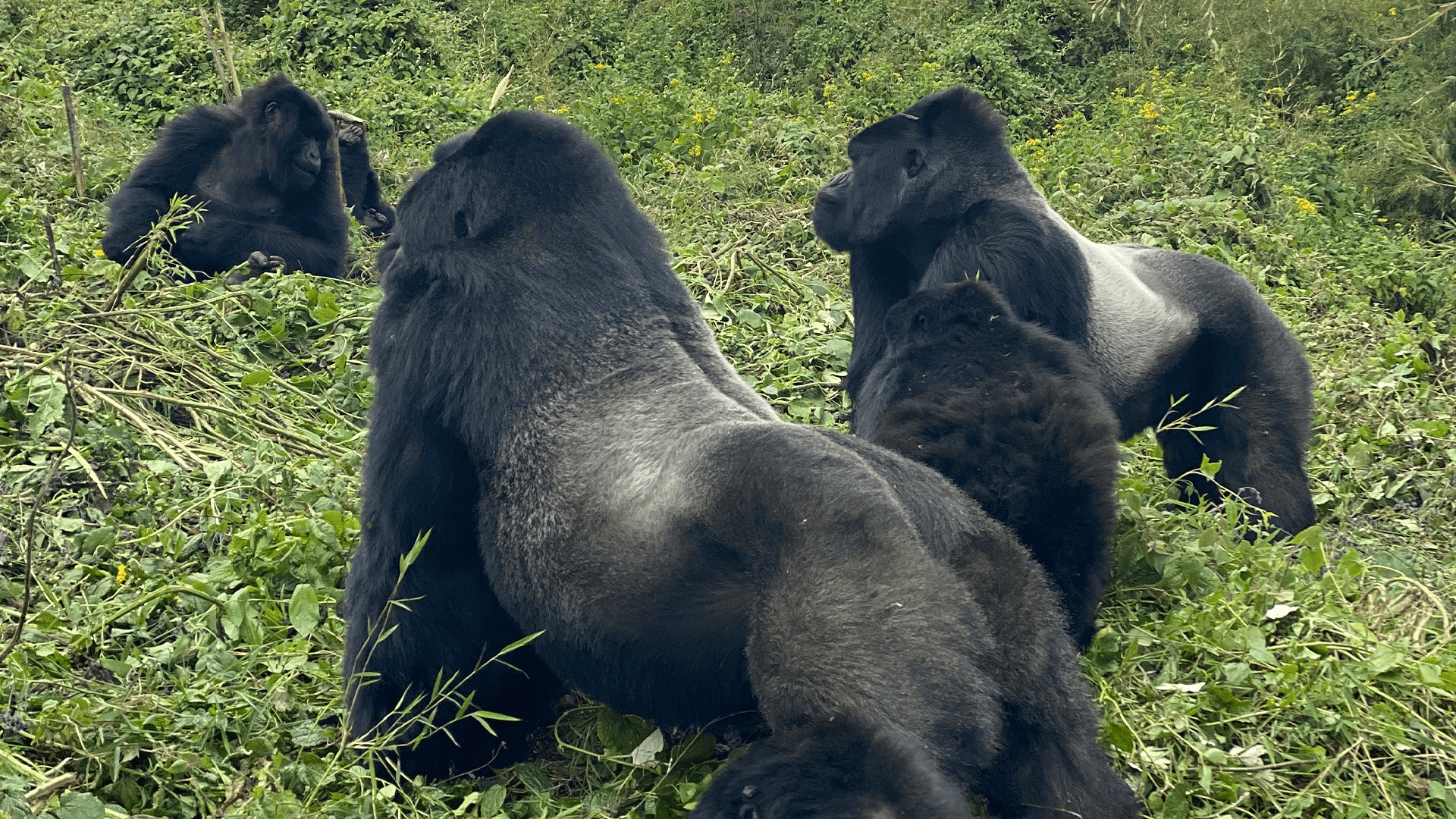
Gorilla trekking is the experience that puts Uganda on the global wildlife map. Uganda harbors roughly half the world’s remaining mountain gorillas in Bwindi Impenetrable National Park and Mgahinga Gorilla National Park. That single fact makes Uganda irreplaceable for conservation-minded travelers.
Bwindi is the larger and more varied destination, with multiple gorilla sectors including Buhoma, Ruhija, Rushaga, and Nkuringo. Each sector offers different terrain and atmosphere. Mgahinga is smaller but equally spectacular, sitting at higher altitude with dramatic volcanic scenery.
What should you expect on the day itself? Rangers brief your group at the trailhead before dawn. You then hike into the forest, guided by trackers who have been monitoring the gorilla family’s movements since early morning. The terrain can be steep, muddy, and thick with vegetation.
“Uganda holds nearly half the world’s mountain gorillas, making it the single most important destination on earth for gorilla conservation and responsible wildlife tourism.”
Key features of the gorilla trekking experience include:
- Permit system: Only eight visitors per gorilla family per day, strictly enforced
- One-hour rule: You spend exactly one hour with the gorillas to minimize stress on the animals
- Eco-sensitive rules: No flash photography, maintain a seven-meter distance, follow ranger instructions at all times
- Photography: The lighting inside the forest can be challenging, but the close-up encounters are extraordinary
- Duration: Hikes range from two hours to a full day depending on gorilla movement
The encounter itself is unlike anything else in wildlife travel. Silverbacks move with quiet authority. Juveniles play and tumble. Mothers nurse infants just meters away. Explore the full range of gorilla trekking options and read the complete guide to gorilla trekking before you finalize your plans.
Chimpanzee tracking: Dynamic forest encounters
If you want an adventure that’s a bit less intense but just as rewarding, chimpanzee tracking delivers dynamic excitement.
Uganda is home to more than 5,000 chimpanzees, with Kibale National Park alone hosting over 1,500 individuals. That density makes Kibale the top destination in Africa for chimpanzee tracking. Other excellent options include Kyambura Gorge in Queen Elizabeth National Park and Budongo Forest in Murchison Falls National Park.
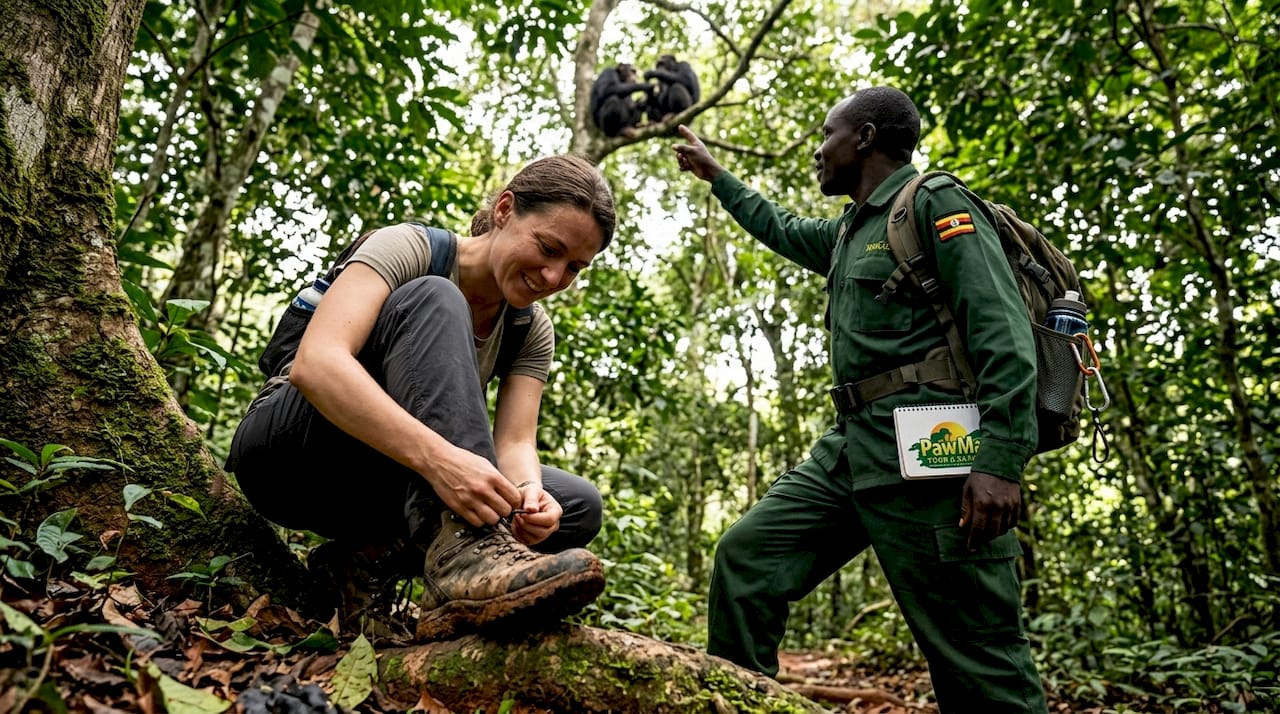
Chimpanzee tracking is more accessible in terms of fitness required than gorilla trekking. The trails at Kibale are relatively flat and well-maintained. Most visitors of average fitness complete the experience comfortably. That said, chimps are fast and unpredictable, so guides need to move quickly when the group relocates.
What makes chimpanzee tracking so exciting is the energy. These primates are loud, social, and visibly emotional. You might witness territorial calls that shake the canopy, grooming sessions, or dramatic chases through the trees. The experience is less meditative than gorilla trekking and far more kinetic.
Top locations and what they offer:
- Kibale National Park: Highest chimp density, well-organized tracking programs, excellent success rates
- Kyambura Gorge: Smaller chimp community, dramatic gorge scenery, often combined with Queen Elizabeth game drives
- Budongo Forest: Remote and wild, ideal for travelers seeking an off-the-beaten-path experience
Pro Tip: Book chimpanzee tracking in Kibale early. Kibale’s tracking programs are popular year-round, and permit slots fill quickly during peak season. Check the guide to chimp success rates to understand what factors influence your chances of a close encounter.
Group sizes are regulated, and experienced guides manage each outing with both visitor safety and animal welfare in mind. The result is a controlled but thrillingly unpredictable adventure.
Golden monkey tracking in bamboo forests
Let’s round out the main options with Uganda’s most playful primate experience.
Golden monkey tracking takes place exclusively at Mgahinga Gorilla National Park, on the slopes of the Virunga volcanoes near Uganda’s border with Rwanda and the Democratic Republic of Congo. The habitat here is dominated by dense bamboo forest, and it is the only place in Uganda where you can track these brilliantly colored primates.
Golden monkey tracking is shorter, less demanding, and offers playful encounters compared to both gorilla and chimpanzee tracking. Hikes are typically one to two hours on gentle slopes, making this the most accessible primate experience in Uganda.
Golden monkeys are social, curious, and remarkably tolerant of human presence. They move in large troops through the bamboo, leaping between stems and foraging actively. Their vivid orange-gold patches make them one of the most photogenic primates on the continent.
Key highlights of golden monkey tracking:
- Location: Mgahinga Gorilla National Park, southwestern Uganda
- Difficulty: Low. Short hikes on gradual terrain suit families and travelers with limited time
- Group behavior: Troops can number in the dozens, creating a lively, immersive scene
- Photography: Excellent light in the bamboo zone, active subjects, and close approach distances
- Conservation focus: Guides provide education on golden monkey ecology and the threats they face
Pro Tip: Golden monkey tracking pairs beautifully with gorilla trekking at Mgahinga on consecutive days. It is also an ideal add-on for travelers visiting Rwanda’s Volcanoes National Park. Read the full guide to Uganda’s primate tracking to see how this experience fits into broader itineraries.
Comparing primate tracking experiences at a glance
With each experience explored, here’s how they stack up and how you can combine them for the ultimate adventure.
| Feature | Gorilla trekking | Chimpanzee tracking | Golden monkey tracking |
|---|---|---|---|
| Location | Bwindi, Mgahinga | Kibale, Kyambura, Budongo | Mgahinga |
| Difficulty | Moderate to strenuous | Moderate | Easy |
| Trek duration | 2 to 8 hours | 2 to 4 hours | 1 to 2 hours |
| Group size | Max 8 per family | Small regulated groups | Small regulated groups |
| Atmosphere | Quiet, majestic | Energetic, dynamic | Playful, colorful |
| Best for | All serious wildlife travelers | Active travelers, families | Families, short trips |
For international travelers with 7 to 10 days, combining all three primate tracking types in a single safari is the most rewarding approach. Here are three popular itinerary frameworks:
- The primate triple (7 to 10 days): Gorilla trekking at Bwindi, chimpanzee tracking at Kibale, and golden monkey tracking at Mgahinga. Add a game drive in Queen Elizabeth for a complete Uganda experience.
- The focused primate safari (5 days): Gorilla trekking at Bwindi plus chimpanzee tracking at Kibale. Browse the 5-day primate safari sample for a ready-made itinerary.
- The Mgahinga double (3 days): Gorilla trekking and golden monkey tracking on consecutive days at Mgahinga, ideal for travelers with limited time or those crossing from Rwanda.
Each combination is flexible and can be adjusted based on permit availability, budget, and personal fitness. Uganda’s compact geography means most destinations are within a manageable drive of each other.
Our take: How to get the most from primate tracking in Uganda
With all experiences compared, here is some expert perspective on making your trip truly unforgettable.
Most travelers focus almost entirely on gorilla trekking, which is understandable. It is the headline act. But this single-focus approach leaves a lot on the table. In our experience at PawMac Safaris, the travelers who come away most satisfied are those who combine all three primate tracking experiences into one trip. The contrast between the quiet majesty of gorillas, the electric energy of chimps, and the playful chaos of golden monkeys creates a richer, more complete narrative of Uganda’s primate world.
Don’t underestimate golden monkey tracking. First-timers often treat it as a secondary activity, but it consistently surprises people. The access is intimate, the setting is beautiful, and the experience is genuinely joyful.
For budget travelers, chimpanzee tracking offers outstanding value. Permit fees are lower than gorilla permits, and the experience is equally memorable in its own way.
Always follow your ranger’s instructions. Respecting the rules around distance, noise, and group behavior is not just a formality. It directly protects the animals and ensures future generations of travelers can enjoy the same encounters.
Pro Tip: Book permits well in advance, especially for in-depth primate tracking insights during the June to September dry season when demand peaks.
Plan your dream primate safari with Uganda experts
Ready to turn inspiration into a once-in-a-lifetime journey?
At PawMac Safaris, we specialize in building primate tracking itineraries that match your fitness level, travel goals, and budget. Whether you are planning a focused gorilla trek or a full primate triple adventure, our team brings local expertise and genuine care to every detail.

Explore our range of Uganda safari tours designed to cover every corner of the Pearl of Africa. Browse our custom gorilla trekking trips or explore all Uganda safaris to find the package that fits your vision. Our commitment to eco-tourism, ethical wildlife encounters, and guest safety means you travel with confidence from the first permit to the final footstep.
Frequently asked questions
Which is more challenging, gorilla or chimpanzee tracking in Uganda?
Gorilla tracking is generally more demanding, often involving steep hikes through dense highland forest, while chimpanzee tracking is more accessible for most fitness levels with flatter, shorter trails.
What is the best time of year for primate tracking in Uganda?
The dry seasons of June to September and December to February offer the best trail conditions and wildlife viewing. Combining all three tracking types during these months gives you the most reliable experience.
Can I combine gorilla, chimpanzee, and golden monkey tracking in one trip?
Yes, many travelers opt for a primate triple itinerary over 7 to 10 days for a comprehensive look at Uganda’s most iconic primates across multiple ecosystems.
Are primate tracking experiences suitable for families?
Golden monkey tracking is shorter and less demanding, making it the most family-friendly option, while gorilla and chimpanzee treks are better suited to active older children and adults.
Recommended
- Uganda primate tracking: gorillas, chimps & golden monkeys
- 5-Day Uganda Primate Safari | PawMac Safaris
- How to Book Gorilla Trekking in Uganda: Step-by-Step Guide
- Uganda safari terminology explained: 2026 gorilla trekking


