


- 90 Views
- 12 Min Read
- (0) Comment
TL;DR:
- Uganda hosts endangered Nubian giraffes, mainly in Murchison Falls and Kidepo parks.
- Best sightings occur during dry seasons when animals gather around water sources.
- Responsible travel supports giraffe conservation through ethical operators and community programs.
Uganda is not the first country that comes to mind when people think about giraffe safaris, yet it shelters one of Africa’s most endangered giraffe populations in settings that few other destinations can match. Knowing which parks to visit, which species you will find, and how to engage responsibly transforms a good wildlife trip into an extraordinary one. This guide walks you through everything: species identification, park selection, daily safari rhythm, photography etiquette, and conservation responsibilities. Whether you are a first-time safari traveler or a seasoned wildlife enthusiast, Uganda’s open savannahs and riverine landscapes hold giraffe encounters that will stay with you for life.
Table of Contents
- How to choose your Uganda giraffe safari: key criteria
- Top national parks in Uganda for giraffe encounters
- What to expect on a Uganda giraffe safari
- Protecting Uganda’s giraffes: Your role as a responsible traveler
- Uganda giraffe safari comparison: Which park suits your travel goals?
- Why Uganda offers Africa’s most rewarding giraffe encounters: our take
- Plan your Uganda giraffe safari with experts
- Frequently asked questions
Key Takeaways
| Point | Details |
|---|---|
| Diverse giraffe habitats | Uganda’s parks offer varied landscapes for memorable giraffe sightings. |
| Responsible travel matters | Ethical safari choices help combat threats like snaring and support conservation. |
| Pick the right park | Each national park offers a unique giraffe viewing experience—compare before booking. |
| Guide expertise enriches safaris | Knowledgeable guides help interpret giraffe behavior and ensure ethical wildlife viewing. |
How to choose your Uganda giraffe safari: key criteria
Choosing the right giraffe safari in Uganda is not simply a matter of picking the nearest national park. Several interconnected factors shape the quality and meaning of your experience.
Know the species first. Uganda is home to the Nubian giraffe (Giraffa camelopardalis camelopardalis), also historically referred to as the Rothschild’s giraffe. This subspecies is classified as endangered, with one of the most significant wild populations surviving in Uganda’s northern parks. Recognizing that you are observing a genuinely threatened animal adds real weight to every sighting.
Habitat quality and herd dynamics matter. Giraffes in Uganda favor open savannah and woodland edges dominated by acacia trees, their preferred browse. Herd sizes are fluid, meaning groups form and dissolve rather than remaining stable. You may encounter a loose aggregation of two or three animals early in the morning, then watch a larger group of 20 or more gather at a water source by midday. Male giraffes engage in “necking,” a dramatic dominance display where they swing their long necks like pendulums to strike rivals. Witnessing this behavior live is one of the most memorable spectacles in African wildlife.
Seasonality shapes your sightings significantly. The dry seasons from December through February and June through September concentrate animals around permanent water sources, making giraffes far easier to spot in open terrain. During wetter months, vegetation becomes dense and animals disperse, which can reduce visibility.
Ethical considerations are non-negotiable. Snaring poses a genuine threat to Uganda’s giraffe populations, causing serious injuries and contributing to population-level impacts. Anti-poaching patrols and community-based programs work actively to mitigate these risks. Selecting a tour operator that funds or partners with such programs directly supports giraffe survival.
Key criteria to evaluate before booking:
- Species authenticity: Confirm the park protects wild Nubian giraffes, not relocated animals
- Guide credentials: Choose operators with certified, experienced field guides
- Conservation alignment: Verify that your operator partners with anti-poaching or community programs
- Group size: Smaller groups create quieter, less disruptive game drive experiences
- Seasonal timing: Align your trip with the dry season for maximum sighting success
Pro Tip: Ask your tour operator directly whether they work with local communities near the park. Community-involved tours create economic incentives for residents to protect wildlife rather than poach it, making your trip part of the conservation solution. PawMac Safaris integrates responsible safari tips into every itinerary to ensure ethical, low-impact game viewing.
Top national parks in Uganda for giraffe encounters
With your selection criteria clear, the next step is understanding what each of Uganda’s major giraffe parks actually delivers on the ground.
Murchison Falls National Park is Uganda’s largest protected area and the undisputed leader for giraffe sightings. The park’s vast northern savannah supports the country’s largest Nubian giraffe population. Game drives on the northern bank reveal giraffes against backdrops of golden grassland, acacia woodland, and the Nile’s dramatic ribbon cutting through the landscape. Adding a river cruise to your itinerary puts you at water level, where giraffes regularly descend to drink in the late afternoon, an astonishing sight given their awkward, spread-legged drinking posture. Murchison Falls also hosts lions, elephants, buffaloes, and over 450 bird species, making it a complete wildlife destination.
Plan Your Uganda Safari with Local Experts
 WhatsApp Us
Kidepo Valley National Park sits in Uganda’s remote northeastern corner, near the borders of South Sudan and Kenya. The park is consistently rated among Africa’s finest wilderness experiences precisely because of its isolation. Giraffe herds here roam the Narus Valley floor against a backdrop of rugged mountain ranges, creating photographic compositions you simply cannot replicate elsewhere. Giraffes form fluid herds of 20 or more, and Kidepo regularly delivers multi-animal aggregations that feel genuinely wild and unhurried. Crowd levels are low, meaning you may encounter giraffe herds with no other vehicle in sight, a rarity across East Africa’s more commercialized safari circuits.
Lake Mburo National Park is Uganda’s most accessible wildlife park, located just a few hours’ drive from Kampala. While giraffe numbers are smaller here than in Murchison Falls or Kidepo, the compact geography and open terrain make sightings almost guaranteed. The park is particularly well suited for families, first-time safari travelers, and those with limited time. Lake Mburo also offers walking safaris and boat trips, adding variety to your wildlife experience.
Choosing the right Uganda safari lodges near each park significantly affects the depth of your experience, so plan your accommodations alongside your park selection.
| Park | Access from Kampala | Best months | Unique experience |
|---|---|---|---|
| Murchison Falls | 4 to 5 hours by road | June to September | River cruise + savannah drives |
| Kidepo Valley | 9 to 10 hours or fly-in | December to February | Remote wilderness, large herds |
| Lake Mburo | 3 hours by road | Year-round | Walking safaris, beginner-friendly |
What to expect on a Uganda giraffe safari
Understanding the shape of a safari day helps you make the most of every hour in the field.
A typical giraffe safari day follows a rhythm built around animal activity patterns:
- Pre-dawn wake-up (5:30 a.m.): A hot drink before you set out. Temperatures are cool and animals are already moving.
- Sunrise game drive (6:00 to 9:30 a.m.): The most productive window. Giraffes browse actively in the morning light, and the golden hour illumination is ideal for photography.
- Mid-morning break (9:30 to 11:00 a.m.): Return to camp for breakfast. Heat begins to build and animal activity slows.
- Midday rest (11:00 a.m. to 3:30 p.m.): Giraffes often stand motionless under trees during peak heat. This is a good time to review images, rest, or join a guided walk.
- Afternoon game drive (4:00 to 7:00 p.m.): Animals become active again. This is prime time to observe males necking for dominance, watch herds approach water, and catch the last light of the day.
- Sundowner and debrief: Many camps offer a bush sundowner, a drink served in the field at sunset, where your guide shares insights from the day.
“Your guide is your most valuable tool in the field. Experienced Ugandan naturalists can read giraffe posture, ear position, and herd movement to predict behavior several minutes before it happens. Listen carefully and you will see far more than the vehicle alone can show you.”
Wildlife photography tours in Uganda are designed specifically around these activity windows, giving photographers the best possible light and behavioral opportunities.
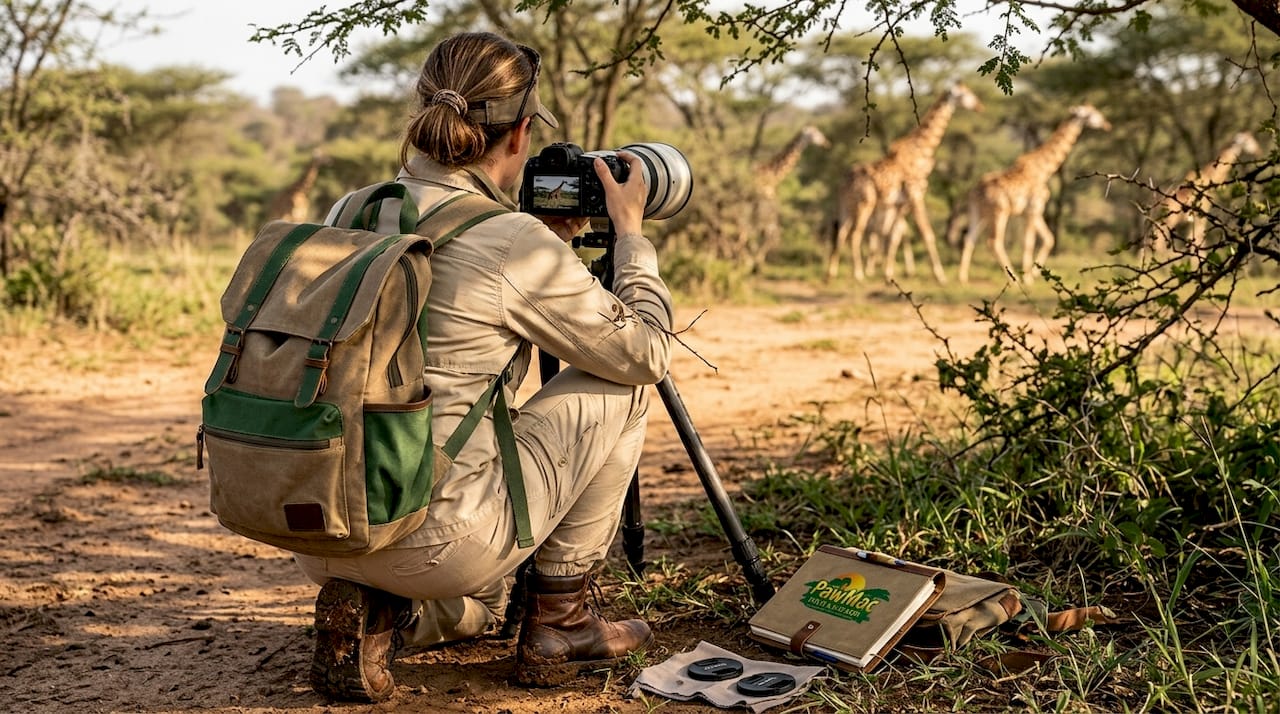
Photography etiquette on a giraffe safari is straightforward but critical. Keep voices low and avoid sudden movements when animals are close. Switch your camera to silent mode where possible. Never instruct your driver to move closer than your guide recommends. These tall, elegant animals are perceptive, and a stressed giraffe will move away quickly, depriving everyone in the vehicle of the experience.
Pro Tip: For the sharpest images of giraffes in motion, use a shutter speed of at least 1/800th of a second, especially when capturing necking males. Booking through experienced operators who understand safari lodge tips ensures your base camp position optimizes morning and evening drive timing.
Protecting Uganda’s giraffes: Your role as a responsible traveler
Every visitor to Uganda’s national parks carries a conservation responsibility. Understanding the threats facing giraffes makes that responsibility concrete and actionable.
The most immediate physical threat to Nubian giraffes is snaring. Wire snares set illegally for other animals frequently injure giraffes, causing deep lacerations, limb damage, and in severe cases, death. Research indicates snare injuries affect up to 20% of giraffe populations in some areas, a figure that underscores the urgency of anti-poaching efforts. Community programs that provide alternative income to people living near park boundaries are proving especially effective at reducing snare placement.
“Responsible travel is not simply about doing no harm. It is about actively choosing operators, lodges, and programs that channel your tourist dollars into giraffe protection, ranger salaries, and community livelihoods.”
As a traveler, your choices translate into direct conservation outcomes. Here is what makes the biggest difference:
- Choose certified ethical operators who reinvest a portion of fees into anti-poaching operations
- Follow park rules without exception: no off-road driving, no feeding, no excessive noise
- Never attempt to touch or feed giraffes, even at lodges where animals approach voluntarily
- Report any suspicious activity (snares, unauthorized vehicles) to your guide immediately
- Support community-adjacent businesses such as craft cooperatives and cultural tours that benefit families near the park
Committing to ethical wildlife travel in Uganda means your trip actively supports the long-term survival of the Nubian giraffe, one of Africa’s most threatened large mammals.
Uganda giraffe safari comparison: Which park suits your travel goals?
Choosing between Murchison Falls, Kidepo Valley, and Lake Mburo comes down to your priorities as a traveler. This side-by-side comparison makes the decision straightforward.
| Factor | Murchison Falls | Kidepo Valley | Lake Mburo |
|---|---|---|---|
| Giraffe population size | Largest in Uganda | Large, remote herds | Smaller but reliable |
| Crowd levels | Moderate | Very low | Low to moderate |
| Accessibility | Good road access | Remote, best by air | Excellent road access |
| Best for | All-around wildlife | Photographers, adventurers | Families, beginners |
| Additional highlights | Nile river cruise, falls | Mountain scenery, rare species | Walking safaris, birding |
| Accommodation range | Budget to luxury | Mid-range to luxury | Budget to mid-range |
Murchison Falls suits travelers who want the richest overall wildlife experience combined with Uganda’s most dramatic natural feature. Kidepo Valley is the choice for serious wildlife photographers and those who prioritize solitude and landscape drama over logistical convenience. Lake Mburo works perfectly for travelers with limited time, families with children, or first-time safari visitors who want guaranteed sightings in a manageable setting.
Explore the full range of Uganda safari tours to match your giraffe safari with complementary experiences like gorilla trekking or chimpanzee habituation, both of which Uganda offers exclusively.
Why Uganda offers Africa’s most rewarding giraffe encounters: our take
Here is a perspective that most generic safari guides miss entirely. The conventional wisdom says Kenya’s Maasai Mara or Tanzania’s Serengeti deliver the definitive African wildlife experience. For general volumes of animals, that may be true. But for giraffes specifically, Uganda presents advantages that the more commercialized circuits cannot replicate.
The Nubian giraffe found in Uganda is rarer than the more widespread reticulated or Masai giraffe subspecies seen farther south and east. Observing an endangered animal in a functioning, intact ecosystem, surrounded by competent rangers and community stewardship, carries a depth of meaning that a high-traffic Serengeti encounter simply does not match. Uganda’s parks are quieter. The experience feels personal rather than theatrical.
Years of guiding in Uganda have reinforced one consistent lesson: small, community-partnered tours create better conservation outcomes and genuinely richer experiences for the traveler. When you travel with a group of six instead of twenty, your guide can take time to explain giraffe social structures, point out behavioral subtleties, and position the vehicle for optimal viewing without competing for space. That intimacy is what separates memorable from extraordinary.
The future of ethical wildlife travel points clearly toward low-impact, high-accountability experiences in destinations where visitor numbers remain manageable. Uganda fits that profile precisely, and the Nubian giraffe is one of the clearest reasons to prioritize it over more crowded alternatives. Discover the full breadth of possibilities across African safari destinations to see how Uganda stands apart.
Plan your Uganda giraffe safari with experts
Translating this guide into an actual itinerary requires local knowledge that no article can fully substitute for. PawMac Safaris specializes in designing giraffe safaris and broader Uganda wildlife journeys that combine Murchison Falls, Kidepo Valley, and Lake Mburo into seamless, customized adventures. Every detail, from park entry logistics to lodge selection and conservation-aligned operators, is handled by guides who know Uganda’s national parks intimately.

Whether you want a focused three-day giraffe safari or a multi-week journey combining gorilla trekking with savannah wildlife, the team at PawMac Safaris builds itineraries around your specific goals and travel style. Browse the full selection of Uganda wildlife tours or connect directly with Uganda safari specialists to begin planning your personalized, ethical giraffe encounter in the Pearl of Africa.
Frequently asked questions
Which giraffe species are found in Uganda?
Uganda is home exclusively to the endangered Nubian giraffe, sometimes called the Rothschild’s giraffe, which survives primarily in Murchison Falls and Kidepo Valley National Parks in the country’s north.
When is the best time of year to see giraffes in Uganda?
The dry seasons from December to February and June to September deliver the best giraffe sightings, as reduced vegetation and concentrated water sources draw animals into open, visible terrain.
What actions help protect giraffes during a safari?
Choose operators who fund anti-poaching programs, follow all guide instructions, maintain respectful distances, and avoid any behavior that disturbs natural giraffe activity. Research confirms that community programs reduce snaring, so supporting community-connected operators amplifies your positive impact.
How close can I get to wild giraffes on safari?
A minimum distance of roughly 50 meters is the standard guideline for wild giraffe viewing. Your guide will always determine the appropriate distance based on the specific animals’ behavior and comfort level on that particular day.
Recommended
- Types of primate tracking in Uganda: your ultimate guide
- How to Book Gorilla Trekking in Uganda: Step-by-Step Guide
- Uganda Safari Guide: Gorilla Trekking, Wildlife & Planning
- Wildlife Photography Safaris: The Essential Uganda Guide


