


- 45 Views
- 18 Min Read
- (0) Comment
Uganda is one of Africa’s most rewarding safari destinations for travelers who want to do more than watch wildlife from a vehicle. Here, many of the most memorable encounters happen on foot: tracking mountain gorillas through Bwindi’s steep rainforest, climbing volcanic ridges in Mgahinga, hiking beside the Nile at Murchison Falls, or crossing the glacier-carved valleys of the Rwenzori Mountains.
The best hiking trips in Uganda combine scenery, wildlife, and strong guiding. They are not all extreme mountain expeditions. Some are half-day walks that fit easily into a classic safari, while others are serious multi-day treks requiring fitness, gear, and careful logistics. For a broader overview of how hiking fits into the country’s wildlife circuits, PawMac Safaris’ Uganda safari guide is a useful planning companion.
Below is a practical, safari-focused guide to Uganda’s top hiking experiences, including where to go, how difficult each hike is, what it costs, and how to combine it with gorilla trekking, chimpanzee tracking, game drives, boat safaris, and cultural visits.
How to Choose the Right Hiking Trip in Uganda
The “best” hike depends on what you want your safari to feel like. A primate lover may prioritize Bwindi or Kibale, a landscape photographer may prefer the Rwenzori or Sipi Falls, while a first-time safari traveler may choose Murchison Falls or Lake Mburo because they offer scenic walking without demanding high altitude fitness.
For 2026 planning, it helps to compare hiking trips by four factors: difficulty, wildlife value, scenery, and routing. Uganda’s roads and park geography matter. A hike that looks close on a map may still require a long transfer, especially when crossing from the northwestern savannah parks to the southwestern gorilla highlands.
| Hiking trip | Best for | Typical difficulty | Ideal time needed | Safari pairing | 2026 cost notes |
|---|---|---|---|---|---|
| Bwindi gorilla trekking | Mountain gorillas and rainforest hiking | Moderate to strenuous | 1-2 days in the park area | Queen Elizabeth, Lake Bunyonyi, Mgahinga | Gorilla permits are typically around US$800 per foreign non-resident traveler, subject to official updates |
| Mgahinga volcano hikes | Volcano views, golden monkeys, highland scenery | Moderate to very strenuous | 1-3 days | Gorilla trekking, Batwa cultural experiences, Lake Bunyonyi | Day hike costs vary by route, guiding, park fees, and transfers |
| Rwenzori Mountains | Serious trekking and alpine landscapes | Strenuous to expedition level | 1-8+ days | Kibale, Queen Elizabeth, Bwindi | Multi-day treks commonly range from about US$1,200 to US$3,500+ per person depending on duration and services |
| Sipi Falls and Mount Elgon | Waterfalls, coffee country, soft adventure | Easy to strenuous | Half day to 5+ days | Jinja, Kidepo extensions, eastern Uganda routes | Local guided waterfall walks may be about US$15-US$30 per person, while multi-day treks cost much more |
| Murchison Falls hike | Nile scenery and classic wildlife safari | Easy to moderate | 1-2 hours plus safari time | Game drives, boat safari, rhino tracking en route | Costs depend on park entry, boat cruise, vehicle, guide, and accommodation |
| Kibale and Bigodi | Chimpanzees, birds, wetlands, crater lakes | Easy to moderate | 1-2 days | Queen Elizabeth, Rwenzori, Bwindi | Chimpanzee tracking in Kibale is commonly around US$250 per foreign non-resident traveler |
| Lake Mburo walking safari | Savannah walking and short active add-on | Easy to moderate | 2-3 hours | Bwindi transfer route, Kampala or Entebbe return | Guided walks often fall around US$30-US$50 plus park-related costs |
These are planning ranges, not fixed package prices. Final budgets depend on permit availability, lodge category, season, group size, vehicle type, domestic flights, and whether you prefer budget, mid-range, or luxury safari accommodation.
Bwindi Impenetrable National Park: Gorilla Trekking and Rainforest Slopes
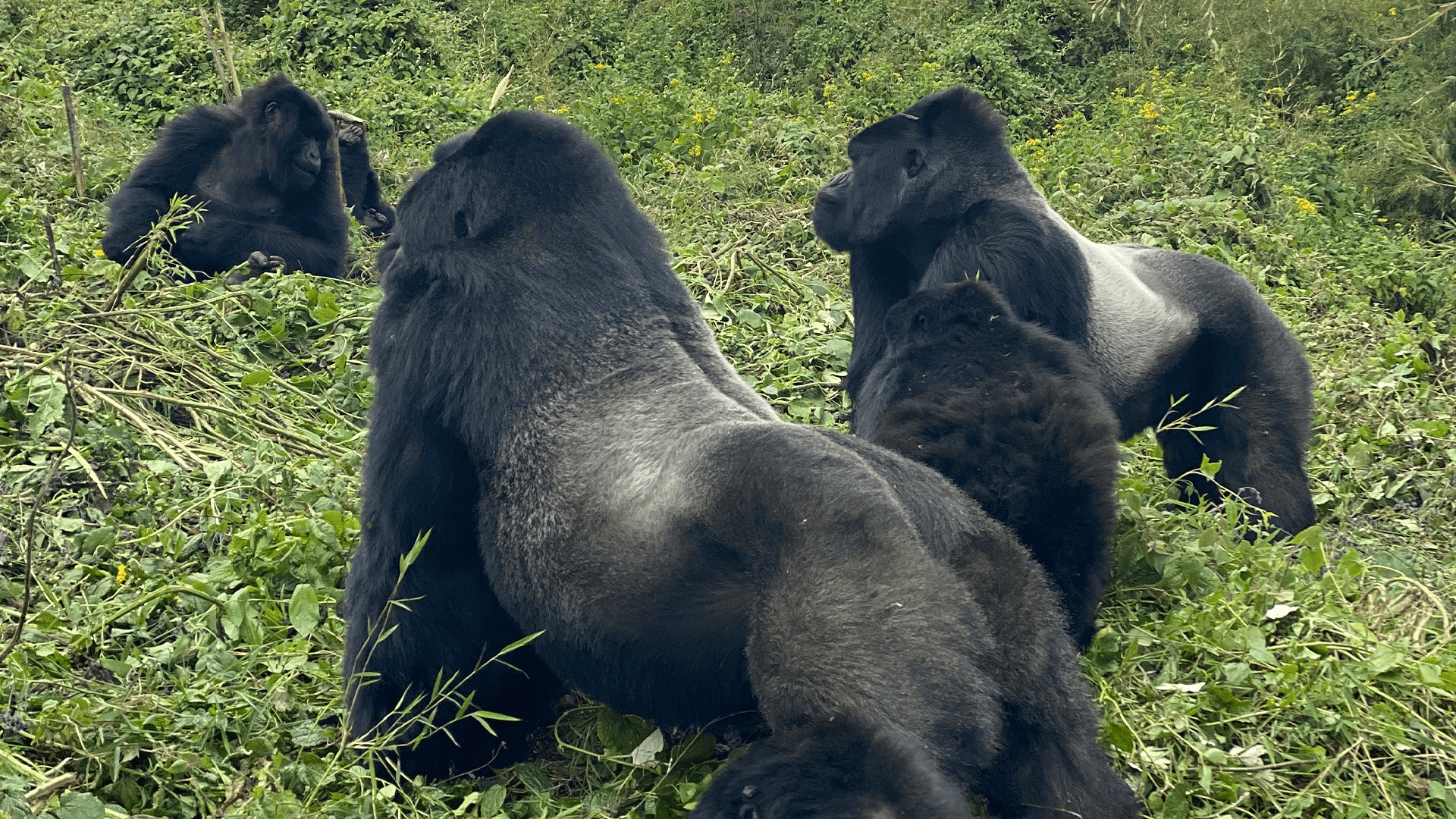
Bwindi is the signature hiking safari in Uganda. The trail is not a casual nature walk. Gorilla trekking can involve steep climbs, muddy descents, tangled vegetation, and several hours of walking before your assigned gorilla family is located. The reward is extraordinary: one carefully regulated hour near mountain gorillas in their natural rainforest habitat.
Bwindi’s four main trekking areas, Buhoma, Ruhija, Rushaga, and Nkuringo, each offer a different hiking feel. Buhoma is popular for established lodge options and forest walks. Ruhija sits higher and can feel cooler, mistier, and quieter. Rushaga has multiple gorilla families and works well for travelers continuing toward Lake Bunyonyi. Nkuringo is one of the most scenic sectors, with dramatic views over terraced hills, but hikes can be steep.
A typical gorilla trekking day starts early with a briefing, followed by ranger assignment based on permit allocation, gorilla family location, and guest fitness. The trek may last from 2 to 6 hours, sometimes longer in challenging conditions. Porters are strongly recommended, not only because they carry your daypack, but because they help on slippery sections and support surrounding communities.
For 2026 budgeting, foreign non-resident gorilla permits are commonly around US$800 per person. On top of that, factor in accommodation, transport, porter tips, guiding, and pre- or post-trek nights near the park. Mid-range lodges around Bwindi often start from roughly US$150-US$300 per person per night, while luxury forest lodges may exceed US$600-US$1,200+ per person per night depending on season and inclusions.
Bwindi is best for travelers who want a hike with emotional depth, not just elevation gain. It pairs beautifully with Queen Elizabeth National Park for game drives and boat safaris, or with Lake Bunyonyi for a relaxed scenic recovery day. If gorilla trekking is the centerpiece of your journey, the top gorilla trekking packages in Uganda can help you understand how permits, sectors, and safari routing come together.
Plan Your Uganda Safari with Local Experts
 WhatsApp Us
Mgahinga Gorilla National Park: Volcano Hiking and Virunga Views
Mgahinga is Uganda’s smallest national park, but it delivers some of the country’s most dramatic hiking scenery. Set within the Virunga volcanic range, it offers a rare combination of bamboo forest, high-altitude moorland, golden monkey tracking, gorilla trekking, and volcano summit hikes.
The three main volcano hikes are Mount Gahinga, Mount Sabinyo, and Mount Muhabura. Mount Gahinga is usually the gentlest option and can be completed in around 6 hours by reasonably fit hikers. Mount Sabinyo is more demanding, famous for rugged ridgelines and ladders, with the symbolic reward of reaching a point where Uganda meets neighboring borders. Mount Muhabura is the most physically intense of the three, often taking 8 to 10 hours and requiring strong stamina.
The scenery is different from Bwindi. Instead of dense, enclosed rainforest for most of the day, Mgahinga opens into volcanic panoramas, crater vegetation, bamboo zones, and wide views over southwestern Uganda. On clear days, the highland light is exceptional for photography.
Mgahinga works especially well for travelers who want a more active gorilla safari. You can combine golden monkey tracking, a volcano hike, and gorilla trekking over 2 to 3 nights, depending on permit availability and fitness. Staying in Kisoro or near the park gate reduces morning transfer pressure.
Budget carefully for this region because transport is a major cost factor. The drive from Entebbe or Kampala to Kisoro is long, often 9 to 10+ hours depending on stops and road conditions. Many premium travelers prefer to use scheduled or charter domestic flights to reduce fatigue, then continue by 4×4 vehicle to the lodge.
Rwenzori Mountains: Uganda’s Most Dramatic Mountain Expedition
For travelers who want serious hiking, the Rwenzori Mountains are Uganda’s most spectacular trekking destination. Known for high-altitude valleys, giant lobelias, waterfalls, bogs, ridges, and glacier-influenced peaks, the Rwenzori feel wild, remote, and completely different from the savannah parks.
There are two broad ways to experience the Rwenzori. The first is a shorter foothill or day hike, ideal for safari travelers staying near Kasese, Fort Portal, or Queen Elizabeth National Park. These hikes offer river valleys, forest trails, and mountain views without committing to a full expedition. The second is a multi-day trek into the high mountains, including routes that may lead toward Margherita Peak on Mount Stanley.
Margherita Peak should be treated as a technical mountain objective, not a casual hiking add-on. It requires acclimatization, appropriate gear, guides, porters, and confidence on steep, cold, wet terrain. Even experienced hikers can find the Rwenzori demanding because of mud, altitude, weather shifts, and long trekking days.
A realistic 2026 budget for a multi-day Rwenzori trek often starts around US$1,200-US$2,000 per person for shorter guided routes and can reach US$2,500-US$3,500+ per person for longer summit-focused itineraries, depending on group size, route, staffing, equipment, meals, park-related costs, and transport. Luxury add-ons before and after the trek increase the overall safari budget.
The Rwenzori pair naturally with Kibale Forest for chimpanzee tracking and Queen Elizabeth National Park for game drives, the Kazinga Channel boat safari, and scenic crater landscapes. This makes the region ideal for travelers who want one itinerary that blends mountain effort with classic wildlife viewing.
Sipi Falls and Mount Elgon: Waterfalls, Coffee Country, and Eastern Uganda Scenery
Sipi Falls is one of Uganda’s most scenic soft-adventure areas. It is particularly attractive for travelers who want rewarding hiking without the intensity of the Rwenzori. The classic Sipi walk connects viewpoints around three waterfalls, with trails passing through farms, local communities, cliff edges, and green slopes on the foothills of Mount Elgon.
Most guided Sipi waterfall hikes take about 3 to 4 hours, though shorter and longer versions are possible. Terrain can be slippery after rain, but the altitude is generally manageable for active travelers. The reward is variety: waterfall spray, valley views, coffee farms, and a slower rural rhythm that contrasts with Uganda’s major wildlife parks.
Sipi is also a strong place to add a coffee experience. Travelers can learn how Arabica coffee is grown, harvested, processed, roasted, and brewed in the communities around Mount Elgon. This kind of stop adds social and cultural context to the landscape, which is why it pairs well with the broader ideas in PawMac Safaris’ guide to cultural tours in Uganda.
For more ambitious hikers, Mount Elgon offers multi-day trekking toward Wagagai Peak and the vast caldera. It is generally less crowded than many famous African mountain routes and can be a good fit for travelers who want solitude, moorland landscapes, and a sense of discovery. Multi-day Mount Elgon treks can range widely, but a 3 to 5 day guided trek may often fall around US$600-US$1,200+ per person before premium lodge upgrades, private vehicle costs, and additional safari extensions.
Sipi and Mount Elgon are best included when your itinerary has enough time to explore eastern Uganda properly. They are less convenient as a quick add-on to a southwestern gorilla circuit, but they work well with Jinja, source-of-the-Nile activities, or a longer Uganda safari designed for travelers who enjoy active days.
Murchison Falls National Park: A Short Hike with Big Safari Impact
Murchison Falls is best known for game drives, boat safaris, elephants, giraffes, lions, buffalo, and the powerful Nile. But it also offers one of Uganda’s most satisfying short scenic hikes: the walk to the top of the falls.
The experience is usually paired with a boat cruise on the Nile. After approaching the base of the falls by boat, travelers may continue on foot with a guide to viewpoints above the narrow gorge where the Nile forces through a tight rock gap. It is not a long hike, but it is intense in atmosphere. The sound, spray, and power of the water make it one of the most memorable scenic walks in the country.
This hike is ideal for travelers who want a lighter walking experience inside a major wildlife park. It does not require the same preparation as gorilla trekking or mountain climbing, yet it adds movement and drama to a safari day.

Murchison Falls also works well for first-time Uganda travelers because it combines different safari styles in one region: game drives on the northern bank, a Nile boat safari, birding, and the falls hike. Many itineraries include rhino tracking at Ziwa Rhino Sanctuary en route, which can help complete a Big Five themed safari when paired with sightings in the national parks.
Costs vary by lodge category and routing. A private mid-range Murchison Falls safari may range from roughly US$900-US$1,800+ per person for a 3 day trip, depending on group size and inclusions. Luxury options can cost significantly more, especially with premium lodges, private guiding, and domestic flights.
Kibale Forest, Bigodi Wetland, and Crater Lake Walks
Kibale is Uganda’s primate capital and one of the best places in Africa for chimpanzee tracking. While many travelers think of it as a primate activity rather than a hike, chimpanzee tracking is very much an on-foot forest experience. Trails pass through lush tropical forest, and the pace changes depending on where the chimpanzees are feeding, moving, or resting.
Chimpanzee tracking in Kibale is generally less physically demanding than gorilla trekking in Bwindi, but it can still involve uneven ground, humidity, and quick movement when chimpanzees shift through the forest. For 2026 planning, chimpanzee tracking permits in Kibale are commonly around US$250 per foreign non-resident traveler, while chimpanzee habituation experiences may cost more and require additional time.
Nearby Bigodi Wetland Sanctuary is a superb low-impact walk for birders and travelers who enjoy smaller details: monkeys, butterflies, papyrus, community guiding, and wetland scenery. It is also a good way to support community-based conservation while adding variety between primate tracking and longer transfers.
The Fort Portal and Kibale region is surrounded by crater lakes, tea landscapes, and rolling hills. Scenic walks around the crater lakes can be customized from easy lodge-based strolls to longer hikes with viewpoints. This area pairs naturally with Queen Elizabeth National Park, making it one of the best regions for travelers who want a safari that alternates between walking, primates, and classic game viewing.
Lake Mburo National Park: Walking Safari in Gentle Savannah
Lake Mburo is one of Uganda’s best parks for guided walking safaris. Unlike many larger parks where walking is more restricted, Lake Mburo offers ranger-led walks that bring travelers closer to the details of the savannah: tracks, dung, bird calls, acacia woodland, and open plains.
The park is known for zebras, impalas, elands, topi, buffalo, warthogs, and rich birdlife. It does not have the same predator density as some larger safari landscapes, which is part of why walking activities are more accessible here under official guidance.
Lake Mburo is especially useful logistically. It sits between Kampala or Entebbe and the southwestern gorilla region, making it a smart overnight stop before or after Bwindi and Mgahinga. A guided walk may take 2 to 3 hours and can be scheduled in the morning before a transfer.
Budget travelers can use Lake Mburo to add an affordable active safari element without adding many extra days. Premium travelers may use it as a relaxed decompression stop with comfortable lodging, private guiding, and a slower pace after gorilla trekking.
How to Combine Hiking Trips with a Uganda Safari
The strongest Uganda itineraries do not simply add hikes at random. They sequence active days with recovery time, scenic transfers, wildlife viewing, and permit-dependent activities. A well-planned route protects your energy so that the biggest moments, especially gorilla trekking and high-altitude hikes, happen when you are rested.
| Itinerary style | Suggested route | Best for | Typical 2026 planning budget |
|---|---|---|---|
| 7-8 day primates and scenic walking | Entebbe, Kibale, Queen Elizabeth, Bwindi, Lake Bunyonyi | First-time visitors who want chimps, gorillas, and moderate hikes | About US$3,500-US$6,500 per person mid-range to upper-mid-range, excluding international flights |
| 10-11 day active gorilla and volcano safari | Entebbe, Kibale, Queen Elizabeth, Bwindi, Mgahinga | Fit travelers who want gorillas plus a volcano hike | About US$4,800-US$8,500+ per person depending on lodges, permits, and transport |
| 12-14 day mountain and wildlife expedition | Entebbe, Rwenzori, Kibale, Queen Elizabeth, Bwindi | Serious hikers who also want primates and savannah wildlife | About US$6,500-US$12,000+ per person depending on trek length and comfort level |
| Luxury scenic safari with selected hikes | Entebbe, domestic flights, Bwindi, Queen Elizabeth, Murchison or Kibale | Premium travelers who want comfort, views, and reduced drive times | Often US$8,000-US$15,000+ per person with luxury lodges and flights |
For private groups, digital planning can also make a complex hiking safari easier to manage. If your organization is building a branded pre-trip portal, itinerary companion, or offline briefing tool for a private expedition, a premium mobile app development agency can help centralize documents, packing lists, maps, and trip communications before travelers reach remote trailheads.
Most leisure travelers will not need custom technology, but everyone benefits from clear planning. PawMac Safaris helps travelers match fitness level, permit dates, lodge locations, and vehicle routing so that hiking days feel rewarding rather than rushed. If you want a wider menu of active experiences beyond hiking, PawMac Safaris’ guide to adventure tours in Uganda explains how rafting, trekking, primate tracking, and other activities can fit into one safari.
Best Time for Hiking Trips in Uganda
Uganda can be visited year-round, but hiking conditions vary by season. The drier periods from June to September and December to February are generally the most popular for trekking, wildlife viewing, and photography. Trails are often more manageable, skies can be clearer, and road conditions may be easier in remote areas.
The wetter months, especially March to May and October to November, can bring lush scenery, fewer visitors in some areas, and beautiful forest atmosphere. However, hiking trails may be muddier, visibility can change quickly in mountain regions, and transfers may require more patience.
For gorilla and chimpanzee trekking, permits are limited and should be booked early, particularly for high-demand months. For premium trips in 2026, planning 6 to 12 months ahead is sensible if you want specific lodges, sectors, domestic flights, or private guiding arrangements.
Rwenzori treks require even more careful timing. Rain is possible in the mountains at any time, but the relatively drier months are usually preferred for longer routes. Even then, waterproof gear and mental flexibility are essential.
What to Pack for Hiking Safaris in Uganda
Packing well can make the difference between a difficult day and a deeply enjoyable one. Uganda’s hiking environments range from humid rainforest to high-altitude cold, so your kit should match your route.
- Broken-in waterproof hiking boots with strong grip
- Lightweight rain jacket or poncho for forest and mountain weather
- Long-sleeved shirts and long trousers for vegetation and insects
- Gardening-style gloves for gripping vines during gorilla trekking
- Gaiters or long socks for mud and trail protection
- Daypack with water, snacks, camera protection, and personal medication
- Trekking poles for Rwenzori, Mgahinga, and steep Bwindi sectors
- Warm layers for high-altitude hikes and early morning starts
- Small cash for porter tips, community guides, and local purchases
Do not underestimate footwear. Many Uganda trails become slippery after rain, even in drier seasons. For gorilla trekking, a porter is one of the best-value decisions you can make. It helps you conserve energy, improves safety on steep sections, and contributes directly to local livelihoods.
Safety, Guiding, and Responsible Hiking
The best hiking trips in Uganda are guided for good reason. National park activities involve official rangers, regulated access, and conservation rules designed to protect wildlife and visitors. In gorilla and chimpanzee habitats, these rules are especially important because primates are vulnerable to stress and human illness.
Travelers should follow distance rules, avoid trekking when sick, keep voices low near wildlife, and never attempt unapproved forest access. On mountain routes, listen carefully to guide advice about pace, weather, altitude symptoms, and turnaround decisions.
Travel insurance is strongly recommended, especially for Rwenzori treks, volcano hikes, and any itinerary involving remote regions. Your policy should cover hiking altitude, evacuation where relevant, medical care, and trip interruption.
PawMac Safaris plans Uganda hiking and safari itineraries with local routing knowledge, professional guides, and comfortable 4×4 vehicles. That matters because the success of an active safari is not only about the trail. It depends on reaching the right gate at the right time, sleeping close enough to early briefings, securing permits, and balancing adventure with comfort.
Frequently Asked Questions
What are the best hiking trips in Uganda for safari travelers? The best options are Bwindi gorilla trekking, Mgahinga volcano hikes, Rwenzori Mountains treks, Sipi Falls and Mount Elgon, Murchison Falls, Kibale and Bigodi walks, and Lake Mburo walking safaris. Each combines scenery with wildlife or cultural value.
Do I need to be very fit for hiking in Uganda? Not always. Murchison Falls, Bigodi, Sipi Falls, and Lake Mburo can suit moderately active travelers. Bwindi and Mgahinga require better fitness, while the Rwenzori Mountains demand serious preparation for multi-day routes.
How much does gorilla trekking cost in Uganda in 2026? For foreign non-resident travelers, Uganda gorilla permits are commonly around US$800 per person, subject to official updates. Your total safari cost also includes accommodation, transport, guiding, meals, tips, and any additional activities.
Can I combine hiking with Big Five safari activities in Uganda? Yes. A strong itinerary can combine gorilla trekking in Bwindi, chimpanzee tracking in Kibale, game drives in Queen Elizabeth or Murchison Falls, rhino tracking en route, and scenic hikes such as Murchison Falls or Lake Mburo walking safari.
When should I book Uganda hiking trips? For peak travel months in 2026, book 6 to 12 months ahead if your itinerary includes gorilla permits, chimpanzee permits, luxury lodges, domestic flights, or a Rwenzori trek. Earlier planning gives you better sector and lodge choices.
Are Uganda hiking trips safe? Guided hiking trips in Uganda are generally safe when planned properly, conducted with official guides or rangers, and matched to your fitness level. Responsible operators also plan realistic transfer times, suitable accommodation, and emergency contingencies.
Plan a Hiking Safari in Uganda with PawMac Safaris
Uganda rewards travelers who are willing to step onto the trail. Whether you want a once-in-a-lifetime gorilla trek, a scenic waterfall walk, a Rwenzori expedition, or a balanced safari with light hiking and premium comfort, the right planning makes all the difference.
PawMac Safaris designs personalized Uganda safari itineraries with expert local guides, practical route planning, flexible accommodation options, and carefully coordinated wildlife experiences. Share your travel dates, preferred comfort level, fitness profile, and must-see highlights, and the team can help shape a Uganda hiking safari that fits your pace and budget.


