


- 46 Views
- 17 Min Read
- (0) Comment
Most travelers arrive with a familiar mental image of an Africa wildlife safari: wide golden plains, a lion under an acacia tree, and herds moving across the horizon. Uganda delivers that, but it also changes the meaning of safari in a way few destinations can. Here, a single journey can take you from tracking mountain gorillas in misty rainforest to watching elephants cross the Nile, hearing chimpanzees call through Kibale Forest, cruising past hippos on the Kazinga Channel, and searching for lions on the open savannah.
That combination is what makes Uganda different. It is not just a place to see wildlife from a vehicle. It is a country where you can walk, boat, track, listen, climb, and slow down. For travelers who want more than a checklist, Uganda offers depth: primates, Big Five routes, rare birds, intimate parks, strong local guiding, and a sense of wilderness that still feels personal.
Uganda changes the rhythm of a classic Africa wildlife safari
Uganda is often called the Pearl of Africa because its landscapes are unusually varied for a country of its size. Within one well-planned itinerary, you can move through rainforest, savannah, wetlands, volcanic foothills, crater lakes, papyrus swamps, and the Nile corridor. That variety directly shapes the safari experience.
A typical vehicle-based safari focuses on game drives at sunrise and late afternoon. Uganda adds several layers to that structure. You may still begin a day in a 4×4 looking for buffalo, elephants, giraffes, hyenas, leopards, or lions, but the next day might involve trekking on foot with Uganda Wildlife Authority rangers to find mountain gorillas. Another morning could be spent following chimpanzee vocalizations through forest canopy. Later in the trip, you may drift by boat past crocodiles, hippos, kingfishers, fish eagles, and elephants drinking at the water’s edge.
| Safari element | How Uganda feels different | Where it stands out |
|---|---|---|
| Gorilla trekking | On-foot rainforest tracking with a limited number of permits | Bwindi Impenetrable National Park, Mgahinga Gorilla National Park |
| Chimpanzee tracking | Fast-moving forest experience shaped by sound, movement, and canopy life | Kibale Forest, Budongo Forest, Kyambura Gorge |
| Big game | Lions, elephants, buffalo, leopards, giraffes, hippos, crocodiles, and rhinos on selected routes | Queen Elizabeth, Murchison Falls, Kidepo Valley, Lake Mburo, Ziwa Rhino Sanctuary |
| Boat safaris | Wildlife viewed from water level, often at close but safe range | Kazinga Channel, River Nile in Murchison Falls, Lake Mburo |
| Birding | Exceptional variety, including wetland, forest, savannah, and Albertine Rift species | Mabamba Swamp, Bwindi, Queen Elizabeth, Murchison Falls, Semuliki |
This is why Uganda works so well for travelers who want a safari with texture. You are not repeating the same activity every day. You are building a sequence of very different wildlife encounters.
The headline difference: gorillas, chimps, and savannah wildlife in one country
The strongest reason many travelers choose Uganda is the ability to combine mountain gorillas, chimpanzees, and classic savannah wildlife without leaving the country. That matters logistically and emotionally.
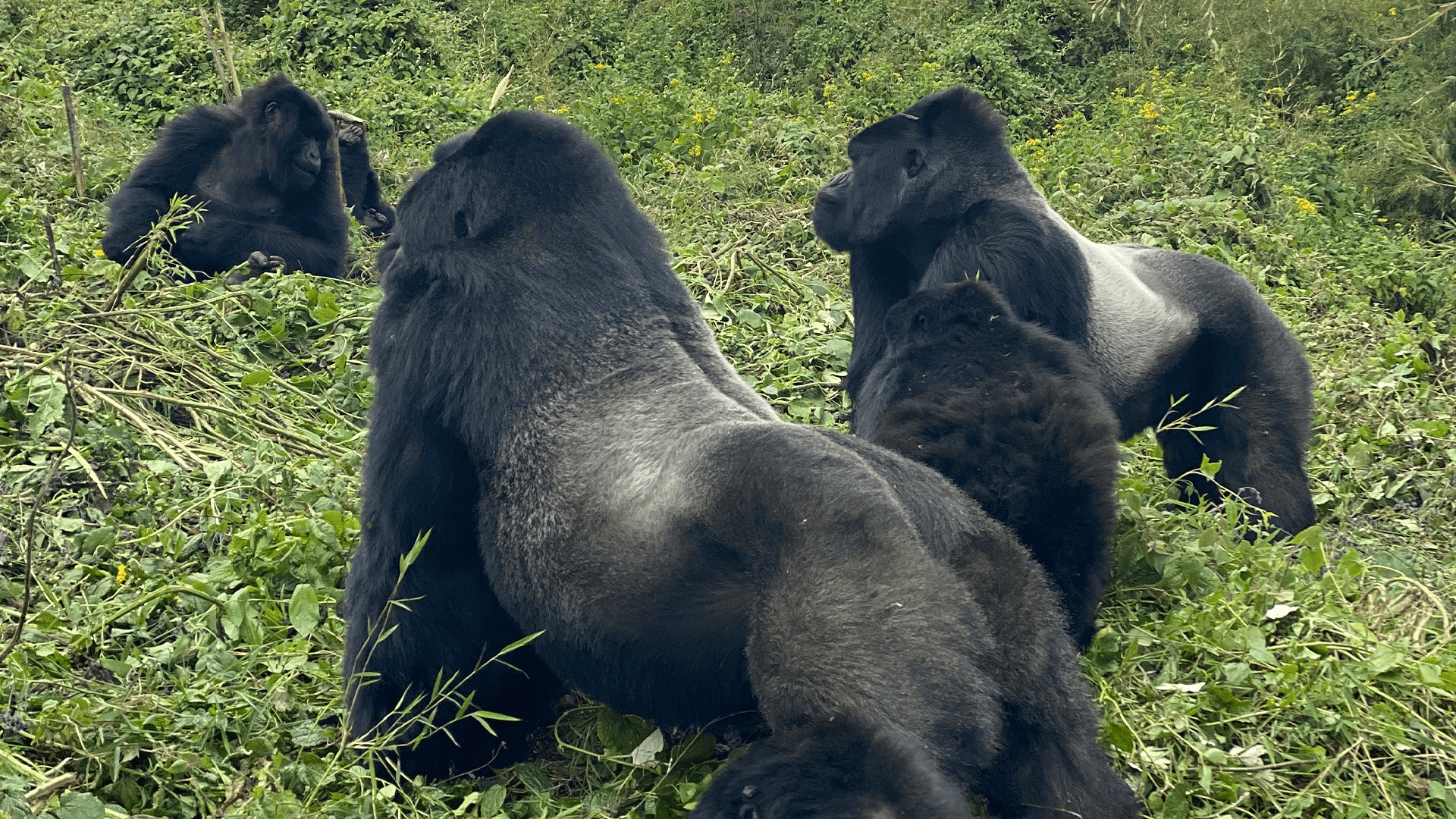
Mountain gorilla trekking is one of the most controlled and intimate wildlife experiences in Africa. In Uganda, gorilla permits are limited, ranger-led, and assigned to specific trekking areas. The day usually begins early with a briefing, then guests are grouped and led into the forest. The trek can be relatively short or physically demanding depending on where the gorilla family is located, weather conditions, and terrain. Once the group is found, visitors typically spend one regulated hour with the gorillas.
The experience is very different from watching animals from a vehicle. You hear branches breaking before you see the silverback. You notice the sound of breathing, feeding, infants playing, and rangers communicating quietly. The encounter feels close, but it is structured around strict conservation rules. For 2026 planning, non-resident gorilla trekking permits in Uganda are generally US$800 per person, while gorilla habituation experiences are significantly higher, commonly around US$1,500 per person. Permit rates should always be reconfirmed at booking because official tariffs can change.
Chimpanzee tracking adds another kind of energy. Chimpanzees move faster, vocalize loudly, and often create a sense of anticipation before they are visible. Kibale Forest is Uganda’s best-known chimpanzee tracking destination, and it pairs well with Queen Elizabeth National Park or Murchison Falls depending on the route. Current Kibale chimpanzee tracking permits for foreign non-residents are commonly around US$250 per person, again subject to confirmation when booking.
Then comes the savannah. Uganda is not only a primate destination. Queen Elizabeth National Park offers elephants, buffalo, hippos, crocodiles, antelope, and predators, with the Ishasha sector especially known for its tree-climbing lions, although sightings are never guaranteed. Murchison Falls National Park brings powerful Nile scenery, giraffes, elephants, buffalo, lions, leopards, and one of the most dramatic waterfall landscapes in Africa. Kidepo Valley National Park, in the far northeast, is remote, open, and superb for travelers who want a wilder, less crowded safari atmosphere.
If you are comparing animal possibilities by region and park, PawMac Safaris has a helpful guide to Uganda’s animals and safari highlights that can help you match species expectations with the right itinerary.
Plan Your Uganda Safari with Local Experts
 WhatsApp Us
Uganda’s habitats make wildlife viewing more varied
One of Uganda’s biggest advantages is ecological contrast. Wildlife experiences are shaped by habitat, and Uganda’s habitats change quickly.
In Bwindi, safari feels humid, green, vertical, and quiet until the forest suddenly becomes alive with movement. In Kibale, the canopy dominates the experience, with monkeys, birds, butterflies, and chimpanzee calls creating a layered forest atmosphere. In Queen Elizabeth, open plains meet crater lakes, wetlands, fig trees, and the Kazinga Channel. In Murchison Falls, the Nile slices through savannah and woodland before forcing itself through a narrow gorge. In Lake Mburo, smaller scale landscapes create excellent opportunities for zebras, impalas, elands, hippos, and walking safaris in selected areas.
This habitat diversity also gives Uganda strong birding value. The country has more than 1,060 recorded bird species, with forest, wetland, savannah, and Albertine Rift specialties. The shoebill is one of the most desired species for many visiting birders, particularly around papyrus wetland areas such as Mabamba Swamp. For photographers and naturalists, this variety means every park feels visually different.
It also changes pacing. Some days are about patience and scanning. Others are about sound and tracking. Others are about being on the water at the right light. A well-designed Uganda safari uses that variety rather than rushing through it.
The experience is more active and less predictable, in a good way
Uganda’s safari style is not passive. This is a major distinction for travelers who want to feel involved in the journey.
Gorilla and chimpanzee tracking require walking. Boat safaris require timing, light awareness, and patience. Game drives require good guiding, not just moving from one road to another. Some routes involve long but scenic drives between parks, passing tea plantations, villages, crater lakes, escarpments, and roadside markets. For many visitors, these transitions become part of the experience rather than empty travel time.
Uganda can also feel less crowded than many better-known safari circuits. This does not mean every park is empty, especially in high season around popular gorilla trekking areas. It does mean that many wildlife moments feel more intimate. A lion sighting in Ishasha or a sunrise drive in Murchison Falls may not involve a large cluster of vehicles. In Kidepo, the sense of space can be especially powerful.
This is why local guiding matters. The best Uganda safari guides understand animal behavior, road conditions, ranger coordination, realistic timing, and how to adjust the day when weather or wildlife movement changes. PawMac Safaris builds trips around this local expertise, combining professional planning with flexible execution on the ground. If you want to understand these field-level advantages more deeply, read this overview of unique wildlife tours in Uganda.
Cost transparency: what makes Uganda pricing different
Uganda can be excellent value, but it is not always a low-cost safari destination, especially when gorilla trekking is included. The main reason is permits. Gorilla and chimpanzee permits are conservation-based costs, and they form a major part of the safari budget.
For a realistic 2026 planning conversation, it is useful to separate fixed costs from style-based costs. Fixed or semi-fixed costs include permits, park entry fees, ranger fees, and certain activity fees. Style-based costs include lodge level, private versus shared transport, domestic flights, vehicle type, trip length, and season.
| Cost item | Typical 2026 planning range | Notes |
|---|---|---|
| Gorilla trekking permit | Around US$800 per foreign non-resident | Usually the largest single activity cost |
| Gorilla habituation permit | Around US$1,500 per foreign non-resident | Longer, more specialized experience, limited availability |
| Kibale chimpanzee tracking permit | Around US$250 per foreign non-resident | Popular, should be booked early in peak periods |
| National park entry | Often around US$40 to US$45 per adult per day | Varies by park category and official tariff |
| Boat safari activity | Often around US$30 to US$40 per person | Varies by park, operator structure, and schedule |
| Private 4×4 safari vehicle and guide | Commonly built into package pricing | Cost depends on route length, fuel, guide days, and vehicle type |
| Domestic scheduled or charter flights | Can add several hundred dollars per sector | Useful for luxury trips or time-sensitive itineraries |
For full safari packages, broad per-person estimates can help set expectations. A short 3-day Uganda gorilla trekking trip may range from about US$1,200 to US$2,800 per person depending on accommodation level, group size, and routing. A 7 to 9-day itinerary combining gorillas, chimpanzees, and savannah wildlife often falls between about US$3,500 and US$8,000 per person for many private mid-range to upper-range trips. Luxury safaris with premium lodges, domestic flights, private guiding, and carefully paced routing can exceed US$10,000 per person, especially for longer itineraries.
These ranges usually exclude international flights, visas, travel insurance, premium drinks, tips, and personal expenses. They may include permits if quoted as a full package, but travelers should always confirm this clearly. A safari price without gorilla permits included can appear much cheaper than it truly is.

Seasonality changes the feel, not just the price
Uganda is a year-round safari destination, but the experience changes by season. The drier months, generally December to February and June to September, are often preferred for gorilla trekking, chimpanzee tracking, and classic game drives because trails may be less muddy and wildlife can be easier to locate around water sources. These months also tend to attract higher demand, especially for gorilla permits and premium lodges.
The wetter months, generally March to May and October to November, can offer lush scenery, dramatic skies, excellent birding, and fewer visitors in some areas. Forest trekking can be muddier, and road conditions may require more patience, but photographers often appreciate the atmosphere. Lodges may also be more flexible outside peak demand periods, although high-quality properties in prime locations can still book well in advance.
For gorilla trekking, the key is not only season but preparation. Good boots, gaiters, waterproof layers, gloves for grabbing vegetation, and porter support can make a significant difference. Travelers should be honest about fitness levels so the guiding team can help match expectations to the day’s trekking conditions where possible.
For a month-by-month planning perspective, PawMac Safaris has a dedicated guide on the best time to visit Uganda for wildlife safaris, including dry and wet season trade-offs.
A Uganda safari itinerary has a distinctive shape
A well-planned Uganda trip should not simply connect famous names on a map. Distances matter. Road conditions matter. Permit dates matter. So does the order of activities, because gorilla trekking is more enjoyable when you are not exhausted from a rushed transfer the day before.
Many international travelers arrive through Entebbe. From there, the itinerary may move northwest toward Murchison Falls, southwest toward Kibale and Queen Elizabeth, or directly toward Bwindi by road or domestic flight. A premium safari often uses selective flying to reduce long drive days, while many mid-range trips use a private 4×4 throughout, turning transfers into scenic travel.
| Trip length | Best suited for | What it can include |
|---|---|---|
| 3 to 4 days | Travelers focused mainly on gorilla trekking | Bwindi or Mgahinga, one gorilla trek, scenic transfers or domestic flight options |
| 6 to 8 days | First-time visitors wanting primates plus savannah | Gorillas, Kibale chimps, Queen Elizabeth, Kazinga Channel, optional Ishasha sector |
| 9 to 12 days | Travelers wanting a balanced Uganda wildlife safari | Murchison Falls, Kibale, Queen Elizabeth, Bwindi, Lake Mburo, possible rhino tracking en route |
| 13+ days | Photographers, repeat safari travelers, or slow luxury travelers | Kidepo Valley, Semuliki, extra gorilla permits, birding, cultural experiences, relaxed lodge stays |
The biggest mistake is trying to do too much in too little time. Uganda rewards travelers who allow enough room for terrain, weather, and wildlife unpredictability. A rushed itinerary may look impressive on paper but feel tiring on the ground.
The Big Five in Uganda require smart routing
Uganda can deliver a Big Five-style safari experience, but with an important distinction: rhinos are not found wild inside the major national parks in the same way lions, leopards, elephants, and buffalo are. Most Big Five-focused Uganda itineraries include rhino tracking at Ziwa Rhino Sanctuary, often as part of a route to or from Murchison Falls National Park.
This makes Uganda’s Big Five experience more varied than a single-park checklist. You may track rhinos on foot with trained guides, then continue to Murchison Falls for elephants, buffalo, lions, leopards, giraffes, hippos, crocodiles, and Nile scenery. Later, Queen Elizabeth can add another predator and plains experience, while the Kazinga Channel provides one of Uganda’s most reliable concentrations of water-based wildlife viewing.
Leopards remain elusive, as they should. Lions are more visible in some regions than others, and tree-climbing lions in Ishasha are a highlight but never a certainty. A trustworthy safari planner will explain probabilities clearly rather than promise sightings. Wildlife is wild, and that uncertainty is part of the value.
Uganda is excellent for premium travelers who want meaning, not just comfort
Luxury in Uganda is not only about thread count, private decks, and fine dining, although these matter. The most meaningful premium experiences come from access, pacing, guiding, and privacy.
A high-end Uganda safari may include carefully selected lodges near key trekking sectors, private 4×4 transport, experienced local guides, charter or scheduled domestic flights, porter arrangements, special-interest guiding for photography or birds, and enough time between major activities. For gorilla trekking, staying near the correct sector is especially important because Bwindi has multiple trekking areas and drive times between sectors can be long.
Premium travelers should also consider booking two gorilla treks rather than one if budget and time allow. The first trek is often emotionally overwhelming. A second trek gives more room for photography, observation, and a deeper appreciation of family behavior. Since each permit is a major cost, this should be planned intentionally, not added casually.
For mid-range travelers, Uganda still offers outstanding depth. The key is prioritization. If gorillas are the main goal, invest in the permit and good routing, then choose comfortable but practical lodges. If photography is the main goal, invest in private guiding and time in the right locations rather than adding too many stops.
Practical planning details that make or break the trip
Uganda safari planning is detail-sensitive. The difference between a smooth journey and a stressful one often comes down to timing, route design, and permit coordination.
Book gorilla and chimpanzee permits early, especially for June to September, December, and holiday periods. Confirm which gorilla sector your permit is for before choosing a lodge. Build in enough time after international arrival before major activities. Consider domestic flights if you have limited time or prefer a more relaxed luxury pace. Carry some cash in clean US dollars for tips, small purchases, and emergencies, while also confirming what can be paid by card.
Health and entry requirements should be checked before travel. A yellow fever vaccination certificate is commonly required for entry, and many travelers discuss malaria prevention with a travel health professional before departure. Travel insurance should include medical evacuation and cover trekking activities where applicable.
Digital preparation matters too, especially for executives, entrepreneurs, and remote professionals who may need to stay connected between safari days. Before departure, download offline copies of permits, insurance documents, passport scans, and emergency contacts. If you manage sensitive work while traveling, the same discipline used in professional IT environments, such as structured cybersecurity, cloud, and infrastructure oversight from MDSI’s IT maintenance and security team, applies in practical travel terms: use secure devices, avoid risky public Wi-Fi behavior, and keep business data protected while abroad.
Responsible travel is part of what makes Uganda different
Uganda’s most iconic encounters depend on conservation rules. Gorilla and chimpanzee trekking are not casual wildlife walks. They are managed experiences designed to reduce stress on animals, support protected areas, and create economic value for conservation and surrounding communities.
Travelers play a role by following ranger instructions, keeping appropriate distance, wearing masks when required near great apes, avoiding trekking when ill, staying quiet during encounters, and never pressuring guides for unsafe proximity. Hiring porters is also valuable. It helps visitors manage challenging terrain while providing income to local community members.
Cultural respect matters as well. Uganda’s safari routes pass through living communities, farms, towns, and heritage areas. A good itinerary can include cultural experiences, but they should be arranged respectfully, with clear benefit to local hosts and no staged discomfort for visitors or residents.
PawMac Safaris emphasizes expert local guiding and personalized planning because these details shape not only guest comfort but also the quality and ethics of the journey. A well-guided safari helps travelers understand why rules exist, how landscapes connect, and what their visit contributes when planned responsibly.
Who should choose Uganda for an Africa wildlife safari?
Uganda is an exceptional choice if you want a wildlife trip with variety and emotional depth. It is especially strong for travelers who want gorillas and chimpanzees, but do not want to give up lions, elephants, buffalo, giraffes, hippos, crocodiles, and rich birdlife.
It is also ideal for repeat safari travelers who have already experienced more conventional savannah circuits and now want something more layered. Families with older children or teenagers can find Uganda deeply educational, provided trekking age limits and fitness requirements are considered. Photographers benefit from the mix of rainforest, waterways, primates, landscapes, and classic mammals.
Uganda may not be the best fit if you only want very short driving distances, a single lodge stay, or a migration-style spectacle across endless plains. Its beauty comes from movement across different ecosystems. The reward is a safari that feels less repetitive and more personal.
Frequently Asked Questions
What makes an Africa wildlife safari in Uganda different? Uganda combines mountain gorilla trekking, chimpanzee tracking, Big Five-style routes, boat safaris, birding, and varied landscapes within one country. The experience is more active and diverse than a safari focused only on vehicle-based game drives.
Can I see the Big Five in Uganda? Yes, with the right routing. Lions, leopards, elephants, and buffalo can be seen in national parks such as Murchison Falls and Queen Elizabeth, while rhino tracking is usually added at Ziwa Rhino Sanctuary. Sightings are never guaranteed, so good planning and guiding are essential.
How much does a Uganda wildlife safari cost in 2026? A short gorilla-focused trip may start around US$1,200 to US$2,800 per person, while a 7 to 9-day private safari with gorillas, chimps, and savannah parks often ranges from about US$3,500 to US$8,000 per person. Luxury trips with premium lodges and flights can exceed US$10,000 per person.
Are Uganda gorilla permits included in safari packages? Sometimes they are included and sometimes they are quoted separately. Always confirm this before comparing prices. A Uganda safari quote that excludes an US$800 gorilla permit can look much cheaper than a quote that already includes it.
When should I book a Uganda safari? For peak travel months, it is wise to book 6 to 12 months ahead, especially if gorilla trekking, chimpanzee tracking, or premium lodges are priorities. Shorter booking windows may still work in quieter months, but permit availability will shape the itinerary.
Is Uganda suitable for luxury safaris? Yes. Uganda offers premium lodges, private guiding, domestic flight options, carefully paced itineraries, and exclusive-feeling wildlife encounters. Luxury planning is especially valuable around gorilla trekking sectors, long transfer days, and specialist interests such as photography or birding.
Plan your Uganda safari with local expertise
Uganda is different because it asks you to participate in the journey. You do not simply watch the wild from a distance. You walk into rainforest, listen for chimpanzees, follow the Nile, scan fig trees for lions, and experience national parks that each have their own rhythm.
PawMac Safaris helps travelers turn that potential into a well-structured itinerary, with expert local guides, comfortable 4×4 vehicles, gorilla and chimpanzee trekking coordination, Big Five safari routing, cultural experiences, and custom packages for different budgets and travel styles.
If you are planning an Uganda Safari 2026 and want a trip that balances comfort, conservation, wildlife quality, and clear cost expectations, start with a tailored conversation. The right plan will not only show you Uganda’s wildlife, it will help you understand why this country offers one of Africa’s most distinctive safari experiences.


