


- 109 Views
- 18 Min Read
- (0) Comment
Uganda turns the familiar idea of a safari Africa tour into something more layered, intimate, and surprising. Instead of one continuous savannah experience, a Uganda safari moves between rainforest, crater lakes, open plains, papyrus wetlands, the Nile, and high-altitude gorilla habitat, often within a single journey.
For travelers planning 2026, that variety is the reason Uganda feels so rewarding. A well-designed trip can include mountain gorilla trekking in Bwindi, chimpanzee tracking in Kibale Forest, lions and elephants in Queen Elizabeth or Murchison Falls, boat safaris on wildlife-rich waterways, and cultural encounters that make the journey feel personal rather than packaged.
Table of Contents
- The Uganda version of a safari Africa tour
- Gorilla trekking in Bwindi or Mgahinga
- Chimpanzee tracking in Kibale Forest
- Savannah game drives in Ugandas national parks
- Boat safaris on the Nile and Kazinga Channel
- What a typical safari day looks like
- Morning game drive or forest departure
- Midday reset and scenic transfer time
- Evening wildlife viewing and lodge time
- Sample Uganda safari routes for 2026
- The 5 to 6 day primate focused safari
- The 8 to 10 day classic Uganda safari
- The 12 to 14 day premium Uganda safari
- Budget and cost expectations
- Permit fees to plan around
- Accommodation and vehicle costs
- The best time to take a Uganda safari
- How to prepare for the experience
- What to pack for forest and savannah
- Health comfort and travel logistics
- Why plan with PawMac Safaris
- Frequently Asked Questions
- Start planning your Uganda safari
The Uganda version of a safari Africa tour
A safari in Uganda is best understood as a multi-habitat journey. The country is compact compared with many long-haul safari destinations, but the ecological variation is extraordinary. You can drive from tea-covered highlands into tropical forest, descend toward savannah plains, cruise beside hippos and crocodiles, then finish in misty mountains where gorillas move through bamboo and dense vegetation.
That is what makes a safari Africa tour in Uganda different. The main attraction is not only the number of animals, but the contrast between experiences. Gorilla trekking is slow, quiet, and emotional. Chimpanzee tracking is energetic and often loud, with calls echoing through the forest. A game drive is patient and open, built around reading tracks, scanning tree lines, and understanding animal movement. A boat safari gives you eye-level access to wildlife that gathers around water.
| Safari element | Where it usually happens in Uganda | What it feels like | Key planning note |
|---|---|---|---|
| Gorilla trekking | Bwindi Impenetrable National Park, Mgahinga Gorilla National Park | Immersive, quiet, once-in-a-lifetime | Permits are limited and should be secured early |
| Chimpanzee tracking | Kibale Forest, with other options in western Uganda | Active, vocal, fast-moving | Morning and afternoon tracking slots may be available |
| Game drives | Queen Elizabeth, Murchison Falls, Kidepo Valley, Lake Mburo | Classic safari viewing from a 4×4 | Wildlife sightings depend on season, time, and patience |
| Boat safaris | Kazinga Channel, River Nile, Lake Mburo | Relaxed but highly productive for wildlife | Excellent for photography and birding |
| Cultural experiences | Communities near parks and selected heritage sites | Human connection and local context | Best when planned respectfully with local guidance |
Gorilla trekking in Bwindi or Mgahinga
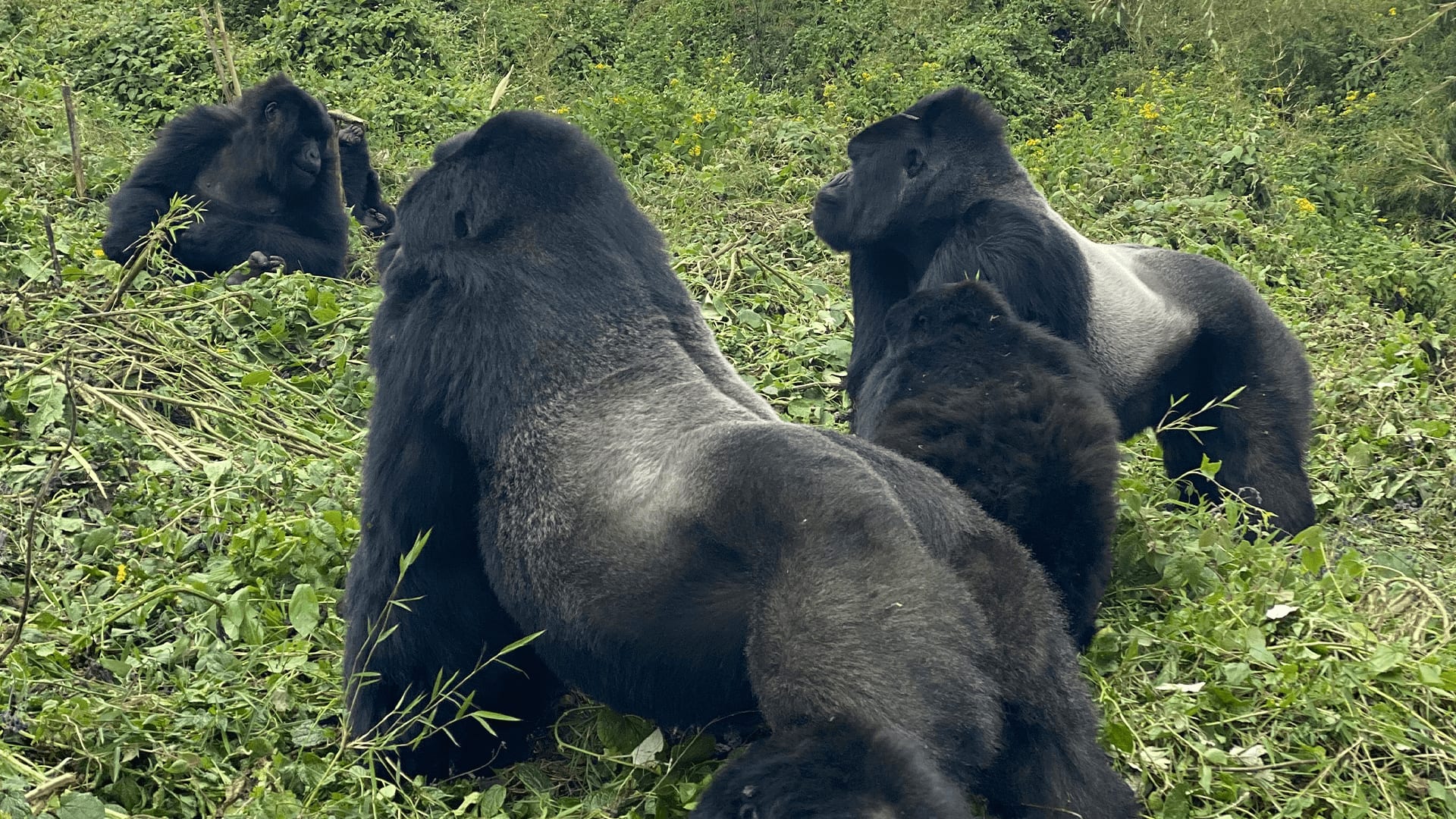
For many travelers, gorilla trekking is the reason to choose Uganda. Bwindi Impenetrable National Park is the flagship destination, with several trekking sectors spread across rugged forest terrain. Mgahinga Gorilla National Park offers a smaller and beautifully scenic alternative in the Virunga volcanic landscape.
A gorilla trekking day starts early with a briefing from park authorities. Trekkers are assigned to a habituated gorilla family, usually based on permit availability, group size, fitness level, and the sector where they are staying. The actual walk can take anything from a relatively manageable trek to several hours of steep, muddy forest hiking. Once the gorilla family is located, visitors generally spend one precious hour with them under the supervision of ranger guides.
Recent foreign non-resident gorilla permit pricing has been commonly budgeted at USD 800 per person, though 2026 travelers should confirm the latest Uganda Wildlife Authority tariff at the time of booking. The permit is not a small line item, but it directly shapes the quality and conservation framework of the experience. Travelers must also be at least 15 years old to trek gorillas.
Sector choice matters. Staying in the wrong area of Bwindi can create unnecessary driving on rough mountain roads before the trek. PawMac Safaris plans around the correct trekking sector, lodge location, road conditions, and overall route flow so that the experience feels premium rather than improvised.
Chimpanzee tracking in Kibale Forest
Chimpanzee tracking adds a completely different primate experience. Kibale Forest is Uganda’s most famous chimpanzee destination, known for its high primate diversity and strong tracking experience. Unlike gorillas, chimpanzees are often vocal and mobile. You may hear pant-hoots before you see them, then follow the movement of the group through the trees with trained guides.
A standard chimpanzee tracking permit in Kibale has recently been budgeted around USD 250 for foreign non-residents, subject to the latest official tariff. Some travelers also consider a chimpanzee habituation experience, where available, for a longer and more in-depth forest encounter. Chimp tracking is often placed before or after Queen Elizabeth National Park because the route between Kibale, the crater lakes region, and the savannah is efficient and scenic.
The best Uganda safaris do not treat chimpanzee tracking as a side activity. It deserves proper timing, a comfortable lodge nearby, and a realistic understanding of forest conditions. Trails can be slippery after rain, and sightings may involve looking upward into the canopy as well as walking on uneven ground.
Plan Your Uganda Safari with Local Experts
 WhatsApp Us
Savannah game drives in Ugandas national parks
Uganda’s savannah parks give the safari its classic wildlife dimension. Queen Elizabeth National Park is popular for its varied landscapes, including the Kasenyi plains, crater areas, the Kazinga Channel, and the Ishasha sector, which is known for tree-climbing lion sightings. Murchison Falls National Park combines powerful Nile scenery with giraffes, elephants, buffalo, lions, and antelope. Kidepo Valley National Park, in the far northeast, is remote, dramatic, and excellent for travelers seeking a wilder feel. Lake Mburo is smaller and often useful at the beginning or end of a route, especially for zebras, impalas, walking safaris, and relaxed game viewing.
A Big Five-style Uganda safari usually includes rhino tracking at Ziwa Rhino Sanctuary, then continues to parks where lions, leopards, elephants, and buffalo may be seen. Wildlife is never guaranteed, but a skilled local guide improves the odds by reading recent sightings, weather, animal behavior, and park terrain. For a deeper species overview, PawMac Safaris has a useful guide to safari Africa animals you can see in Uganda.
Boat safaris on the Nile and Kazinga Channel
Boat safaris are one of Uganda’s strongest advantages. They slow the pace and bring wildlife into clear view. On the Kazinga Channel in Queen Elizabeth National Park, hippos, crocodiles, buffalo, elephants, and abundant birdlife often gather along the banks. In Murchison Falls National Park, a Nile boat safari can travel toward the base of the falls, where the river narrows and crashes through a dramatic gorge.
For photographers, boat safaris are especially valuable because animals often remain calmer near water than they do beside vehicles. The angle is lower, the backgrounds are cleaner, and the rhythm is more relaxed. Birders also benefit, with opportunities to see fish eagles, kingfishers, bee-eaters, herons, and many water-associated species.
What a typical safari day looks like
A Uganda safari day is structured, but it should not feel rushed. The best days allow enough time for early wildlife activity, comfortable meals, scenic transfers, and quiet moments at the lodge. This is where professional planning matters. Too many activities packed into one itinerary can turn a beautiful route into a checklist. A well-balanced tour leaves room for weather, road conditions, park timing, and the natural unpredictability of wildlife.
Morning game drive or forest departure
On savannah days, you may wake before sunrise for coffee or tea, then leave the lodge while the air is still cool. Predators are more active early, and grazers move into open areas before the heat builds. Your guide will often focus on tracks, fresh dung, alarm calls, and recent sighting information from rangers or other trusted guides.
On gorilla or chimpanzee trekking days, the rhythm is different. You leave early for the park office, attend a briefing, meet the ranger team, and begin the trek with packed water and sometimes a packed lunch. A porter is strongly recommended for gorilla trekking, not only to carry your bag but also to provide balance and support on steep or muddy ground. Hiring a porter also supports local livelihoods around the park.
Midday reset and scenic transfer time
Midday often brings a slower pace. In the savannah parks, wildlife activity may drop as temperatures rise, so this is a good time to return to the lodge, have lunch, rest, or transfer toward the next region. Uganda’s drives are part of the experience. You pass banana plantations, tea estates, crater lakes, roadside markets, fishing villages, escarpments, and mountain views.
Road distances should be taken seriously. A route that looks short on a map can take longer because of road surface, weather, park tracks, and mountain terrain. Comfortable 4×4 vehicles are not a luxury detail in Uganda; they are part of making the safari safe, smooth, and flexible.
Evening wildlife viewing and lodge time
Late afternoon is another prime wildlife window. Depending on the park, you may head out for a second game drive, take a boat safari, visit a local community project, or simply enjoy the lodge setting. Premium safari days often end with a sundowner, a warm meal, and a guide briefing for the next morning.
This balance matters. A Uganda safari is physically rewarding, but gorilla trekking, long drives, early starts, and changing climates can be tiring. Good pacing helps travelers enjoy each highlight fully instead of arriving exhausted at the next one.
Sample Uganda safari routes for 2026
The right route depends on your time, budget, comfort level, and main priority. Some travelers want the shortest possible gorilla trek extension. Others want the full Uganda circuit with primates, Big Five-style wildlife, boat safaris, and cultural depth. If you are comparing trip lengths in more detail, PawMac Safaris has a fuller guide to Uganda safari itineraries that breaks down options, costs, and experiences.
| Route length | Typical focus | Likely destinations | Best for | Budget character |
|---|---|---|---|---|
| 5-6 days | Primates and one savannah highlight | Entebbe, Kibale or Queen Elizabeth, Bwindi or Mgahinga | Travelers with limited time | Efficient, permit-heavy |
| 8-10 days | Classic Uganda safari | Murchison Falls, Kibale, Queen Elizabeth, Bwindi, Lake Mburo | First-time Uganda travelers | Best balance of variety and pace |
| 12-14 days | Premium in-depth safari | Murchison Falls, Kibale, Queen Elizabeth, Bwindi, Kidepo or extra gorilla trekking | Luxury or returning safari travelers | Higher comfort, more remote options |
The 5 to 6 day primate focused safari
A shorter Uganda safari usually prioritizes gorilla trekking and one other major experience. This may be chimpanzee tracking in Kibale, a game drive and boat safari in Queen Elizabeth, or a fly-in arrangement that reduces road time. The key is discipline. A 5 to 6 day itinerary cannot comfortably include every major park without compromising the experience.
This route works well for travelers adding Uganda to a broader international trip, honeymooners who want one signature wildlife moment, or guests with limited annual leave. The main cost concentration is permits, private guiding, and transport efficiency. Domestic flights can raise the price but may save valuable time.
The 8 to 10 day classic Uganda safari
For most first-time visitors, 8 to 10 days is the sweet spot. A strong route may begin with Murchison Falls for Nile scenery and game drives, continue to Kibale for chimpanzees, move through Queen Elizabeth for savannah and the Kazinga Channel, then end with gorilla trekking in Bwindi before returning via Lake Mburo or a domestic flight.
This is the itinerary length where Uganda’s diversity becomes clear. You are not only coming for gorillas. You are experiencing forests, rivers, open plains, escarpments, crater lakes, and local communities. The pace can still be comfortable if the lodges are chosen strategically and the route avoids unnecessary backtracking.
The 12 to 14 day premium Uganda safari
A longer premium safari allows for deeper customization. You might add Kidepo Valley National Park for remote wilderness, include two gorilla treks in different sectors, add more cultural touring, schedule slower lodge stays, or use domestic flights to reduce road fatigue. This is also the best range for photographers, birders, and travelers who prefer fewer one-night stops.
Luxury does not only mean a better room. In Uganda, premium planning means smarter routing, private guiding, better lodge locations, well-timed permits, carefully paced transfers, and contingency planning if weather affects roads or activities.

Budget and cost expectations
Uganda can be planned as a budget-conscious adventure, a comfortable mid-range safari, or a high-end private journey. The biggest variables are permit costs, accommodation level, vehicle and guide arrangements, domestic flights, season, and whether the tour is private or shared. International flights are usually quoted separately from land arrangements.
The ranges below are planning estimates for foreign non-resident travelers in 2026. They are not fixed PawMac Safaris prices, since each custom itinerary depends on dates, lodge availability, permit status, route design, and group size.
| Safari style | Typical land budget estimate | What usually drives the cost |
|---|---|---|
| Budget-conscious private or small group | USD 250-450 per person per day before some permits | Simpler lodges, longer road transfers, fewer premium extras |
| Comfortable mid-range private safari | USD 450-750 per person per day plus key permits | Better lodges, private 4×4, experienced guide, balanced routing |
| Luxury private safari | USD 800-1,500+ per person per day plus permits and flights | Premium lodges, fly-in sectors, exclusive guiding, slower pacing |
| Ultra-premium custom safari | USD 1,500+ per person per day | Top lodge categories, charter options, special access logistics, high-touch planning |
Permit fees to plan around
Gorilla and chimpanzee permits are among the most important early budget items. Recent foreign non-resident gorilla permits have been commonly budgeted at USD 800 per person. Kibale chimpanzee tracking has recently been commonly budgeted around USD 250 per person. These figures should always be confirmed against the latest official tariff when your dates are being held.
Permit availability can become tight in peak months, especially June to September, December, January, and holiday periods. If gorilla trekking is the centerpiece of your safari, the itinerary should be built around permit availability first, then lodges and transport should be matched to the correct trekking sector.
Accommodation and vehicle costs
Accommodation ranges widely. Comfortable mid-range lodges may offer excellent hospitality and strong locations without the cost of ultra-luxury camps. Premium lodges in gorilla areas, remote savannah locations, or high-demand seasons can rise significantly, sometimes reaching USD 600 to over USD 1,500 per room per night depending on property, meal plan, and season.
Vehicle and guide costs also matter. A private 4×4 with a professional local guide gives flexibility, privacy, and better interpretation throughout the route. Solo travelers often pay more per person because the vehicle and guide costs are not shared. Families and small groups may find better per-person value while still enjoying a private tour.
Premium travelers should look beyond nightly lodge rates and ask what the trip includes. Does the route reduce fatigue? Are park sectors aligned with permits? Are cultural visits responsibly arranged? Are domestic flights worth the time saved? For a more detailed premium breakdown, see PawMac Safaris’ guide to Africa luxury safari in Uganda.
The best time to take a Uganda safari
Uganda is a year-round safari destination, but seasons change the experience. The drier months, typically June to September and December to February, are popular because forest trails may be easier, wildlife can be more concentrated around water, and road conditions are generally more predictable. These months also attract higher demand for gorilla permits and preferred lodges.
The wetter months, often March to May and October to November, can be beautiful. Landscapes are lush, birding can be excellent, and some lodges may offer better value outside peak periods. Rain does not usually mean every day is washed out, but it can make forest trekking muddier and some roads slower.
For 2026 planning, the best advice is to book early if your dates are fixed. Gorilla permits, specific lodge rooms, and experienced guides can sell out before flights are finalized. If your dates are flexible, PawMac Safaris can help match your priorities to the season, such as photography, birding, family travel, honeymoon privacy, or luxury lodge availability.
How to prepare for the experience
A Uganda safari is comfortable when planned well, but it is still an active nature journey. Preparation should reflect the mix of rainforest trekking, savannah drives, altitude changes, and tropical weather. The goal is not to overpack. The goal is to bring the right gear, understand the rhythm, and arrive ready for early mornings and varied terrain.
What to pack for forest and savannah
Pack with layers and practicality in mind. Gorilla and chimpanzee trekking require different clothing from game drives, and luggage space may be limited if your itinerary includes domestic flights.
- Lightweight long-sleeved shirts and long trousers for forest walks
- Waterproof hiking boots with good grip, already broken in
- Rain jacket or poncho for sudden showers
- Garden gloves or trekking gloves for holding vegetation during gorilla treks
- Neutral-colored safari clothing for game drives
- Binoculars for birds, primates, and distant wildlife
- Insect repellent, sunscreen, hat, and refillable water bottle
- Soft-sided luggage if domestic flights are included
A small daypack is useful for trekking days. Carry water, snacks, rain protection, camera gear, and any personal medication. For gorilla trekking, avoid wearing strong fragrances and follow ranger instructions carefully around the gorillas.
Health comfort and travel logistics
Most international travelers arrive through Entebbe International Airport. Depending on arrival time, it is often wise to spend the first night near Entebbe or Kampala before starting the safari route. This protects the itinerary from flight delays and allows you to begin long road transfers rested.
Travelers should consult a travel health professional about malaria prevention, routine vaccinations, and personal medical needs. Yellow fever vaccination documentation has been an important entry requirement for Uganda, so confirm current requirements before departure. Comprehensive travel insurance should cover medical evacuation, safari activities, trip interruption, and high-value camera equipment if relevant.
Premium logistics may begin before you reach Uganda. If you are coordinating business travel, VIP airport movement, or executive transfers in Europe before connecting to Entebbe, reliable executive chauffeur services can help keep that pre-departure leg punctual and discreet. Once you land in Uganda, PawMac Safaris handles the safari-side planning, including guided road transfers, park timing, lodge coordination, and activity flow.
Why plan with PawMac Safaris
A Uganda safari is not difficult because of one single element. It is complex because every piece affects the next one. Gorilla permits must match the correct trekking sector. Lodges need to align with daily drive times. Boat safaris and game drives need the right timing. Road transfers require realistic planning. Cultural tours should be meaningful and respectful rather than rushed add-ons.
PawMac Safaris specializes in expert-guided wildlife and gorilla trekking tours in Uganda, with local knowledge and professional planning at the center of the experience. The team designs personalized safari packages across budget, mid-range, and luxury travel styles, using comfortable 4×4 vehicles, experienced local guides, and flexible routing that reflects each guest’s priorities.
That local expertise is especially valuable in Uganda because the best trip is not always the one with the most stops. It is the one that gives you the strongest wildlife opportunities with the least unnecessary friction. For some travelers, that means a focused gorilla and chimpanzee itinerary. For others, it means a full Big Five-style route, cultural touring, adventure activities, and premium lodge stays.
Frequently Asked Questions
Is Uganda good for a first safari Africa tour? Yes. Uganda is excellent for first-time safari travelers who want more than a standard game-drive itinerary. It combines gorilla trekking, chimpanzee tracking, savannah wildlife, boat safaris, and rich landscapes in one country.
How many days do I need for a Uganda safari? A focused gorilla safari can be done in 4-6 days, but 8-10 days is better for a classic Uganda safari with primates, savannah parks, and boat safaris. A 12-14 day route allows slower pacing and more premium customization.
Can I see the Big Five in Uganda? Yes, with the right route. Rhino tracking at Ziwa Rhino Sanctuary is usually added to complete a Big Five-style Uganda safari, while lions, leopards, elephants, and buffalo may be seen in national parks such as Murchison Falls and Queen Elizabeth.
How difficult is gorilla trekking in Uganda? Difficulty varies by gorilla family location, weather, terrain, and your fitness level. Some treks are moderate, while others are steep and muddy. A porter, good boots, and honest fitness guidance help make the experience more comfortable.
How much should I budget for Uganda in 2026? Mid-range private safaris often start around USD 450-750 per person per day plus key permits, while luxury safaris may exceed USD 800-1,500 per person per day. Gorilla and chimpanzee permits are major additional costs.
When should I book gorilla permits? Book as early as possible once your travel dates are known, especially for June to September, December, January, and holiday periods. Permit availability should guide the route before lodges and transfers are finalized.
Start planning your Uganda safari
A safari in Uganda is intimate, varied, and deeply memorable when the logistics are handled properly. You are not simply booking wildlife activities. You are building a route through forests, rivers, savannahs, communities, and conservation areas that each require careful timing.
If you want a professionally planned Uganda safari for 2026, PawMac Safaris can help design a personalized journey around your travel dates, budget, comfort level, and must-see experiences, from gorilla trekking to Big Five-style wildlife routes and premium lodge stays.


