


- 10 Views
- 22 Min Read
- (0) Comment
Uganda is compact on the map, but its national parks feel remarkably different from one region to the next. In one journey, you can move from misty gorilla forests and volcanic slopes to open savannah, crater lakes, roaring waterfalls, papyrus wetlands, and remote semi-arid valleys where wildlife moves against huge skies.
That variety is exactly why regional planning matters. The best Uganda national parks for your safari depend on what you most want to experience, how much time you have, your budget, your comfort level with long drives or domestic flights, and whether gorilla trekking, chimpanzee tracking, big cats, hiking, birding, or cultural encounters sit at the top of your list.
This guide organizes Uganda’s national parks by region, then explains where to go and why, with practical routing, cost, permit, and timing insights for serious safari planning.
Table of Contents
- Why region matters for Uganda safari planning
- The 10 Uganda national parks at a glance
- Southwestern Uganda gorillas volcanoes and soft adventure
- Bwindi Impenetrable National Park
- Mgahinga Gorilla National Park
- Lake Mburo National Park
- Western Uganda Albertine Rift primates big cats and mountains
- Queen Elizabeth National Park
- Kibale National Park
- Rwenzori Mountains National Park
- Semuliki National Park
- Northern Uganda grand wilderness and powerful landscapes
- Murchison Falls National Park
- Kidepo Valley National Park
- Eastern Uganda highland hiking and quieter nature
- Mount Elgon National Park
- Central Uganda safari gateways and route planning
- How to choose Uganda national parks by travel style
- Sample regional itinerary ideas
- Budget permit and timing considerations
- Permit and park fee planning
- Seasonal planning by region
- Frequently Asked Questions
- Plan your Uganda national parks safari with PawMac Safaris
Why region matters for Uganda safari planning
A Uganda safari is not simply a list of parks. It is a route. The country’s landscapes are linked by real roads, altitude changes, weather patterns, and activity schedules that affect how your days feel on the ground.
For example, a gorilla trek in Bwindi Impenetrable National Park is usually best planned with at least two nights in the area because the trek starts early and the road transfer from another region can be long. Queen Elizabeth National Park pairs naturally with Bwindi because the drive between them can include the Ishasha sector, famous for its tree-climbing lions. Kibale National Park works beautifully with Queen Elizabeth because it adds chimpanzee tracking and forest primates to a savannah itinerary.
Northern Uganda is different. Murchison Falls National Park can fit into a classic one-week safari, especially when combined with rhino tracking en route. Kidepo Valley National Park, by contrast, rewards travelers who have more time or who are willing to fly because it sits in Uganda’s far northeast and feels wonderfully remote.
Regional planning also helps with cost control. Longer road transfers increase fuel, vehicle, guide, and accommodation costs. Domestic flights reduce fatigue and save time, but they increase the overall budget. Premium travelers often combine both approaches, using road transfers where the scenery is part of the experience and flights where the distance would otherwise consume a full day.
The 10 Uganda national parks at a glance
Uganda has 10 national parks, each with a distinct safari purpose. The table below gives a practical regional overview before we look at each area in more detail.
| Region | National park | Best for | Why go | Suggested minimum stay |
|---|---|---|---|---|
| Southwestern Uganda | Bwindi Impenetrable National Park | Gorilla trekking | Uganda’s most famous mountain gorilla destination with multiple trekking sectors | 2 nights |
| Southwestern Uganda | Mgahinga Gorilla National Park | Gorillas, golden monkeys, volcano hiking | Small, scenic, quieter, and excellent for combining primates with mountain views | 2 nights |
| Southwestern Uganda | Lake Mburo National Park | Short safaris, walking safaris, zebras | Convenient stop between Entebbe or Kampala and the southwest | 1 night |
| Western Uganda | Queen Elizabeth National Park | Game drives, boat safari, big cats | Diverse savannah, Kazinga Channel wildlife, crater scenery, Ishasha lions | 2 to 3 nights |
| Western Uganda | Kibale National Park | Chimpanzee tracking | Uganda’s premier chimpanzee tracking destination with rich primate diversity | 2 nights |
| Western Uganda | Rwenzori Mountains National Park | Trekking and alpine scenery | High-altitude hiking, glacier landscapes, and dramatic mountain ecosystems | 3 to 9 nights |
| Western Uganda | Semuliki National Park | Birding and lowland forest | Specialist destination with hot springs, rare birds, and Central African forest character | 1 to 2 nights |
| Northern Uganda | Murchison Falls National Park | Big game, Nile boat safari, waterfalls | Uganda’s largest national park and a strong choice for classic wildlife viewing | 2 to 3 nights |
| Northeastern Uganda | Kidepo Valley National Park | Remote wilderness and dramatic scenery | Less crowded, wild, cinematic, and excellent for buffalo, lions, and sweeping landscapes | 3 nights |
| Eastern Uganda | Mount Elgon National Park | Hiking, caves, waterfalls, birding | Quieter mountain alternative with scenic trails and nearby Sipi Falls | 2 to 4 nights |
If you want a shorter wildlife-focused overview before building a full route, PawMac Safaris also covers the must-see national parks in Uganda for wildlife in a separate guide.
Southwestern Uganda gorillas volcanoes and soft adventure
Southwestern Uganda is the region most travelers dream about first because it is home to Uganda’s mountain gorilla parks. It is also one of the most visually striking parts of the country, with terraced hills, volcanic peaks, crater lakes, cool highland air, and winding roads that reveal a new view at every turn.
This region works especially well for travelers who want a meaningful, once-in-a-lifetime wildlife encounter rather than only classic game drives. It also combines well with Queen Elizabeth National Park to the north and Lake Mburo National Park on the return route toward Entebbe.
Plan Your Uganda Safari with Local Experts
 WhatsApp Us
Bwindi Impenetrable National Park
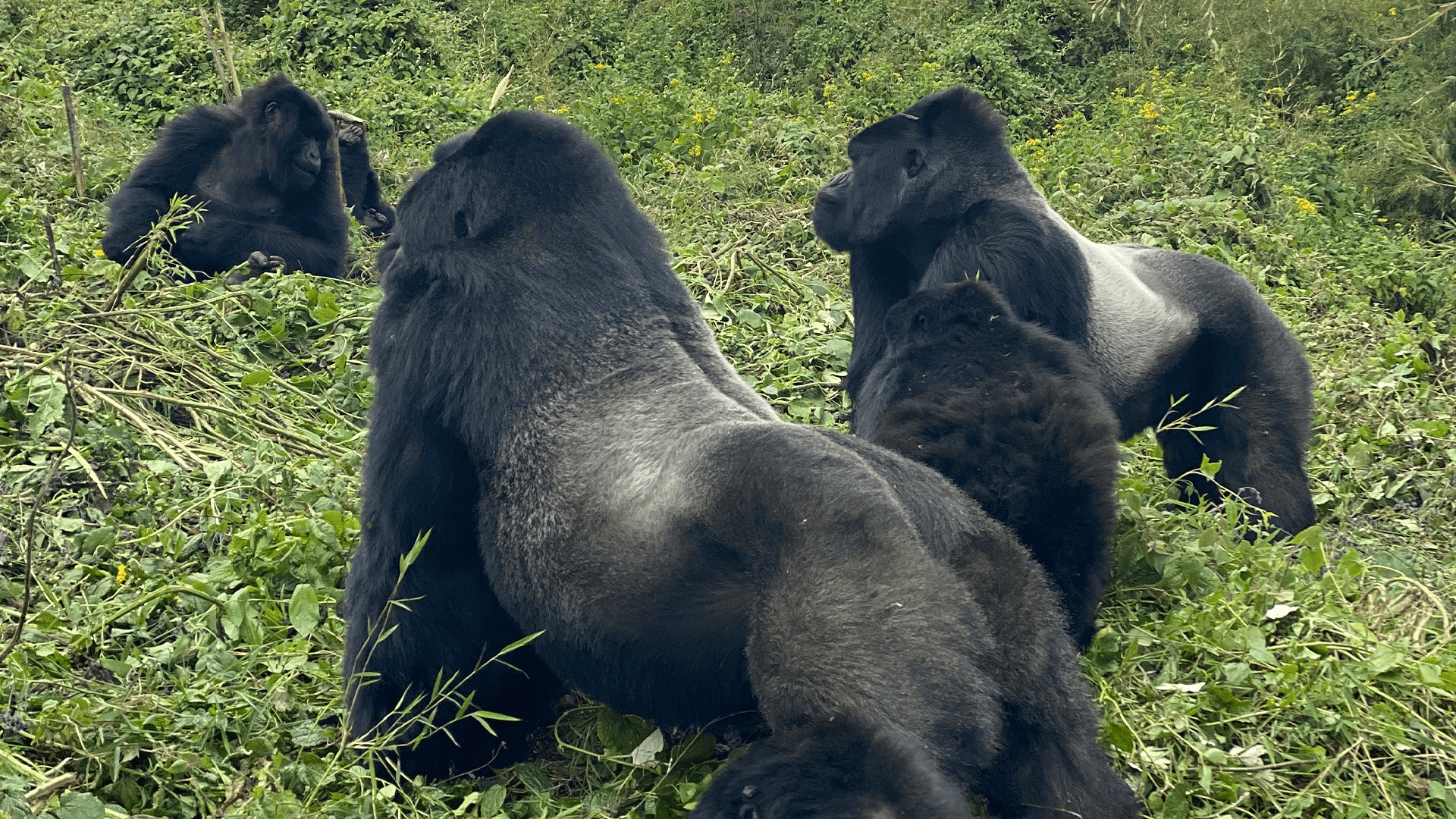
Bwindi is Uganda’s flagship gorilla trekking destination and one of the most important conservation areas in Africa. Its dense montane forest shelters multiple habituated gorilla families across different trekking sectors, including Buhoma, Ruhija, Rushaga, and Nkuringo.
The sector you choose matters. Buhoma is well established and often works smoothly with itineraries coming from Queen Elizabeth. Ruhija can be useful for travelers combining birding and scenic highland drives. Rushaga and Nkuringo are in the south and can pair well with Mgahinga, Lake Bunyonyi, or flights through Kisoro.
A gorilla trek can last anywhere from a few hours to most of the day depending on where the gorilla family is located. The actual time with the gorillas is usually limited to one hour for standard trekking, which is why good preparation, a comfortable pace, and an experienced guide are so valuable. Porters are highly recommended, not only for assistance on steep or muddy trails but also because hiring them supports local livelihoods around the park.
For 2026 planning, gorilla trekking permits for foreign non-residents are commonly budgeted at about USD 800 per person, while gorilla habituation experiences, where available, are significantly higher, often around USD 1,500 per person. Permit tariffs can change, so they should always be confirmed at booking. Accommodation near Bwindi ranges widely, from simple lodges to premium forest retreats where nightly rates can climb above USD 800 to USD 1,500 per person in peak periods.
If gorilla trekking is the center of your safari, this detailed guide on where to see gorillas in Uganda will help you compare Bwindi with Mgahinga before you finalize your route.
Mgahinga Gorilla National Park
Mgahinga is Uganda’s smallest national park, but it delivers a powerful sense of place. It sits in the Virunga volcanic landscape and offers gorilla trekking, golden monkey tracking, and challenging volcano hikes. The scenery is open, dramatic, and different from Bwindi’s thick forest atmosphere.
Mgahinga is ideal for travelers who want a quieter primate experience or who are drawn to mountain landscapes. It is also a strong choice if you want to add golden monkey tracking, usually budgeted around USD 100 per foreign non-resident adult for the permit, subject to current tariffs.
Because Mgahinga has fewer gorilla trekking permits than Bwindi, availability can be tighter. That can be a benefit for travelers seeking intimacy, but it also means you should plan early. It pairs naturally with southern Bwindi sectors, Lake Bunyonyi, and Kisoro airstrip.
Lake Mburo National Park
Lake Mburo is often underestimated because it lacks the scale and predator density of Uganda’s larger savannah parks. Its strength is accessibility and atmosphere. Located between Kampala or Entebbe and the southwestern highlands, it is one of the best places to break up the long journey to or from Bwindi.
The park is known for zebras, impalas, elands, buffalo, warthogs, hippos, and excellent birdlife. Because it has a different wildlife profile from Queen Elizabeth or Murchison Falls, it adds variety rather than repetition. It is also one of Uganda’s best parks for guided walking safaris, making it appealing to active travelers who want to experience the bush beyond the vehicle.
Lake Mburo is especially useful for first or last safari nights. After an international flight, it can provide a gentle introduction to Uganda’s wildlife. At the end of a gorilla safari, it offers a relaxed final stop before returning to Entebbe.

Western Uganda Albertine Rift primates big cats and mountains
Western Uganda is the region for travelers who want the richest mix of safari experiences in one corridor. Here, the Albertine Rift creates crater lakes, escarpments, forests, savannah plains, wetlands, and snow-touched mountains. This is where you can track chimpanzees in the morning, watch elephants along a channel in the afternoon, and look toward the Rwenzori Mountains as the light changes.
For many travelers, the classic western circuit is the backbone of a Uganda safari: Kibale for chimpanzees, Queen Elizabeth for savannah and boat safari, then Bwindi or Mgahinga for gorillas.
Queen Elizabeth National Park
Queen Elizabeth National Park is one of Uganda’s most versatile safari parks. It offers open plains, crater lakes, wetlands, woodland, and the Kazinga Channel, a waterway famous for dense concentrations of hippos, buffalo, elephants, crocodiles, and waterbirds.
The park has several distinct areas. Kasenyi is a key game drive area for lions and Uganda kob. Mweya is convenient for the Kazinga Channel boat safari. Ishasha, in the southern sector, is known for tree-climbing lions, although sightings are never guaranteed. The crater areas offer some of the most beautiful landscape photography in Uganda.
Queen Elizabeth is not only about ticking off species. It is about variety and pacing. A strong two-night visit usually includes game drives and a boat safari. With three nights, you can add Ishasha or explore the crater landscape more comfortably. Boat safari costs vary by operator and vessel type, but travelers should commonly budget extra activity costs in addition to park entry fees.
The park works exceptionally well between Kibale and Bwindi. This makes it one of the most logical choices for travelers who want both primates and classic savannah without losing too many days to backtracking.
Kibale National Park
Kibale is Uganda’s premier chimpanzee tracking destination. The forest is famous for its primate diversity, with chimpanzees as the headline experience. Standard chimpanzee tracking permits for foreign non-residents are commonly budgeted around USD 250 per person, subject to the latest tariff.
The experience differs from gorilla trekking. Chimpanzees are more vocal, mobile, and socially dynamic. You may hear them before you see them, with calls echoing through the forest canopy. The pace can be brisk if the chimpanzees are moving, so comfortable walking shoes, light rain protection, and a readiness for humid forest conditions are important.
Kibale also pairs well with Bigodi Wetland Sanctuary, crater lake drives, and community experiences around Fort Portal. For serious photographers or travelers creating a personal safari film, forest light can be challenging, so it is worth thinking about storytelling and shot planning in advance. Reviewing the work of a professional filmmaker can be useful if you want to understand how mood, movement, and natural light shape a travel story.
Rwenzori Mountains National Park
Rwenzori Mountains National Park is not a casual add-on for most safari travelers. It is a destination for hikers, climbers, photographers, and travelers who want Uganda’s most dramatic mountain environment. The Rwenzori range is known for giant heathers, mossy forests, bogs, alpine vegetation, and high peaks that feel entirely different from the savannah parks below.
Shorter hikes can introduce you to the lower slopes, while multi-day treks reach deeper into the mountains. Summit-focused itineraries require more time, strong fitness, specialized support, and appropriate gear. If your goal is Margherita Peak or a high-altitude route, plan carefully and do not underestimate the physical demands.
The Rwenzori region combines well with Queen Elizabeth, especially for travelers who want a safari that includes both wildlife and serious trekking. However, it is not ideal to squeeze into a rushed itinerary. The mountains deserve time, and weather can affect trail conditions.
Semuliki National Park
Semuliki is one of Uganda’s most distinctive and least conventional parks. It protects lowland forest near the Semliki Valley and has a different ecological feel from Kibale or Bwindi. The park is especially attractive to birders and repeat visitors who want to go beyond the best-known safari circuit.
The Sempaya hot springs are a major feature, and the birdlife can be excellent, including species associated with Central African forest habitats. Wildlife viewing here is more subtle than in the savannah parks. You come for forest atmosphere, specialist species, and a sense of discovery, not for high-volume big game sightings.
Semuliki can be added from Fort Portal or combined with Kibale for travelers who have extra time and a strong interest in birding, forests, and unusual ecosystems.
Northern Uganda grand wilderness and powerful landscapes
Northern Uganda offers some of the country’s most impressive safari drama. The landscapes open up, distances become larger, and the sense of wilderness intensifies. This region is particularly strong for travelers who want big game, sweeping scenery, and parks that feel less compressed than the popular southwestern circuit.
Murchison Falls National Park
Murchison Falls National Park is Uganda’s largest national park and one of its strongest all-round safari destinations. The Nile River is the central force here, squeezing through a narrow rock gap at Murchison Falls before spreading into wildlife-rich waterways.
A well-planned visit usually includes game drives on the northern bank, a boat safari toward the base of the falls, and a visit to the top of the falls if routing allows. Wildlife can include elephants, giraffes, buffalo, lions, hippos, crocodiles, antelopes, and many bird species. The Nile delta area is also important for birding, including the possibility of shoebill sightings, depending on conditions and luck.
Murchison works well for travelers who want a classic savannah safari without immediately traveling to the far southwest. It can be included in a 5 to 7 day Uganda itinerary or used as the opening stage of a longer route toward Kibale, Queen Elizabeth, and Bwindi.
Many itineraries include rhino tracking at Ziwa Rhino Sanctuary en route to or from Murchison. Ziwa is not a national park, but it is important for travelers hoping to complete a Big Five themed Uganda safari, since rhinos are not free-ranging inside Uganda’s national parks in the same way as elephants, lions, leopards, and buffalo.
Kidepo Valley National Park
Kidepo Valley National Park is one of Uganda’s most spectacular wilderness areas. It sits in the far northeast, near the borders with South Sudan and Kenya, and feels remote in the best possible way. The Narus Valley is the core wildlife viewing area, while the broader landscape offers rugged hills, open plains, and a powerful sense of space.
Kidepo is excellent for travelers who value exclusivity, scenery, and a slower, more immersive safari style. Wildlife may include large buffalo herds, elephants, lions, giraffes, zebras, hartebeest, and other dry-country species. The park is also known for its dramatic light and wide horizons, making it especially rewarding for photography.
The key planning issue is access. Overland drives from Kampala or Entebbe are long and usually require careful overnight stops. Fly-in options reduce travel time and are often the best choice for premium travelers, although they increase the budget. Because of the distance, Kidepo deserves at least three nights if possible.

Eastern Uganda highland hiking and quieter nature
Eastern Uganda is not usually the first region chosen by first-time gorilla safari travelers, but it is highly rewarding for hikers, birders, and visitors who want a quieter side of the country. The landscapes around Mount Elgon and nearby Sipi are green, elevated, and culturally rich.
Mount Elgon National Park
Mount Elgon National Park protects an ancient volcanic massif on Uganda’s eastern border. It is a strong alternative to the more demanding Rwenzori Mountains for travelers who want multi-day hiking without the same level of technical intensity or altitude extremes.
The park offers forest trails, caves, waterfalls, caldera routes, and rich birdlife. Treks to Wagagai Peak, the highest point of Mount Elgon, usually require several days. Shorter hikes can be arranged for travelers who simply want a scenic active extension.
Mount Elgon combines well with Sipi Falls, coffee experiences, and cultural visits in the surrounding highlands. It is best suited to travelers with a specific interest in hiking, landscapes, or a less crowded Uganda itinerary. If your first priority is gorillas or big cats, the southwest and western regions should usually come first, but Mount Elgon can be a superb second or third journey into Uganda.
Central Uganda safari gateways and route planning
Central Uganda does not contain one of the country’s major classic national parks in the same way as the southwest, west, north, or east. Its importance is logistical. Entebbe is the main international arrival point, Kampala is the commercial hub, and the roads radiating from this region shape almost every safari route.
For many travelers, the central region is where the safari begins and ends. Entebbe can be useful for a relaxed arrival night, especially after a long international flight. Depending on your interests, nearby experiences such as botanical gardens, Lake Victoria excursions, or shoebill-focused wetland trips can add value before you head toward the national parks.
Central routing also influences whether you drive or fly. A road safari to Bwindi can be scenic but long. A fly-in gorilla itinerary saves time and can make sense for travelers with limited vacation days or a higher comfort expectation. A road journey to Murchison is more manageable and can include rhino tracking on the way. For the far northeast and Kidepo, domestic flights are often the most comfortable premium option.
How to choose Uganda national parks by travel style
The best region depends on the experience you want most. Rather than trying to visit every park, choose a route that gives enough time in each place for the experience to feel unhurried.
| Travel goal | Best parks or region | Why it works | Planning note |
|---|---|---|---|
| First Uganda safari with gorillas | Bwindi, Queen Elizabeth, Kibale | Combines gorillas, chimpanzees, savannah, and boat safari | Ideal for 8 to 10 days |
| Premium primate safari | Bwindi or Mgahinga plus Kibale | Best combination of gorilla and chimpanzee experiences | Book permits early |
| Big game and dramatic scenery | Murchison Falls, Queen Elizabeth, Kidepo | Strong wildlife viewing with varied landscapes | Kidepo needs more time or flights |
| Short safari extension | Lake Mburo or Murchison Falls | Easier access from Entebbe or Kampala | Good for 2 to 4 nights |
| Hiking and mountain landscapes | Rwenzori, Mount Elgon, Mgahinga | Best for active travelers and scenic trekking | Fitness and gear matter |
| Birding and specialist nature | Semuliki, Kibale, Queen Elizabeth, Mabamba area | Excellent variety of forest, wetland, and savannah species | Specialist guiding improves results |
| Luxury wilderness | Kidepo, Bwindi, Murchison Falls | Remote lodges, exceptional landscapes, strong guiding potential | Budget for flights and premium lodges |
If you are still deciding how Uganda compares for broader safari goals, this article on why Uganda makes a strong case among the best safari locations gives helpful context while keeping the focus on Uganda’s strengths.
Sample regional itinerary ideas
A good Uganda itinerary should balance ambition with comfort. Trying to do too many parks in too few days can turn a safari into a transfer schedule. The following route ideas show how the regions can fit together.
6 to 7 days, gorilla and savannah highlights: Start in Entebbe, travel to Lake Mburo for a gentle wildlife introduction, continue to Bwindi for gorilla trekking, then add Queen Elizabeth before returning to Entebbe. This is a strong choice for travelers who want gorillas plus classic wildlife but have limited time.
8 to 10 days, primates and western safari circuit: Begin with Kibale for chimpanzee tracking, continue to Queen Elizabeth for game drives and the Kazinga Channel, then finish with Bwindi or Mgahinga for gorillas. Add Lake Mburo if you want to break the return journey. This is one of the most balanced Uganda safari routes.
10 to 12 days, northern wilderness focus: Visit Murchison Falls first, include rhino tracking en route, then continue toward Kidepo if time and budget allow. This itinerary suits travelers who prioritize dramatic landscapes, big game, and fewer crowds over gorilla trekking.
12 to 14 days, comprehensive Uganda circuit: Combine Murchison Falls, Kibale, Queen Elizabeth, Bwindi, and Lake Mburo. This gives a full mix of waterfalls, chimpanzees, savannah, boat safari, gorillas, and relaxed wildlife viewing. It is one of the best options for travelers who want a deep first visit to Uganda without rushing into every remote corner.
14 days or more, specialist nature and trekking: Add Rwenzori Mountains, Semuliki, Mount Elgon, or Kidepo depending on your interests. This style of itinerary is best for repeat safari travelers, hikers, birders, photographers, or guests who want Uganda beyond the classic route.
Budget permit and timing considerations
Uganda can work for a range of budgets, but national park safaris involve unavoidable costs: permits, park entry, vehicle expenses, fuel, professional guiding, accommodation, meals, and activity fees. The biggest price jumps usually come from gorilla permits, chimpanzee permits, premium lodges, domestic flights, and private or highly customized routing.
As a broad 2026 planning guide, a private Uganda safari can often range from USD 250 to USD 450 per person per day for more budget-conscious arrangements, USD 450 to USD 750 per person per day for comfortable mid-range travel, and USD 800 to USD 1,500 or more per person per day for luxury safaris. Ultra-premium lodges, fly-in routing, and exclusive experiences can exceed those ranges.
These estimates may or may not include gorilla and chimpanzee permits depending on how a package is quoted. Always ask whether permits, park fees, domestic flights, drinks, tips, laundry, and optional activities are included.
Permit and park fee planning
Permit and activity costs are a major part of safari budgeting. The figures below are practical planning estimates for foreign non-resident adults and should be confirmed at the time of booking because official tariffs can change.
| Experience or cost item | Common planning estimate | Where it applies | Notes |
|---|---|---|---|
| Gorilla trekking permit | USD 800 per person | Bwindi, Mgahinga | Book early, especially for peak season |
| Gorilla habituation experience | USD 1,500 per person | Selected Bwindi areas | Longer and more expensive than standard trekking |
| Chimpanzee tracking permit | USD 250 per person | Kibale | Uganda’s most popular chimpanzee tracking site |
| Kyambura chimpanzee tracking | Around USD 100 per person | Queen Elizabeth area | Availability and sightings vary |
| Golden monkey tracking | Around USD 100 per person | Mgahinga | Excellent add-on to gorilla or volcano itineraries |
| National park entry | Often around USD 40 to USD 45 per person per day | Many Uganda national parks | Varies by park, residency, and tariff period |
| Porter for gorilla trekking | Often around USD 20 or more plus tip | Bwindi, Mgahinga | Highly recommended for comfort and community benefit |
Tipping is also part of the real safari budget. While not mandatory, it is customary to tip guides, lodge staff, rangers, and porters when service is good. For premium travelers, building a tipping allowance into the trip budget avoids last-minute uncertainty.
Seasonal planning by region
Uganda is a year-round destination, but seasonality affects road conditions, trekking comfort, photography, and lodge demand. The drier months, generally December to February and June to September, are popular for gorilla trekking and wildlife safaris because trails can be more manageable and animals may gather more predictably around water sources in some areas.
The wetter months, often March to May and October to November, can bring lush scenery, fewer visitors, and occasional lodge value, but forest trekking can be muddier and some roads may be slower. Birding can be excellent in green seasons, and photographers often appreciate the dramatic skies and richer colors.
For a deeper month-by-month planning perspective, PawMac Safaris has a dedicated guide to the best time to visit Uganda for wildlife safaris.
Frequently Asked Questions
How many national parks are there in Uganda? Uganda has 10 national parks: Bwindi Impenetrable, Mgahinga Gorilla, Queen Elizabeth, Kibale, Rwenzori Mountains, Semuliki, Murchison Falls, Kidepo Valley, Mount Elgon, and Lake Mburo.
Which region of Uganda is best for gorilla trekking? Southwestern Uganda is best for gorilla trekking because it contains Bwindi Impenetrable National Park and Mgahinga Gorilla National Park, the two places where travelers can trek mountain gorillas in Uganda.
Which Uganda national parks are best for a first safari? For most first-time visitors, Bwindi, Kibale, Queen Elizabeth, Murchison Falls, and Lake Mburo create the strongest mix of gorillas, chimpanzees, savannah wildlife, boat safaris, and manageable routing.
Where can I see the Big Five in Uganda? Uganda offers excellent chances for lions, leopards, elephants, buffalo, and rhinos, but rhinos are usually tracked at Ziwa Rhino Sanctuary rather than inside a national park. Murchison Falls, Queen Elizabeth, and Kidepo are strong parks for big game.
Is Kidepo Valley National Park worth the distance? Yes, Kidepo is worth it for travelers who want remote wilderness, dramatic scenery, fewer crowds, and a strong sense of exclusivity. Because it is far from the main tourist circuit, it is best with at least three nights or a fly-in budget.
Can I visit all Uganda national parks in one trip? Yes, but it requires time. A realistic all-parks itinerary usually needs three weeks or more. Most travelers get a better experience by choosing a focused 8 to 14 day route built around their top priorities.
How much should I budget for gorilla trekking in Uganda? Start with the gorilla permit, commonly budgeted at USD 800 per foreign non-resident adult, then add accommodation, transport, guide services, meals, park fees, porter costs, and tips. A comfortable gorilla safari usually costs significantly more than the permit alone.
Plan your Uganda national parks safari with PawMac Safaris
Choosing the right Uganda national parks is not about visiting the longest list of places. It is about building a route that fits your pace, budget, comfort expectations, and wildlife priorities.
PawMac Safaris designs personalized Uganda safari itineraries with expert local guides, comfortable 4×4 vehicles, gorilla trekking tours, chimpanzee tracking, Big Five focused routes, cultural experiences, and flexible planning options for different travel styles. Whether you want a premium gorilla and wildlife safari, a family-friendly route, a photography-focused journey, or a more adventurous national parks circuit, the right regional plan will make every day count.
If you are ready to turn Uganda’s national parks into a well-paced, expertly guided safari, start with PawMac Safaris and plan your journey through the Pearl of Africa with local knowledge from the first conversation.


