


- 81 Views
- 13 Min Read
- (0) Comment
TL;DR:
- Uganda offers a rich diversity of over 350 mammal species and 1,060 bird species across various ecosystems. Visitors can experience world-renowned gorilla and chimpanzee encounters, along with Big Five safaris and remarkable birdwatching opportunities. Precise planning, including permit acquisition and sustainable tourism practices, ensures memorable, impactful wildlife adventures in this extraordinary destination.
Uganda is one of those rare destinations where every turn of the trail reveals something extraordinary. Over 350 mammal species roam its forests, grasslands, and wetlands, including the greatest concentration of mountain gorillas on Earth. For wildlife enthusiasts weighing their safari options, Uganda presents a genuinely difficult choice, not because options are limited, but because they are so richly varied. This guide breaks down Uganda’s most iconic animals, practical trekking logistics, permit costs for 2026, and the national parks that deliver unforgettable encounters.
Table of Contents
- Uganda’s animal kingdom: An overview
- Top animals to see: Gorillas, chimps, lions & beyond
- Gorilla trekking in Uganda: Permits, costs & booking tips
- Comparing safari experiences: National parks & wildlife viewing
- Our take: Why Uganda’s wildlife is worth the journey
- Embark on your Ugandan wildlife adventure
- Frequently asked questions
Key Takeaways
| Point | Details |
|---|---|
| Exceptional wildlife diversity | Uganda is home to over 350 mammal species and more than 1,060 bird species. |
| Gorilla trekking logistics | Permits cost $800 USD for 2026, with booking best done 6–12 months ahead. |
| Mixed conservation trends | Some populations are rising, but icons like lions and elephants face declines. |
| Comparative safari choices | National parks differ in animal highlights, giving travelers plenty of options. |
| Tourism supports conservation | Visiting Uganda aids protection efforts, though traveler impact must be managed. |
Uganda’s animal kingdom: An overview
Uganda’s biodiversity places it among Africa’s most impressive wildlife destinations. The country packs an astonishing variety of ecosystems into a relatively compact area, from the mist-shrouded Bwindi Impenetrable Forest to the sprawling savanna of Murchison Falls and the crater lakes of Queen Elizabeth National Park. Each habitat supports a distinct community of animals, which is why a single Uganda itinerary can include both gorilla trekking and classic big game viewing.
Uganda’s mammal diversity spans over 350 species, a figure that rivals countries many times its size. Alongside that, Uganda records more than 1,060 bird species, making it one of Africa’s top birding destinations. That combination of primates, megafauna, and avian richness is genuinely rare.
Key animal groups found in Uganda:
- Primates: Mountain gorillas, chimpanzees, golden monkeys, olive baboons, red-tailed monkeys, black-and-white colobus, and more than a dozen other species
- Big game: African elephants, Cape buffaloes, hippopotamuses, Nile crocodiles, and Uganda kob
- Big cats: Lions and leopards, primarily in the savanna parks
- Ungulates: Topi, bushbuck, waterbuck, impala, oribi, and Rothschild’s giraffes
- Birds: Shoebill stork, African fish eagle, grey crowned crane (the national bird), and hundreds of migratory and endemic species
| Animal group | Approx. species count | Primary habitat |
|---|---|---|
| Mammals | 350+ | Forest, savanna, wetlands |
| Birds | 1,060+ | All ecosystems |
| Reptiles | 142+ | Rivers, forests, savanna |
| Primates | 20+ | Tropical forests |
| Amphibians | 86+ | Montane and tropical forests |
For travelers planning their first visit, consulting a Uganda wildlife safari guide is a strong starting point. Those ready to explore specific wildlife tours in Uganda will find options ranging from budget-friendly group tours to fully customized private safaris.
The habitats underpinning this diversity are worth understanding. Uganda’s Albertine Rift, shared with the Democratic Republic of Congo and Rwanda, is one of Africa’s most biodiverse regions. Bwindi alone shelters hundreds of plant species, dozens of mammals, and over 350 bird species within a single park boundary.
Top animals to see: Gorillas, chimps, lions & beyond
Uganda’s wildlife lineup is anchored by three globally significant species: mountain gorillas, chimpanzees, and lions. Each offers a completely different type of encounter, and each comes with its own conservation story.
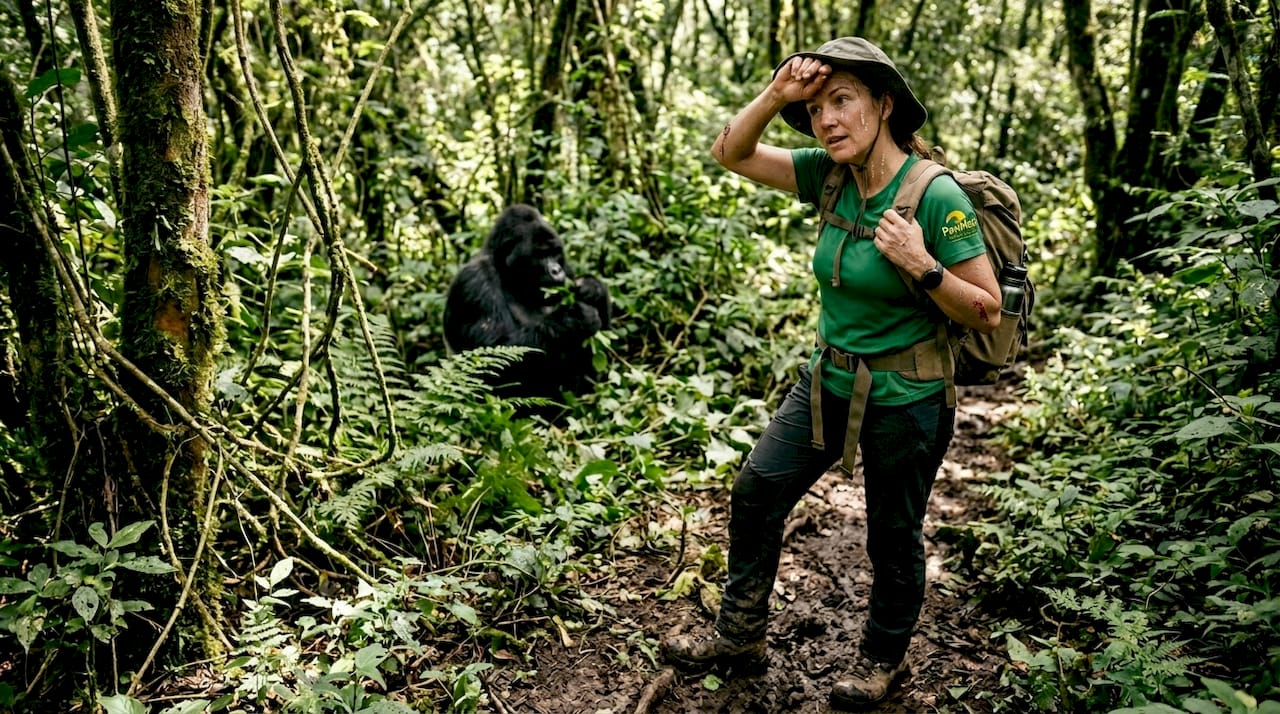
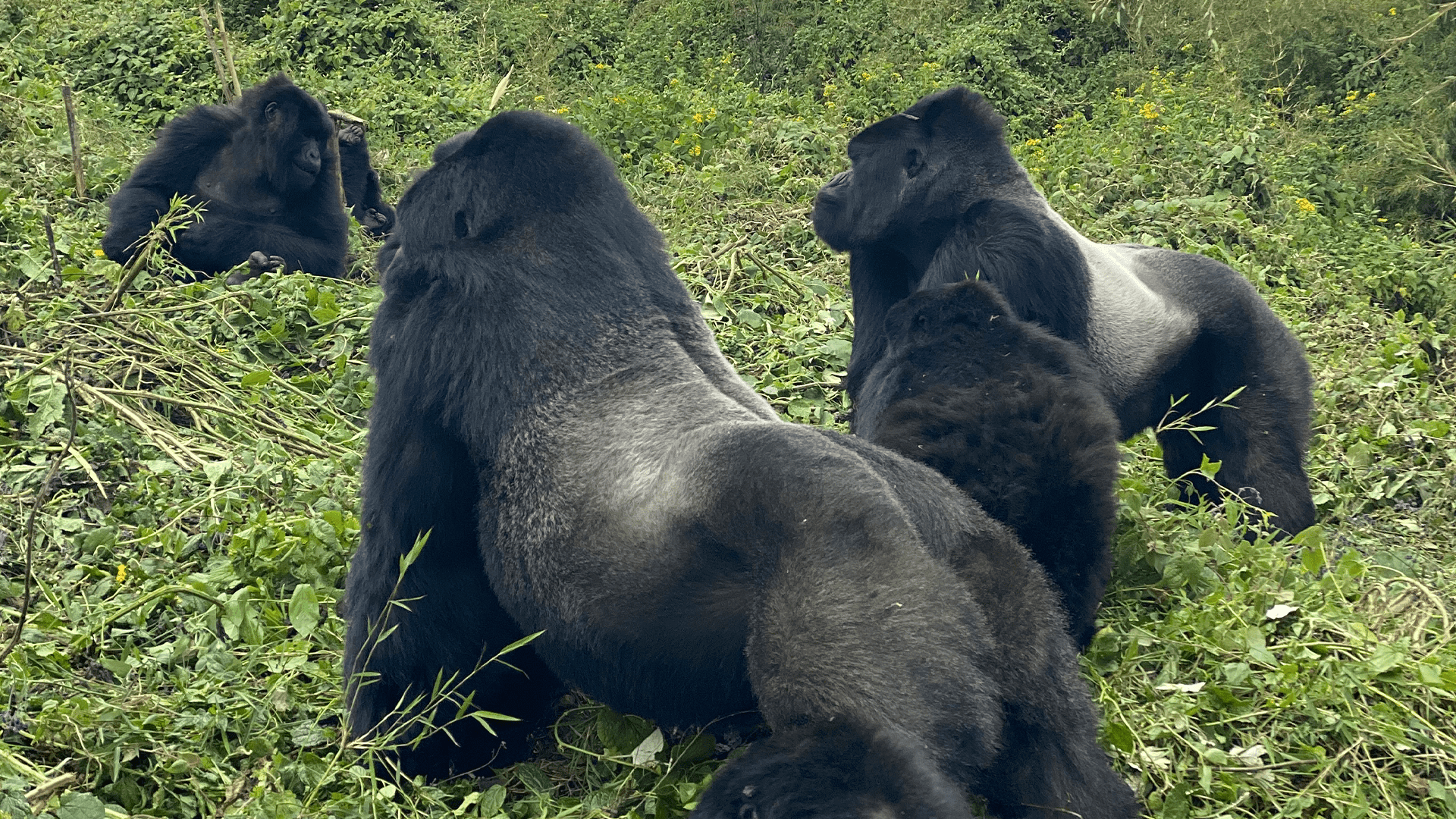
Mountain gorillas are the headline act. Uganda hosts more than 50% of the world’s approximately 1,000 remaining mountain gorillas. They live in two parks, Bwindi Impenetrable National Park and Mgahinga Gorilla National Park, across dense montane forest that can feel almost prehistoric in its quiet intensity. Habituated gorilla families are those that have been gradually accustomed to human presence over years of careful fieldwork, and it is only these groups that trekkers are allowed to visit.
Chimpanzees are found primarily in Kibale National Park, where around 500 chimpanzees live alongside 12 other primate species. Kibale offers the highest density of primates anywhere in Africa, and a chimp tracking session here is a wildly different experience from gorilla trekking. Chimps move fast, vocalize loudly, and travel through the mid-canopy, making for exciting, dynamic encounters.
Plan Your Uganda Safari with Local Experts
 WhatsApp Us
Lions and big cats call Queen Elizabeth and Murchison Falls home. Uganda’s lions are notable for the tree-climbing behavior documented in the Ishasha sector of Queen Elizabeth National Park. It is unusual for lions to rest in fig trees, and spotting one draped across a branch against an open sky is genuinely surprising.
“Recent population data reveals mixed trends across Uganda’s wildlife. Species like buffalo, hippos, Uganda kob, impala, and zebra have shown gains, while lion populations dropped from 373 in 2020 to just 291 in 2022/23, and elephant numbers are also declining due to climate pressure, invasive species, poaching, and habitat loss.”
These trends matter for travelers. Understanding which species are thriving and which are under pressure helps you appreciate the conservation context of your visit. It also shapes which parks and experiences deserve priority on a finite itinerary.
Additional wildlife worth noting:
- Hippos are abundant along the Kazinga Channel in Queen Elizabeth and in the Nile at Murchison Falls
- Rothschild’s giraffes, one of the world’s most endangered giraffe subspecies, roam Murchison Falls in healthy numbers
- Elephants, despite declining overall, are still regularly seen in both Murchison Falls and Queen Elizabeth
- Shoebill storks, prehistoric-looking birds with massive bills, inhabit the Mabamba Swamp near Lake Victoria
Pro Tip: For the fullest primate experience, combine gorilla trekking in Bwindi with chimp tracking in Kibale. These two parks together give you encounters with the two closest living relatives to humans. Read more about planning both in this primate tracking in Uganda guide, or explore the different primate tracking experiences available across the country.
Gorilla trekking in Uganda: Permits, costs & booking tips
Gorilla trekking is the cornerstone of most Uganda safari itineraries, and for good reason. Standing within meters of a silverback gorilla in his natural forest habitat is an experience that stays with you permanently. But accessing that experience requires careful advance planning.
Understanding the permit system:
Uganda Wildlife Authority (UWA) manages gorilla trekking permits strictly. Each permit costs $800 USD for foreign non-residents and is valid through June 2026. During the low season months of April, May, and November, the price drops to $600 USD, offering meaningful savings without sacrificing the experience. Only 8 visitors are allowed per habituated gorilla group per day, and you spend exactly one hour with the gorillas once you locate them.
Booking lead time is critical. UWA recommends booking 6 to 12 months ahead for peak season treks. Permits sell out. This is not a casual day-trip decision. If your dates fall during school holiday periods or around major international events, book at the longer end of that window.
Steps to secure your permit:
- Decide your preferred sector and dates before contacting UWA or a licensed operator
- Contact UWA directly or book through a registered tour operator like PawMac Safaris
- Pay the permit fee in full to confirm your booking
- Receive written confirmation and permit documentation
- Arrange transport, accommodation, and guiding logistics around your confirmed permit date
- Arrive at the park trailhead briefed, properly equipped, and physically prepared for the trek
Comparing Bwindi’s four trekking sectors:
| Sector | Location in Bwindi | Habituated groups | Best for |
|---|---|---|---|
| Buhoma | Northern Bwindi | 4 groups | First-time trekkers, accessibility |
| Ruhija | Eastern Bwindi | 4 groups | Serious hikers, mountain views |
| Rushaga | Southern Bwindi | 6 groups | Most permit availability |
| Nkuringo | Southern Bwindi | 2 groups | Remote, adventurous terrain |
Rushaga offers the widest selection of habituated groups and tends to have better permit availability closer to travel dates. Buhoma is the most developed sector and suits travelers who prefer easier access and established lodge infrastructure. Nkuringo is genuinely wild and physically demanding, but the sense of remoteness is unmatched.
Pro Tip: Book your trek for an early morning start and allow a full day. Treks can take anywhere from 2 to 8 hours depending on where the gorilla family has moved overnight. Fitness preparation in the weeks before your trip makes a real difference. Detailed gorilla trekking permit costs and logistics are covered in depth for 2026, along with guidance on photography permits and gear for trekkers who want to capture the experience.
Comparing safari experiences: National parks & wildlife viewing
Uganda has 10 national parks, but four stand out as the pillars of any serious safari itinerary. Each delivers something distinct, and understanding their differences helps you prioritize smartly.
Murchison Falls National Park is Uganda’s largest protected area and home to the Nile’s most dramatic point, where the river forces through a 7-meter-wide gorge to create one of Africa’s most powerful waterfalls. Wildlife here includes lions, Rothschild’s giraffes, elephants, hippos, Nile crocodiles, and large herds of Uganda kob. A boat safari to the base of the falls is one of Uganda’s great wildlife experiences, placing you within meters of hippos and crocodiles on the Nile’s banks.
Queen Elizabeth National Park stretches across the western Rift Valley and offers the famous Kazinga Channel boat safaris, the tree-climbing lions of Ishasha, and extraordinary bird diversity. It also connects to Kibale via a short drive, making it a natural pairing for combined chimp and big game itineraries.
Bwindi Impenetrable National Park is gorilla country. This UNESCO World Heritage Site covers 331 square kilometers of dense montane forest and is primarily accessed for gorilla and chimpanzee trekking. Non-primate wildlife is present but harder to spot in the thick forest. Accommodation ranges from luxury lodges perched on ridge lines to community-run guesthouses.
Kibale National Park specializes in primates. Beyond chimpanzees, you will encounter red colobus, L’Hoest’s monkeys, grey-cheeked mangabeys, and more. The Bigodi Wetland Sanctuary, just outside the park, is excellent for birding and smaller mammals.
| Park | Top animals | Boat safari available | Best season |
|---|---|---|---|
| Murchison Falls | Lion, giraffe, hippo, crocodile | Yes, Nile river | Dec to Feb, Jun to Aug |
| Queen Elizabeth | Tree-climbing lion, elephant, hippo | Yes, Kazinga Channel | Jun to Sep |
| Bwindi | Mountain gorilla, chimpanzee | No | Year-round |
| Kibale | Chimpanzee, red colobus | No | Jun to Aug, Dec to Jan |
Conservation trends from the UWA 2026 report show that while savanna species like buffalo, kob, and hippos are thriving, pressure on lions and elephants is a real concern. Choosing parks that support ranger operations and community conservation programs actively benefits these declining species.
Pro Tip: Pair Murchison Falls with Kidepo Valley National Park in the remote northeast for an off-the-beaten-path experience. Kidepo hosts cheetahs, ostriches, and large lion prides in landscapes that look nothing like the rest of Uganda. Read through safari lodge recommendations and family safari planning tips to refine your itinerary.
Our take: Why Uganda’s wildlife is worth the journey
There is a tempting tendency to compare Uganda to Kenya or Tanzania when justifying a safari choice. That comparison misses the point entirely. Uganda does not compete on open savanna spectacle or sheer volume of grazing herds. What it offers is fundamentally different: intimate, forested encounters with species found nowhere else in such numbers.
The gorilla experience in particular defies easy description. You are not watching animals from a vehicle. You are moving through their environment on foot, often in light rain, breathing the same damp air, watching a silverback assess your group with calm, intelligent eyes. That proximity is governed by strict rules for a reason, and those rules work. Mountain gorilla populations have grown because the conservation model here functions.
Tourism income plays a direct role in that success. Bwindi’s park tourism generated $1.18 million in 2018/19 alone, funding ranger patrols, community programs, and anti-poaching operations. When you pay for a gorilla permit, that money moves directly into the ecosystem protecting the animals you came to see.
The harder question is balance. Over-visitation is a genuine risk in popular sectors, and the concern is not hypothetical. At PawMac Safaris, we consistently advocate for distributing visitors across sectors and seasons, partly to spread economic benefit into less-visited communities, and partly because a quieter trail through Ruhija or Nkuringo often delivers a richer, more personal experience than a crowded Buhoma morning.
The decline in lion and elephant numbers should also inform your choices. Supporting parks like safari tourism and conservation initiatives that actively address habitat pressures is not just ethical. It is practical, because the animals you want to see in 2030 depend on decisions made during your 2026 visit.
Embark on your Ugandan wildlife adventure
Reading about Uganda’s wildlife and actually standing in it are two very different things. The gorillas, the chimps swinging through Kibale’s canopy, the hippos breaching the Kazinga Channel at sunset, these are experiences that reward careful planning and genuine commitment.

PawMac Safaris specializes in crafting itineraries that connect you to Uganda’s wildlife in ways that are ethical, efficient, and genuinely memorable. Browse our full range of Uganda wildlife tours to find an itinerary that fits your travel style and budget. If gorillas are your priority, our dedicated gorilla trekking experiences page walks you through everything from permit logistics to sector selection. For travelers who know exactly what they want, we offer a fully customized Uganda safari design service. Tell us your dates, your priorities, and your comfort level, and we will build something remarkable around them.
Frequently asked questions
How many animal species can I expect to see in Uganda?
Uganda hosts over 350 mammal species and more than 1,060 bird species, giving wildlife enthusiasts an exceptional range across a single destination. In practice, a well-planned 10-day itinerary can yield encounters with gorillas, chimpanzees, elephants, lions, hippos, and hundreds of bird species.
What is the cost and process for gorilla trekking permits in 2026?
A gorilla permit costs $800 USD for foreign non-residents, dropping to $600 during the low season months of April, May, and November. Booking 6 to 12 months in advance through UWA or a licensed operator is strongly recommended, as permits are limited to 8 visitors per group per day.
Which national parks are best for spotting lions and elephants?
Queen Elizabeth and Murchison Falls National Parks offer the strongest lion and elephant viewing opportunities, though population declines in both species have been recorded in recent years due to habitat pressure and other threats. Game drives in the early morning and late afternoon maximize sighting chances.
Are there conservation concerns I should know about when visiting Uganda?
Yes. Lions dropped from 373 to 291 between 2020 and 2022/23, and elephant numbers are also falling. Yet tourism revenue funds conservation directly, meaning responsible visitors actively contribute to the protection of the species they travel to see.
What is the best time of year to visit for animal viewing?
Uganda’s dry seasons, June through September and December through February, generally offer the best game viewing conditions with clearer trails and animals concentrated near water sources. However, low season permits cost $600 for gorilla trekking, making April, May, and November an excellent choice for budget-conscious travelers willing to trek in wetter conditions.
Recommended
- Uganda Safari Guide: Gorilla Trekking, Wildlife & Planning
- How to Book Gorilla Trekking in Uganda: Step-by-Step Guide
- Gorilla & Wildlife Safari Uganda | PawMac Safaris
- Uganda Safari Packing Guide for Gorilla Treks and Big Five


