


- 81 Views
- 13 Min Read
- (0) Comment
Planning a safari trip in Uganda should feel exciting, not like a second job. The challenge is not a lack of options. Uganda has gorilla trekking in Bwindi Impenetrable National Park and Mgahinga Gorilla National Park, chimpanzee tracking in Kibale, classic savannah game drives in Queen Elizabeth and Murchison Falls, rhino tracking at Ziwa Rhino Sanctuary, boat safaris on the Nile and Kazinga Channel, plus cultural encounters that add real depth to the journey.
The real risk is losing time to poor routing, late permit bookings, unrealistic driving days, and unclear budgets. A well-planned Uganda safari is built around three decisions made early: your main wildlife priority, your preferred comfort level, and the number of days you can spend in the country. Once those are clear, the rest becomes much easier.
This guide shows you how to plan efficiently, avoid common delays, and build a safari that matches Uganda’s geography instead of fighting against it.
Table of Contents
- Define Your Safari Priority Before Choosing Parks
- Choose a Time-Efficient Uganda Safari Route
- Lock In Gorilla and Chimpanzee Permits First
- Match Your Trip Length to the Right Experiences
- Budget With Realistic 2026 Cost Ranges
- Save Time With the Right Lodges, Transport, and Season
- Use a Simple Safari Planning Timeline
- Avoid These Common Uganda Safari Time-Wasters
- Frequently Asked Questions
- Plan Your Uganda Safari With PawMac Safaris
Define Your Safari Priority Before Choosing Parks
The fastest way to waste planning time is to start by asking, “Which parks should I visit?” Instead, start with what you most want to experience. Uganda rewards travelers who plan around a clear primary goal.
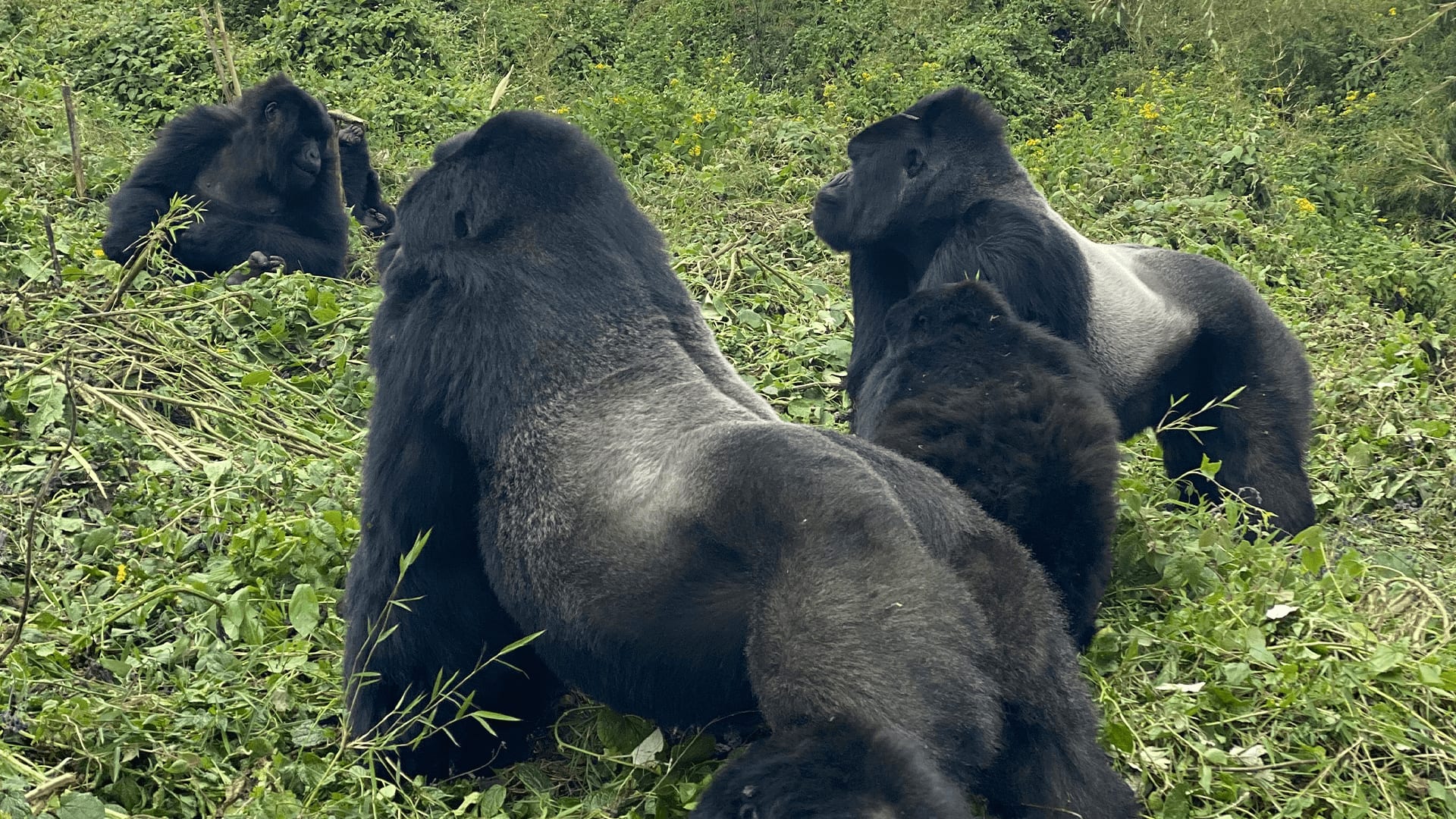
If gorilla trekking is the reason you are coming, build the safari around Bwindi or Mgahinga first. If your dream is a broader wildlife safari with lions, elephants, buffalo, giraffes, hippos, crocodiles, and rhinos, your route will likely include Murchison Falls, Queen Elizabeth, and Ziwa Rhino Sanctuary. If you want the strongest primate experience, combine gorillas with chimpanzees in Kibale, then add Queen Elizabeth for a classic savannah contrast.
For most first-time visitors, the most efficient Uganda safari trip balances three experiences: gorilla trekking, chimpanzee tracking, and game viewing. This combination gives you Uganda’s rarest highlight, its most rewarding forest primate experience, and its open plains wildlife without trying to cover every corner of the country.
If you are still deciding how Uganda fits into your broader travel ambitions, PawMac Safaris has also explained why many travelers use Uganda as the foundation for a first major safari in planning an Africa safari trip starting with Uganda.
Choose a Time-Efficient Uganda Safari Route
Uganda is compact compared with some safari destinations, but it is not a place where you should underestimate road travel. Distances on a map can look short, yet national park routes include rural roads, mountain approaches, ferry timings, town traffic, weather changes, and scenic stops.
The best safari route is not always the one with the most parks. It is the one that reduces backtracking and keeps your energy high for the experiences you came to enjoy.
The western circuit is usually the most efficient route
For many travelers, the strongest route starts and ends in Entebbe, then moves through western Uganda in a logical loop. A classic sequence may include Murchison Falls National Park, Kibale National Park, Queen Elizabeth National Park, Bwindi Impenetrable National Park, and then back to Entebbe, sometimes with Lake Bunyonyi or another restful stop before departure.
This route works because it follows Uganda’s natural safari corridor. It can include rhinos at Ziwa, the Nile and Murchison Falls, chimpanzees in Kibale, the Kazinga Channel, tree-climbing lion areas in the Ishasha sector when conditions and routing allow, and gorillas in Bwindi.
Plan Your Uganda Safari with Local Experts
 WhatsApp Us
For travelers with less time, it is better to reduce the route rather than rush it. A 6-day trip should not try to include Murchison, Kibale, Queen Elizabeth, and Bwindi unless you are comfortable with long travel days and limited downtime. A focused gorilla and wildlife safari can be more rewarding than a rushed checklist.
When domestic flights save valuable time
Domestic flights can be a smart upgrade, especially for premium travelers or anyone short on vacation days. Flying between Entebbe and airstrips near Bwindi or Queen Elizabeth can save many hours compared with driving. It also reduces fatigue before or after gorilla trekking.
Flights are most useful when you have 5 to 8 days, when your itinerary includes Bwindi at the far end of the route, or when you want to combine luxury lodges with a smoother pace. They are less necessary if you enjoy scenic road journeys, have 10 to 12 days, and want to experience the countryside between parks.
Before choosing between road and air, compare the true cost of time. A road transfer may cost less, but it can consume most of a day. A flight may cost more, but it can protect the quality of your safari by adding rest, flexibility, and a better arrival experience.
Lock In Gorilla and Chimpanzee Permits First
For a Uganda safari that includes primates, permits should shape the itinerary before lodges are finalized. This is especially important for gorilla trekking because permit availability is limited by trekking sector, date, and group allocation.
As of 2026 planning, foreign non-resident gorilla permits in Uganda are commonly budgeted at about US$800 per person. Gorilla habituation experiences cost more and are limited to specific arrangements. Chimpanzee tracking in Kibale is commonly budgeted around US$250 per person for foreign non-residents. These figures are useful for planning, but final fees should always be confirmed at booking because official tariffs can change.
Booking permits early saves time in three ways. First, it prevents the need to rebuild your route around late availability. Second, it helps secure lodges in the correct gorilla trekking sector. Third, it avoids unnecessary transfers between sectors, which can add hours on mountain roads.
With PawMac Safaris, permit planning is handled alongside routing, lodge selection, and transport timing, so the trip is built as one coordinated journey rather than separate pieces that may not fit well together.
Match Your Trip Length to the Right Experiences
One of the most important time-saving decisions is accepting what your trip length can realistically support. Uganda has enough variety for a 5-day focused safari or a 14-day in-depth journey, but each duration requires different priorities.
| Trip length | Best fit | What to avoid |
|---|---|---|
| 5 to 6 days | Gorilla trekking with Queen Elizabeth or Lake Bunyonyi | Trying to include Murchison Falls and Kibale unless flying or accepting long drives |
| 7 to 8 days | Gorillas, chimpanzees, and Queen Elizabeth | Adding too many one-night stays |
| 9 to 10 days | Western circuit with Bwindi, Kibale, Queen Elizabeth, and Murchison Falls | Underestimating transfer days between major parks |
| 11 to 14 days | Comprehensive Uganda safari with primates, Big Five route elements, boat safaris, cultural stops, and downtime | Overloading every day with early starts and no recovery time |
For many travelers, 8 to 10 days is the sweet spot. It allows enough time for gorilla trekking, chimpanzee tracking, game drives, and boat safaris without turning every day into a transfer. If you want detailed examples by duration and comfort level, the guide to Uganda safari itineraries, costs, and experiences can help you compare realistic options.
Budget With Realistic 2026 Cost Ranges
A clear budget saves weeks of back-and-forth. Uganda can support budget-conscious travelers, midrange safari guests, and high-end luxury travelers, but the same itinerary can vary dramatically depending on lodge category, season, group size, transport style, and permit inclusions.
For private guided safaris in 2026, a gorilla-inclusive Uganda safari commonly falls into these broad planning ranges. These are not fixed prices from PawMac Safaris, but practical budgeting estimates to help you qualify the type of trip you want before requesting a tailored quote.
| Safari style | Typical planning range per person | Best for |
|---|---|---|
| Budget to simple midrange, 6 to 8 days | About US$2,400 to US$3,800+ | Travelers prioritizing gorillas and key wildlife with modest accommodation |
| Comfortable midrange, 8 to 10 days | About US$3,800 to US$6,500+ | First-time visitors who want a balanced route, reliable lodges, and private guiding |
| Luxury road safari, 9 to 12 days | About US$6,500 to US$10,000+ | Travelers who value premium lodges, better pacing, and upgraded service |
| Luxury fly-in safari | About US$8,000 to US$12,000+ or more | Time-sensitive travelers seeking maximum comfort and reduced driving |
The biggest cost drivers are permits, lodge category, private vehicle and guide costs, internal flights, park fees, and whether you travel solo or share costs with others. Gorilla permits alone can represent a significant share of the total budget, especially on shorter trips.
When budgeting, separate fixed costs from flexible costs. Permits, park fees, and some conservation-related charges are relatively fixed. Lodges, route length, domestic flights, and vehicle days are more flexible. This distinction helps you decide where to save and where not to compromise.
If your safari is part of a broader financial season that includes major commitments at home, it can help to organize big-picture decisions before you travel. Resources offering smart mortgage solutions show the value of clear guidance and transparent terms, the same kind of clarity you should expect when planning a premium Uganda safari budget.
Save Time With the Right Lodges, Transport, and Season
Good safari planning is not just about which parks you visit. It is also about where you sleep, how you move, and when you travel. These choices can either make the journey feel seamless or create unnecessary delays.
Choose lodges by location, not only star rating
In Uganda, lodge location matters enormously. A beautiful lodge that is far from your gorilla trekking sector, park gate, or boat departure point can cost you hours of extra driving. In Bwindi, this is especially important because trekking sectors are spread across different parts of the forest, including Buhoma, Ruhija, Rushaga, and Nkuringo.
If your gorilla permit is assigned to one sector, your lodge should be chosen with that sector in mind. Staying in the wrong area may require an extremely early departure and a tiring mountain transfer before your trek even begins.
Use the right vehicle for Uganda roads
A comfortable 4×4 vehicle is not a luxury detail in Uganda. It is central to timing, safety, and enjoyment. Safari roads can vary from paved highways to murram roads, park tracks, mountain routes, and seasonal wet sections. A well-maintained 4×4 with an experienced local guide helps you keep a realistic pace and avoid preventable delays.
Private guiding also saves time because your guide manages gate timings, activity check-ins, road conditions, local communication, and route adjustments. This is where local knowledge becomes more valuable than any generic itinerary found online.
Plan around season, but do not overcomplicate it
Uganda is a year-round safari destination. The drier months from December to February and June to September are often preferred for trekking and game drives because trails and roads are generally easier. The wetter periods from March to May and October to November can bring greener scenery, fewer crowds in some areas, and attractive lodge value, but travelers should be prepared for muddy trails and schedule flexibility.
If your dates are flexible, begin by reviewing the best time to visit Uganda for wildlife safaris, then match the season to your comfort level and wildlife goals. If your dates are fixed, do not worry. A strong Uganda safari can still be planned by choosing the right route, lodges, and daily pacing.
Use a Simple Safari Planning Timeline
Efficient planning depends on doing the right tasks in the right order. You do not need to decide every detail on day one, but you do need to secure the elements that can sell out or constrain the rest of the journey.
| When to plan | What to do | Why it saves time |
|---|---|---|
| 9 to 12 months before travel | Choose travel window, trip length, comfort level, and gorilla trekking preference | Best chance of securing permits and preferred lodges |
| 6 to 9 months before travel | Confirm permits, route, vehicle plan, and key lodges | Prevents rebuilding the itinerary around limited availability |
| 3 to 6 months before travel | Finalize international flights, domestic flights if needed, and special activities | Keeps arrival and departure logistics aligned with the safari route |
| 1 to 3 months before travel | Review packing, visa requirements, health preparation, insurance, and final timing | Reduces last-minute stress and avoids preventable disruptions |
Travelers booking within a shorter window can still plan successfully, but flexibility becomes more important. You may need to adjust travel dates, trekking sectors, lodge categories, or route sequence based on permit and accommodation availability.
Avoid These Common Uganda Safari Time-Wasters
Many safari delays begin with small planning mistakes that only become obvious once the trip is underway. Avoiding these issues can protect both your budget and your experience.
Do not build an itinerary with too many one-night stays. Uganda’s best experiences often require early starts, and constant packing can make the safari feel rushed. Two-night stays in key areas usually create a better rhythm, especially in Kibale, Queen Elizabeth, Bwindi, and Murchison Falls.
Do not choose lodges before confirming permits. This is especially important in Bwindi, where the wrong lodge location can create long transfer times to the correct trekking sector.
Do not underestimate Entebbe arrival and departure logistics. If your international flight lands late, plan an overnight stay near Entebbe or Kampala before beginning the safari. Starting a long road transfer immediately after a late arrival can affect the quality of the first two days.
Do not try to make every activity a must-do. A boat safari, game drive, forest walk, cultural visit, and transfer on the same day may look efficient on paper, but it can feel exhausting in reality. The best Uganda safaris leave space for wildlife unpredictability, photography, rest, and genuine hospitality.
Finally, do not compare quotes without comparing inclusions. A lower price may exclude permits, park fees, private guiding, internal flights, quality accommodation, or key meals. Always check what is included, what is optional, and what must be paid locally.
Frequently Asked Questions
How many days do I need for a safari trip in Uganda? For a focused gorilla safari, 5 to 6 days can work. For gorillas, chimpanzees, and savannah wildlife, 8 to 10 days is more comfortable. For a comprehensive Uganda safari with Murchison Falls, Kibale, Queen Elizabeth, Bwindi, and cultural or relaxation time, 11 to 14 days is ideal.
What should I book first for a Uganda safari? Book gorilla and chimpanzee permits first, then secure lodges in the right locations, especially around Bwindi’s trekking sectors. Flights, vehicle planning, and activity scheduling should follow the permit-confirmed route.
Is it better to drive or fly during a Uganda safari? Driving gives you more scenery, flexibility, and countryside context. Domestic flights save time and reduce fatigue, especially for shorter luxury safaris or itineraries that include Bwindi. The best choice depends on your budget, trip length, and tolerance for long road transfers.
How much should I budget for gorilla trekking in Uganda in 2026? Foreign non-resident travelers should commonly budget around US$800 per person for a gorilla trekking permit, excluding accommodation, transport, guiding, porter tips, and other safari costs. Always confirm the current official fee when booking.
Can PawMac Safaris customize my Uganda safari? Yes. PawMac Safaris specializes in personalized Uganda safari planning, including gorilla trekking tours, chimpanzee tracking, Big Five route elements, cultural tours, adventure activities, and private guided itineraries across budget, midrange, and luxury travel styles.
Plan Your Uganda Safari With PawMac Safaris
The best way to plan a safari trip in Uganda without wasting time is to work with a team that understands the country on the ground. PawMac Safaris brings together expert local guides, professional itinerary planning, comfortable 4×4 vehicles, permit coordination, and flexible safari options designed around your travel style.
Whether you want a luxury gorilla trekking journey, a balanced primate and wildlife route, a Big Five-focused safari, or a custom family adventure, PawMac Safaris can help you turn broad ideas into a realistic, well-paced Uganda itinerary.
Start with your dates, budget range, comfort level, and must-see experiences. PawMac Safaris will help you shape the route, secure the right permits, and plan a Uganda safari that uses your time wisely from arrival in Entebbe to your final day in the Pearl of Africa.


