


- 190 Views
- 13 Min Read
- (0) Comment
TL;DR:
- Kampala, Uganda’s vibrant capital, offers rich cultural, historical, and culinary experiences worth exploring before wildlife safaris. A well-planned city tour reveals its layered heritage, dynamic arts, and community projects that deepen understanding of Ugandan identity. Visitors who spend more time in Kampala often find that it enhances their entire Uganda adventure by providing meaningful connections and context.
Most travelers land in Kampala, spend one rushed night, and head straight for Bwindi or Queen Elizabeth National Park. They miss almost everything. Kampala is a city of seven hills, home to more than 3.5 million people, where colonial-era architecture sits beside buzzing street markets, world-class mosques, and one of East Africa’s most dynamic music scenes. It is the kind of place that rewards curiosity. Whether you are spending one day or three before your wildlife safari, a well-planned Kampala city tour will change the way you see Uganda entirely.
Table of Contents
- Why include Kampala in your Ugandan adventure?
- Essential stops on a Kampala city tour
- Comparing city tour options in Kampala
- Insider tips for an immersive and responsible Kampala city tour
- The hidden charms of Kampala: What most travelers overlook
- Plan the ultimate Kampala and Uganda experience with PawMac Safaris
- Frequently asked questions
Key Takeaways
| Point | Details |
|---|---|
| Kampala is a vibrant city | It offers rich cultural and historical experiences beyond being a transit point. |
| Diverse tour options | Travelers can choose guided, self-guided, or specialty tours to suit their interests and budgets. |
| Top city sights | Must-see attractions include Kasubi Tombs, Uganda Museum, and lively local markets. |
| Travel responsibly | Supporting local communities and practicing ethical tourism ensures a more meaningful visit. |
| Easily combined with safaris | Kampala city tours fit perfectly with broader Uganda wildlife adventures. |
Why include Kampala in your Ugandan adventure?
Kampala is Uganda’s capital and its beating commercial heart. Many people assume it is simply a transit hub, a place to change money and catch a transfer. That assumption costs travelers some of the richest cultural experiences in the region. The city sprawls across seven hills and offers a remarkable variety of experiences within a very compact area, making it surprisingly easy to explore without losing whole days to transportation.
“Kampala serves as a major cultural and economic hub for Uganda, offering historic landmarks, thriving arts, and diverse culinary scenes.” This means a single day here can include ancient royal heritage, contemporary African art, and a meal that rivals anything you will find in Nairobi or Kigali.
The city’s blend of influences is genuinely striking. Baganda kingdom traditions coexist with Swahili coastal culture, Indian commercial heritage, and a young, ambitious creative class that is reshaping what modern Ugandan identity looks like. Music drifts out of every open doorway, from Afrobeats and kadodi drumming to homegrown Ugandan genres like kidandali.
Key reasons to add Kampala to your Uganda itinerary:
- Cultural depth: The Buganda Kingdom has maintained its cultural practices for centuries, and Kampala is where those traditions are most visible and accessible to visitors.
- Food scene: Street food stalls, rooftop restaurants, and local cafes offer everything from rolex (a beloved Ugandan street wrap) to fresh Nile perch, all at prices that will surprise you pleasantly.
- Historical context: Understanding Kampala’s colonial and pre-colonial past gives your entire Uganda trip more meaning, especially when you later visit protected areas that were shaped by that same history.
- Logistical convenience: As Uganda travel highlights show, the city connects seamlessly to every major national park, making it the natural anchor for any multi-stop itinerary.
- Human connection: Markets, craft workshops, and community projects give travelers rare opportunities to meet Ugandans on equal terms, not as guests and service providers, but as curious people sharing a moment.
Now that you see why Kampala deserves real attention, let’s look at the top stops on a city tour.
Essential stops on a Kampala city tour
A strong Kampala city tour does not try to see everything. It focuses on the sites that tell the most layered stories. Popular city tour highlights include the Uganda Museum, Kasubi Tombs, Nakasero Market, and the bustling Owino Market, but the full list of standout attractions is worth knowing in detail.
| Attraction | Location | Activity type | Local tip |
|---|---|---|---|
| Kasubi Tombs | Kasubi Hill | Cultural, historical | Go with a local guide for full context |
| Uganda Museum | Kitante Road | Educational, cultural | Arrive by 9 a.m. before school groups arrive |
| Gaddafi National Mosque | Old Kampala Hill | Architecture, spiritual | Dress modestly; rooftop views are spectacular |
| Nakasero Market | Central Kampala | Shopping, food | Bargain respectfully; vendors appreciate patience |
| Independence Monument | Kampala Road | Historical, scenic | Best photographed in the late afternoon light |
Kasubi Tombs are a UNESCO World Heritage Site and the royal burial ground of the Buganda kings. Walking through the main thatched palace, called the Muzibu Azaala Mpanga, gives you a visceral sense of Buganda kingdom history that no museum exhibit can replicate. Uganda Museum holds one of East Africa’s most important collections of ethnological and natural history artifacts, including traditional musical instruments and archaeological finds dating back thousands of years. Gaddafi National Mosque, completed in 2006 and gifted by Libya, is the largest mosque in sub-Saharan Africa and offers a rooftop panorama of the entire city skyline.
Sample half-day Kampala city tour itinerary
- 7:30 a.m. Arrive at Nakasero Market. Pick up fresh fruit, sample local snacks, and watch the city wake up.
- 9:00 a.m. Visit the Uganda Museum. Spend 60 to 90 minutes in the ethnological galleries and traditional instruments section.
- 10:45 a.m. Drive to Kasubi Tombs. Allow at least 75 minutes for a guided tour of the royal enclosure.
- 12:30 p.m. Lunch near Old Kampala Hill at one of the local restaurants serving matooke, groundnut stew, and roast meat.
- 2:00 p.m. Tour the Gaddafi National Mosque, including the rooftop walkway.
- 3:30 p.m. Stop at the Independence Monument for photos, then wind through central Kampala streets back to your hotel.
Pro Tip: Arrive at Nakasero Market before 8 a.m. Vendors are setting up, crowds are thin, and you will get the freshest produce and the most genuine interactions of your entire day. Early arrivals often get better prices and more time to chat with stallholders who speak remarkably good English.
If you want to tailor this route around your specific interests, customizable tour options make it easy to build an itinerary that fits your travel pace. For travelers who prefer something slower, relaxing Uganda experiences blend city time with lakeside rest stops beautifully.
Knowing the top attractions, it’s time to choose how to explore the city. Let’s compare your tour options.
Plan Your Uganda Safari with Local Experts
 WhatsApp Us
Comparing city tour options in Kampala
Not every traveler wants the same kind of city experience. Some people want a knowledgeable local by their side explaining every detail. Others prefer the freedom to wander off-script. Kampala accommodates both instincts, and a few specialty tour formats sit somewhere usefully in between.
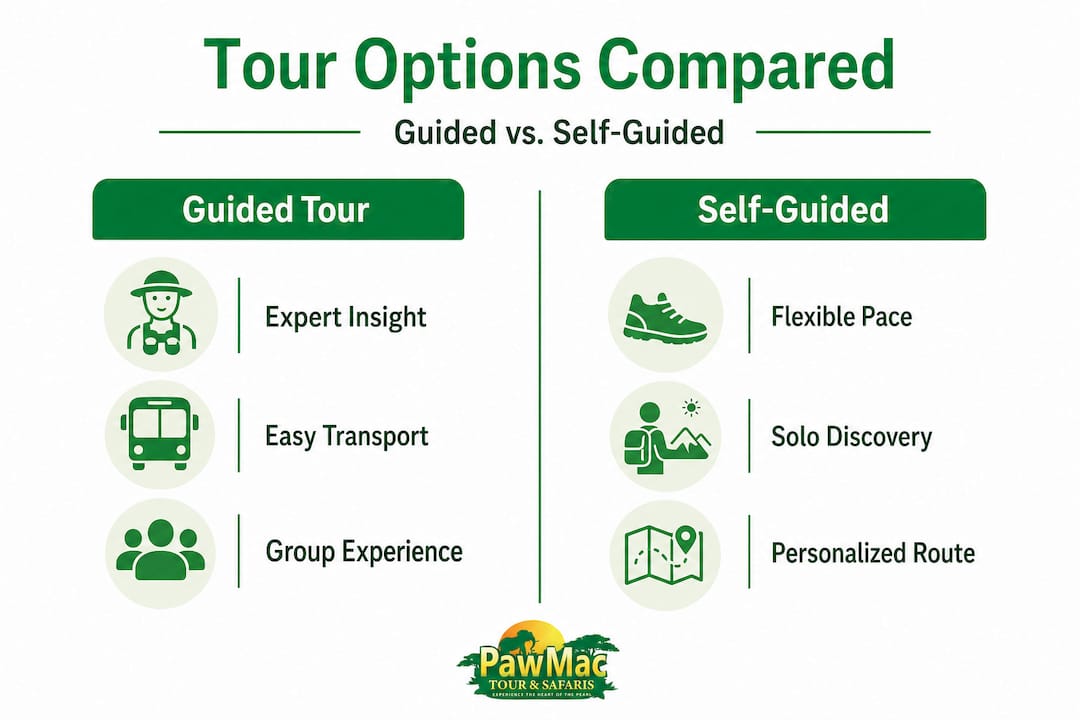
Guided tours often include transportation, local insights, and safety; self-guided tours allow more flexibility in terms of timing and spontaneous discovery. Here is how the three main options compare:
| Tour type | Average cost | Key features | Best for |
|---|---|---|---|
| Guided tour | $40 to $90 per person | Local expert, vehicle, curated stops | First-time visitors, history lovers |
| Self-guided walk | $5 to $20 (maps, transport) | Full flexibility, personal pace | Experienced travelers, solo explorers |
| Themed/specialty tour | $50 to $120 per person | Focus: food, art, music, or community | Repeat visitors, niche interests |
Guided tours are the most practical choice for visitors arriving in Kampala for the first time. A qualified local guide provides safety awareness, language support, and contextual knowledge that transforms a good visit into a genuinely memorable one. Guides also navigate traffic efficiently, which matters in a city where congestion can swallow an hour of your day without warning.
Self-guided walks work well for confident, experienced travelers who enjoy the unplanned moment, the alley that leads somewhere unexpected, the conversation that starts over a shared boda-boda taxi. Apps and offline maps now make Kampala much more navigable than it was even five years ago.
Themed tours are the most exciting option for repeat visitors or travelers with strong specific interests. A Kampala food tour, for example, moves through five or six distinct eating experiences across neighborhoods you would never find alone. A craft and art tour connects you with potters, weavers, and painters working in studios around the city.
Before booking any tour, ask these questions:
- What is the maximum group size? (Smaller groups mean more personal attention and fewer logistics headaches.)
- Is the guide a certified local with knowledge of Kampala’s history and current culture?
- What is included in the price? Entrance fees, meals, and transport can add up significantly if not covered.
- Can the itinerary be adjusted if you want to spend more time somewhere?
- Does the operator work with local, community-based businesses along the route?
You can also compare Kampala tour prices to understand what a fair rate looks like before committing to a booking.
Selecting your touring style sets you up for a great experience. Next, see how to experience Kampala authentically and responsibly.
Insider tips for an immersive and responsible Kampala city tour
Responsible travel in Kampala is not complicated. It mostly comes down to respect, curiosity, and a willingness to slow down enough to actually see the place you are in. Responsible tourism in Uganda includes respecting local customs, supporting community businesses, and being mindful of waste. That principle applies just as strongly in the city as it does on a gorilla trek.
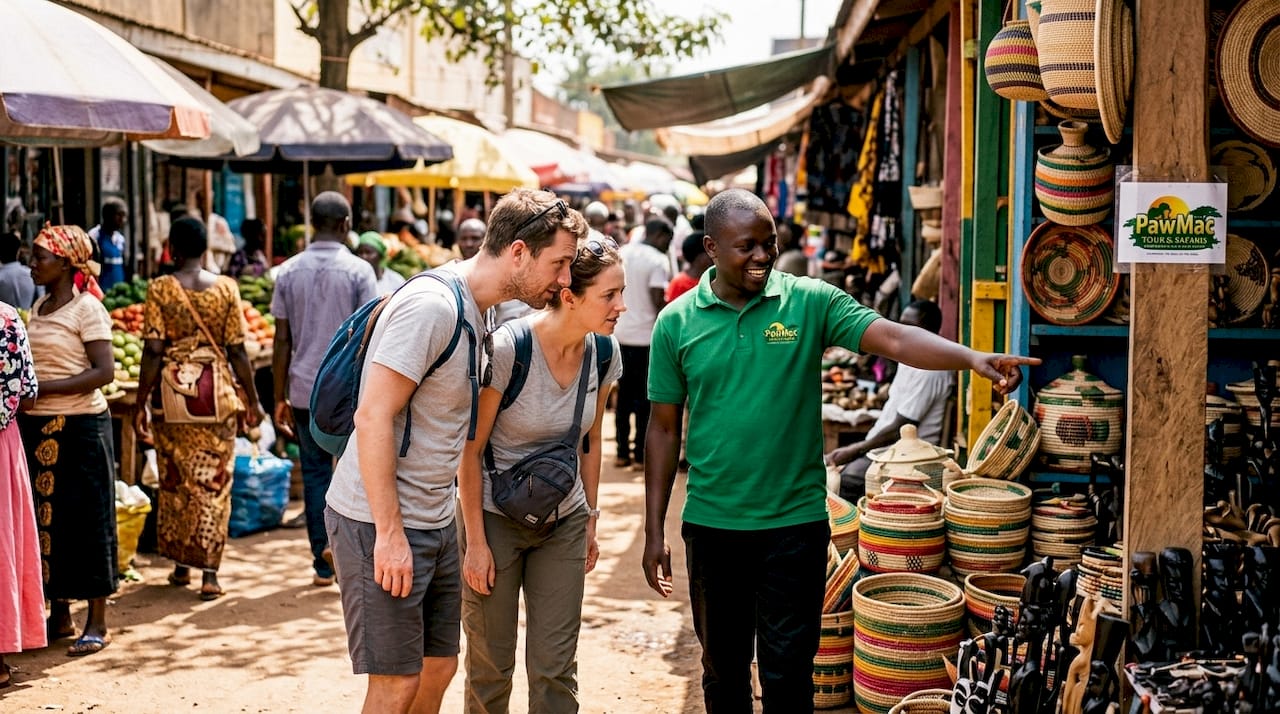
Dress thoughtfully. Kampala is a relatively relaxed city, but modesty is appreciated, especially in markets, religious sites, and local neighborhoods. Lightweight cotton clothing that covers shoulders and knees works well and is comfortable in the equatorial heat.
What to carry: A small daypack, a reusable water bottle (filtered water is available in most hotels), local currency in small denominations, and a charged phone with an offline map. Leave expensive jewelry at your accommodation.
Street food safety: Kampala’s street food is genuinely excellent and mostly very safe. Look for stalls with high turnover, fresh ingredients visible, and clean cooking surfaces. Rolex stands, grilled meat vendors, and fresh juice stalls are almost universally reliable.
Ethical ways to support community tourism in Kampala:
- Buy crafts directly from artisan cooperatives rather than from hotel gift shops, where margins rarely benefit the maker.
- Eat at locally owned restaurants rather than international chains. The food is better and the money stays in the community.
- Hire guides who are registered with the Uganda Tourism Board to ensure they are properly trained and fairly compensated.
- Avoid giving money directly to children on the street. Genuine support flows through established community organizations.
- Ask permission before photographing people. A brief, warm request is almost always welcomed and respected.
- Support travel and conservation impact by choosing operators who reinvest in local communities and wildlife protection.
Pro Tip: Use a registered guide for your city tour even if you are an experienced traveler. The difference in depth of experience is remarkable. A good Kampala guide will take you into conversations, workshops, and spaces that you would never access alone, and your presence there directly supports their livelihood and their community.
Armed with responsible travel tips, you’re ready for an unforgettable Kampala adventure. But what do seasoned travel experts think travelers miss most?
The hidden charms of Kampala: What most travelers overlook
Here is something we hear regularly from travelers who spend time in Kampala before heading into Uganda’s national parks: they wish they had stayed longer. Not because they ran out of famous sights, but because they found something they did not expect. They found a city in the middle of creating itself, confidently and on its own terms.
Many visitors rush through Kampala, missing genuine interaction with local artists, musicians, and entrepreneurs shaping the city’s evolving culture. That is the honest truth, and it applies to experienced safari travelers as much as first-timers.
Uganda is not only for wildlife. That assumption does the country a disservice. The art galleries around Ntinda and Kisementi showcase painters, sculptors, and textile artists who are influencing conversations happening across the African continent. The music that comes out of Kampala, not just the pop you hear in bars, but traditional Buganda court music and the evolving sounds of Ugandan hip-hop and gospel, represents a living, breathing cultural tradition.
Community projects throughout the city invite visitors to participate rather than just observe. Pottery cooperatives in the outskirts, women’s weaving groups in Mengo, and urban gardening initiatives in low-income neighborhoods all welcome respectful visitors who want to understand what daily Kampala life actually looks like.
Our opinion, grounded in years of guiding travelers through this country, is that the most memorable Uganda trips are the ones that start slowly in Kampala. Travelers who give the city two or three days before heading to Bwindi or Murchison arrive at those wild places with a richer frame of reference. They understand the people whose communities border those parks. They carry conversations with them. That changes everything about how they experience the wilderness.
The unique Uganda experiences waiting in Kampala are not a consolation prize before the real adventure. They are the beginning of it.
Plan the ultimate Kampala and Uganda experience with PawMac Safaris
Kampala is the starting point for some of the most extraordinary journeys in Africa. A morning at Kasubi Tombs or Nakasero Market can flow naturally into a multi-day gorilla trekking permit at Bwindi, a boat safari along the Kazinga Channel, or a sunrise game drive in Murchison Falls National Park. These experiences do not compete with each other. They build on each other.

PawMac Safaris designs itineraries that honor the full breadth of what Uganda offers, from its most electric urban neighborhoods to its most remote jungle trails. If you are ready to explore Uganda safari tour packages that begin right in the heart of Kampala and stretch out to the country’s wildest corners, we are here to help you design exactly that. Browse our full range of best Uganda tours to find the itinerary that fits your interests, timeline, and budget, and reach out to our team for personalized guidance.
Frequently asked questions
What are the top attractions on a Kampala city tour?
Kasubi Tombs, Uganda Museum, Gaddafi National Mosque, Nakasero Market, and Independence Monument are highlights of most tours. Popular city tour highlights also include the vibrant Owino Market, which offers an unfiltered view of everyday Kampala commercial life.
Are guided city tours in Kampala better than self-guided options?
Guided tours offer transportation, local insights, and safety, while self-guided tours allow more flexibility and personal pacing. Your best choice depends on whether you prioritize depth of context or freedom of movement.
Is it safe to explore Kampala as a tourist?
Kampala is generally safe for tourists, but you should stay aware of your belongings in crowded markets and stick to reputable, registered tour providers for added security and peace of mind.
How can travelers ensure their Kampala city tour supports responsible tourism?
Choose locally owned tour operators, eat at community restaurants, and hire certified guides to maximize your positive impact. Responsible tourism in Uganda means supporting local businesses and respecting cultural practices at every stop.
Can I combine a Kampala city tour with a wildlife safari in Uganda?
Yes, and it is highly recommended. Most travelers start with one to two days in Kampala before continuing to Uganda’s national parks. Kampala serves as Uganda’s hub, connecting easily to Bwindi, Queen Elizabeth, and Murchison Falls for a seamless end-to-end Uganda adventure.
Recommended
- Unique Wildlife Tours in Uganda for Unmatched Encounters
- Top advantages of guided safaris in Uganda for 2026
- Tailor-Made Uganda Safari 10–25 Days | PawMac Safaris
- Luxury Safari Experiences in Uganda – Private Gorilla & Wildlife Safaris


