

- 160 Views
- 9 Min Read
- (0) Comment
Planning a Uganda gorilla safari often feels overwhelming when you encounter unfamiliar terms like UWA, porters, pangas, and GHE trekking. Many adventure travelers struggle to decode the specialized vocabulary used by guides, tour operators, and park authorities, which can create confusion during trip planning and on the ground. This guide breaks down essential Uganda safari terminology with practical context, helping you navigate gorilla trekking logistics confidently and communicate effectively with your ground team throughout your 2026 adventure.
Table of Contents
- Understanding Core Uganda Safari Terms
- Gorilla Trekking Styles And Terminology Explained
- The Trekking Process And Critical Field Roles Demystified
- Plan Your Uganda Gorilla Safari With PawMac Safaris
- Frequently Asked Questions
Key takeaways
| Point | Details |
|---|---|
| UWA controls permits | Uganda Wildlife Authority issues $800 gorilla permits and manages all national parks |
| Rangers provide security | Armed rangers accompany every trek to protect groups from wildlife encounters |
| Porters support trekkers | Local porters carry gear for $15-20 tips and assist on steep, muddy terrain |
| GHE vs standard trekking | GHE offers immersive research-focused experiences while standard suits first-timers |
| Trek duration varies | Gorilla family location determines trek length from 1 to 7 hours each way |
Understanding core Uganda safari terms
The Uganda Wildlife Authority (UWA) serves as the sole government body managing all national parks and issuing gorilla trekking permits. For 2026, UWA maintains the gorilla permit price at $800 for foreign non-residents, significantly lower than Rwanda’s $1,500 rate. This permit grants you one hour with a habituated gorilla family in Bwindi Impenetrable National Park or Mgahinga Gorilla National Park.
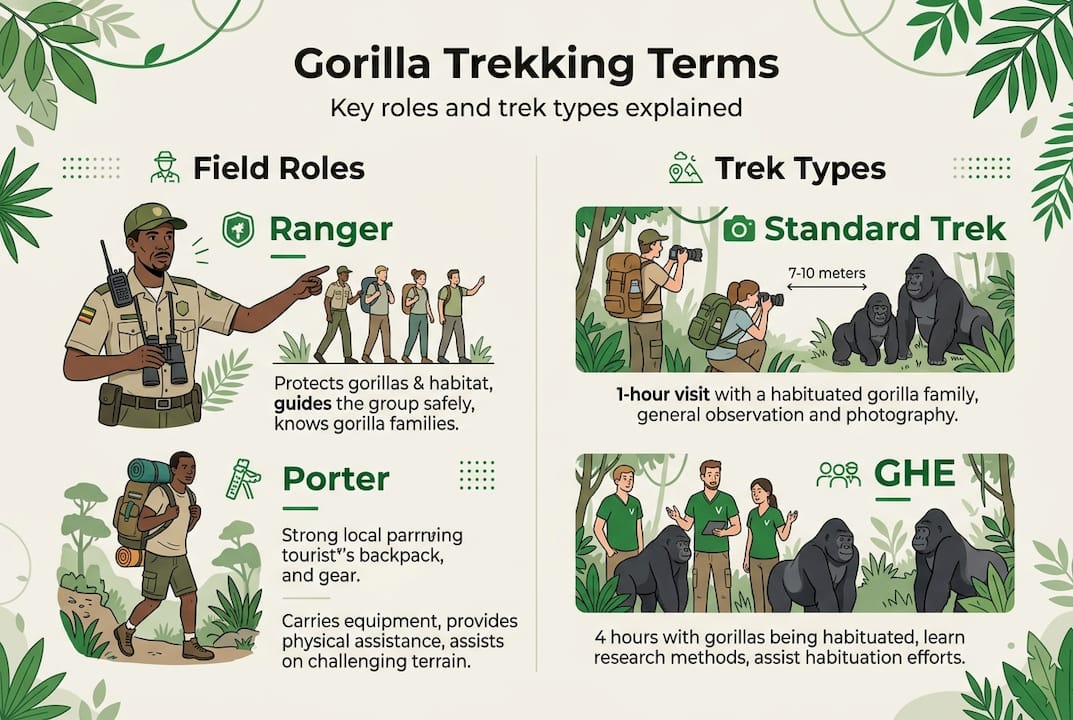
Rangers are armed park officials who accompany every trekking group to provide security against potential wildlife encounters, particularly forest elephants and buffalo. These trained professionals carry AK-47 rifles and lead the group through dense vegetation. Guides work alongside rangers, using pangas (machetes) to cut trails through thick undergrowth and locate gorilla families based on tracker intelligence gathered earlier that morning.
Porters represent local community members hired to carry trekker backpacks, camera equipment, and walking sticks throughout the trek. Employing a porter directly supports village economies around Bwindi, with standard tips ranging from $15 to $20 per trek depending on difficulty and duration. PawMac Safaris coordinates porter assignments during the pre-trek briefing at park headquarters, ensuring seamless logistics for every client.
Pro Tip: Hire a porter even if you travel light, as the employment directly benefits local families and provides invaluable assistance on steep, slippery sections where extra stability prevents falls.
Key safari roles include:
- UWA rangers: Armed security and wildlife management experts
- Trackers: Early morning scouts who locate gorilla families before tourist groups depart
- Guides: Trail navigators who use pangas to clear paths and interpret gorilla behavior
- Porters: Gear carriers who provide physical support on challenging terrain
Gorilla trekking styles and terminology explained
Gorilla Habituation Experience (GHE) represents an extended, research-focused trekking option where participants spend up to four hours with a gorilla family undergoing habituation training. Unlike standard one-hour treks, GHE permits allow travelers to observe researchers working with semi-habituated groups, documenting behavior patterns and gradually acclimating gorillas to human presence. This immersive experience costs $1,500 and occurs exclusively in Bwindi’s Rushaga sector.
Standard gorilla trekking follows the conventional format where groups of up to eight people track fully habituated families for precisely one hour of observation time. This format suits first-time trekkers, budget-conscious travelers, and those with moderate fitness levels, as treks typically range from two to five hours total (including hiking time). The $800 permit price makes Uganda’s standard trekking significantly more accessible than Rwanda’s premium positioning.
| Trekking Style | Duration with Gorillas | Permit Cost 2026 | Best For | Physical Demand |
|---|---|---|---|---|
| Standard Trek | 1 hour | $800 | First-timers, budget travelers | Moderate to high |
| GHE (Habituation) | 4 hours | $1,500 | Wildlife photographers, researchers | High to extreme |
| Rwanda Standard | 1 hour | $1,500 | Luxury seekers, short timelines | Moderate |
GHE trekking benefits experienced wildlife enthusiasts who want deeper insights into gorilla social structures, feeding behaviors, and conservation research methodologies. Standard trekking provides sufficient time for photography, emotional connection, and understanding basic gorilla family dynamics without the extended physical demands. PawMac Safaris recommends GHE only for clients with proven hiking experience and genuine interest in primate research beyond casual observation.
Plan Your Uganda Safari with Local Experts
 WhatsApp Us
Pro Tip: Book GHE permits at least six months ahead, as Rushaga sector releases limited slots and demand from photography tour groups fills availability quickly during peak seasons.
The terminology distinction matters because tour operators sometimes blur these categories in marketing materials. Standard treks occur in all four Bwindi sectors (Buhoma, Ruhija, Rushaga, Nkuringo), while GHE operates exclusively in Rushaga with semi-habituated families. Understanding this difference prevents sector-lodging mismatches that create unnecessary travel time between accommodation and trailheads.
The trekking process and critical field roles demystified
Every gorilla trek begins with a mandatory briefing at park headquarters, typically starting at 7:30 AM. During this session, UWA rangers assign trekking groups to specific gorilla families based on participant fitness levels, age, and mobility considerations. The briefing covers behavioral guidelines, photography rules, minimum distance requirements (7 meters from gorillas), and what to do during close encounters or charges.
Trackers depart at dawn, locating the gorilla family’s overnight nesting site and following fresh trails to determine current position. These experts communicate via radio with guides at headquarters, providing GPS coordinates and estimated hiking difficulty. Once your group receives family assignment, guides lead you from the trailhead through various terrain types, adjusting pace based on group capability and real-time tracker updates.
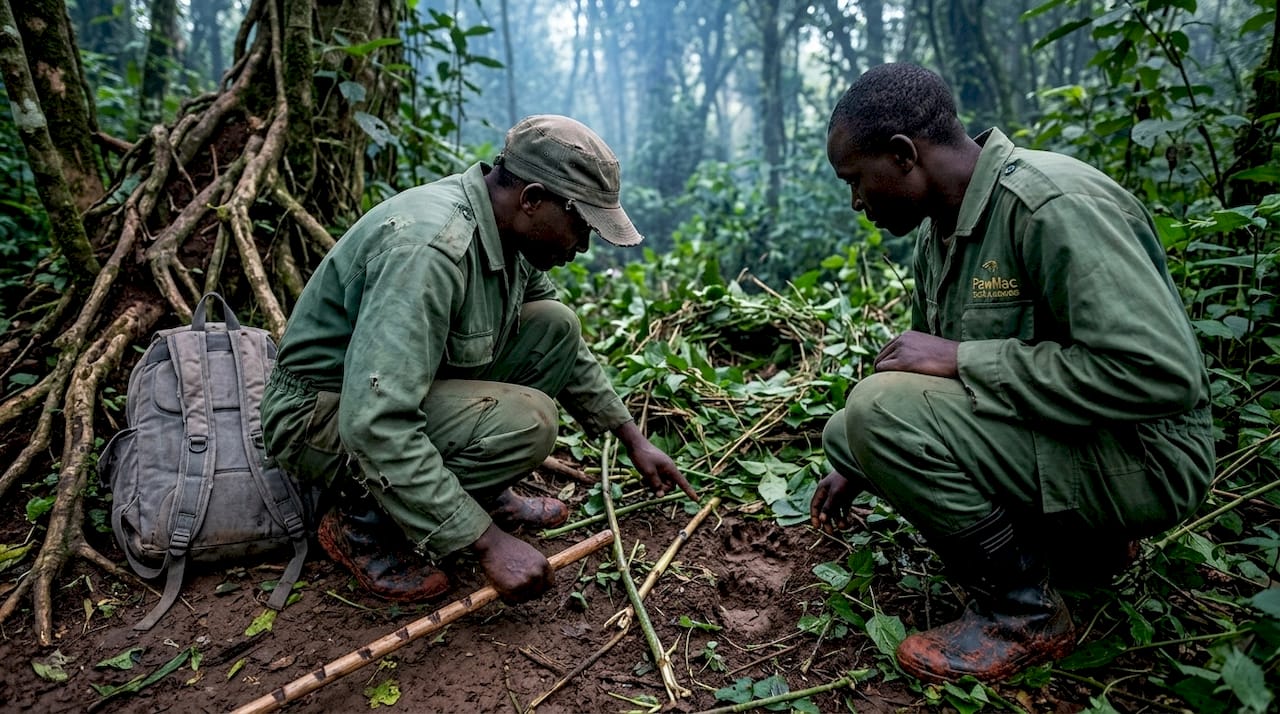
Trek duration depends entirely on where the assigned gorilla family traveled overnight and their morning movement patterns. Families near park boundaries may require only 45 minutes of hiking, while groups deep in the forest can demand four to six hours of strenuous climbing through bamboo zones and steep ridges. Weather conditions, trail maintenance, and seasonal gorilla ranging patterns all influence daily trek difficulty, making physical preparation essential regardless of sector choice.
Porters serve dual functions beyond simple gear transport. They provide physical support by pushing or pulling trekkers up muddy inclines, offer walking sticks for stability, and act as cultural ambassadors sharing local knowledge about forest ecology and community conservation efforts. Employment as a porter represents significant income for villages surrounding Bwindi, where agricultural opportunities remain limited and tourism provides the primary economic engine.
Porter support includes:
- Carrying backpacks, camera bags, and excess clothing layers
- Providing stability assistance on steep, slippery sections
- Offering walking sticks and adjusting equipment during breaks
- Sharing local ecological knowledge and community conservation stories
- Creating employment opportunities that reduce poaching pressure
Trail conditions vary dramatically by season and sector. Buhoma’s northern trails feature gentler slopes but longer distances, while Nkuringo’s southern approach involves extreme elevation changes over shorter distances. Rushaga offers middle-ground difficulty with diverse terrain, and Ruhija presents high-altitude bamboo forests requiring strong cardiovascular fitness. PawMac Safaris matches clients to sectors based on honest fitness assessments, preventing miserable experiences caused by unrealistic expectations.
Pro Tip: Request a porter during briefing even if you feel physically capable, as the $15-20 cost directly supports families and the assistance becomes invaluable when exhaustion hits during the return hike.
The one-hour observation period begins the moment your group reaches the gorilla family, regardless of hiking duration. Guides enforce strict rules about flash photography, minimum distances, mask wearing (to prevent disease transmission), and quiet behavior. Silverbacks may approach closer than the 7-meter guideline, requiring you to remain still and avoid direct eye contact, which gorillas interpret as threatening behavior.
Plan your Uganda gorilla safari with PawMac Safaris
PawMac Safaris operates direct ground logistics for Uganda gorilla trekking, eliminating sector-lodging mismatches that plague aggregate booking platforms. Our Uganda safari packages include $800 permit procurement, sector-aligned accommodation, and customized 4×4 safari van transport with pop-up roofs for optimal wildlife viewing between Bwindi and other national parks.
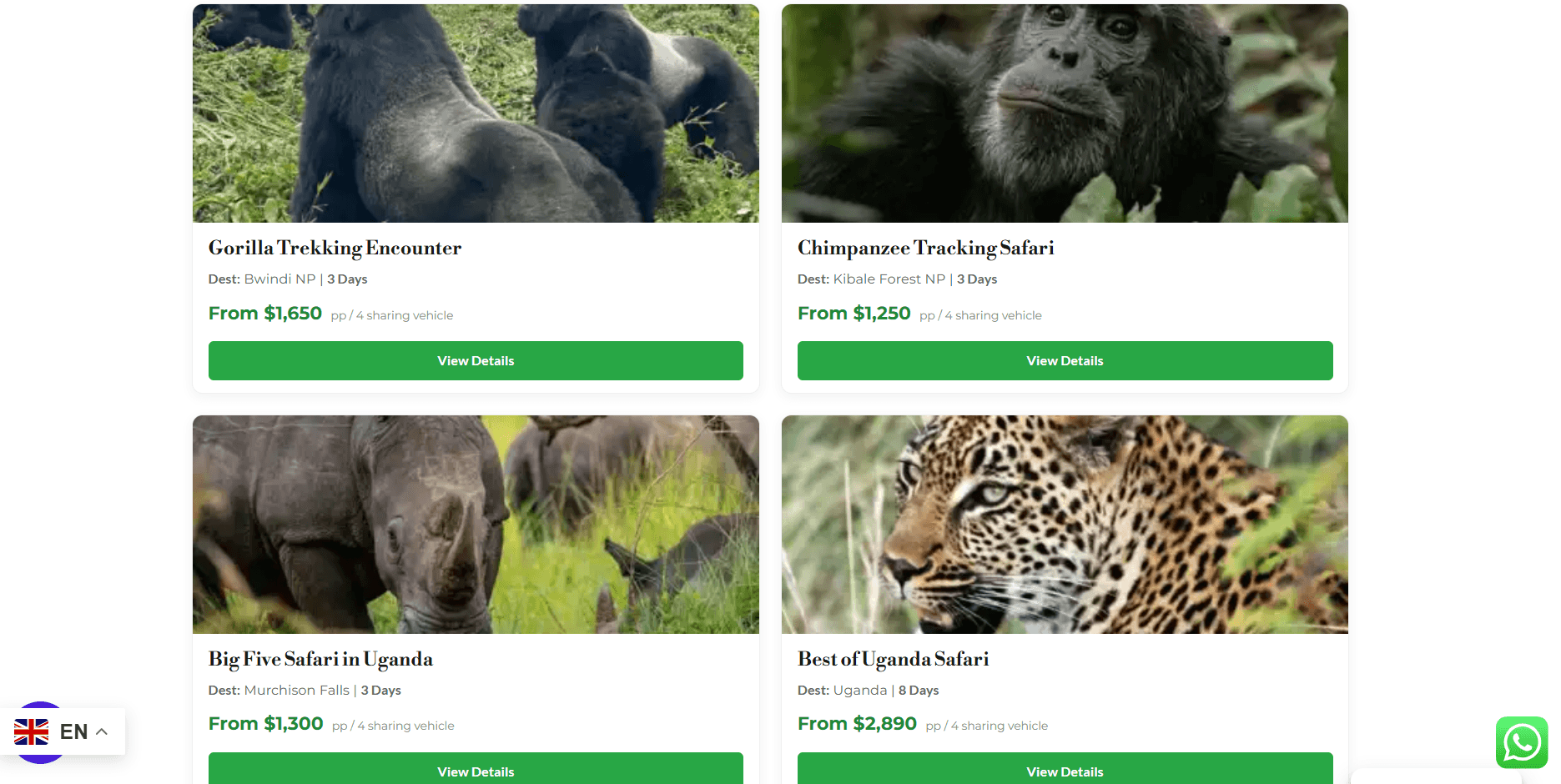
Our 2026 gorilla trekking packages range from focused 3-day Bwindi encounters to comprehensive 8-day Uganda safaris combining gorillas with Murchison Falls and Queen Elizabeth National Park game drives. Every itinerary includes professional driver-guides who understand terrain demands, porter coordination, and optimal photography timing for your gorilla hour. Contact PawMac Safaris for a custom 2026 quote that matches your fitness level, photography goals, and preferred trekking sector.
Frequently asked questions
What is the role of a porter in Uganda gorilla trekking?
Porters carry trekker gear including backpacks, camera equipment, and extra clothing while providing physical assistance on steep, muddy terrain. They also offer walking sticks, push or pull trekkers up difficult sections, and share local ecological knowledge throughout the hike. Hiring a porter costs $15-20 in tips and directly supports village economies around Bwindi, creating employment that reduces poaching pressure on gorilla habitat.
How much should I tip my porter for gorilla trekking?
Standard porter tips range from $15 to $20 per trek, with higher amounts appropriate for exceptionally difficult conditions or extended hiking durations. Pay tips directly to your porter in Ugandan shillings or US dollars at the trek conclusion, as this income supports their family and reinforces the economic value of gorilla conservation. PawMac Safaris recommends bringing small bills specifically for porter and guide gratuities to avoid change complications.
What does UWA stand for in Uganda safari terminology?
UWA stands for Uganda Wildlife Authority, the government agency managing all national parks and issuing gorilla trekking permits. UWA sets the $800 foreign non-resident permit price for 2026, coordinates ranger assignments, enforces park regulations, and oversees conservation research programs. All gorilla trekking revenue flows through UWA, with portions allocated to community development projects and anti-poaching operations around Bwindi and Mgahinga.
What is a panga and why do guides carry them?
A panga is a machete-style cutting tool that guides use to clear vegetation and create trails through dense forest undergrowth during gorilla treks. Guides cut bamboo shoots, vines, and low-hanging branches blocking the path, making passage safer and easier for trekking groups. The panga also serves as a tool for trackers marking trails and researchers collecting botanical samples during habituation work.
How long does a typical gorilla trek take in Uganda?
Gorilla trek duration ranges from one to seven hours each way, depending on where your assigned family traveled overnight and their morning movement patterns. Total trek time includes hiking to the gorilla location, spending one hour observing the family, and returning to the trailhead. Factors like weather, trail conditions, group fitness, and seasonal ranging patterns all influence daily trek length, making physical preparation essential regardless of which Bwindi sector you choose.
What is the difference between standard and GHE gorilla trekking?
Standard gorilla trekking allows one hour with fully habituated families for $800, suitable for first-time visitors and budget-conscious travelers. GHE (Gorilla Habituation Experience) permits cost $1,500 and provide four hours with semi-habituated families undergoing research training, exclusively in Rushaga sector. GHE suits experienced wildlife photographers and travelers interested in primate research methodologies, while standard treks offer sufficient time for meaningful gorilla encounters without extreme physical demands.
Recommended
- Uganda Safari Guide 2026: Gorilla Permits & Logistics
- Gorilla Trekking in Uganda: Cost, Permits & Tours 2026
- Gorilla Trekking Uganda 2026 – Permits, Prices & Best Safaris
- Why Uganda is the best gorilla trekking destination 2026