


- 59 Views
- 16 Min Read
- (0) Comment
Uganda gives travelers a rare advantage: it lets you experience some of the most sought-after wildlife in Africa without relying on a single style of safari. In one well-planned route, you can track mountain gorillas on foot, listen for chimpanzees in a rainforest canopy, watch elephants from a Nile boat, search for lions on open savannah, and add rhino tracking for a complete Big Five perspective.
That variety is not just a checklist. It changes the quality of the encounter. Uganda’s best wildlife routes combine forests, wetlands, crater lakes, river systems, and savannah parks in a way that makes many sightings feel more personal, less rushed, and more connected to the landscape.
Table of Contents
- Why Uganda changes how you see wildlife in Africa
- Close encounters without staged-feeling pressure
- Several habitats in one practical route
- Less crowding around high-value sightings
- The wildlife in Africa that Uganda often shows especially well
- Mountain gorillas in Bwindi and Mgahinga
- Chimpanzees in Kibale Forest
- Tree-climbing lions and classic savannah wildlife
- Hippos, crocodiles, elephants, and birds by boat
- Rhinos and the Big Five route
- A Uganda route that improves your wildlife viewing
- Best timing for wildlife viewing in Uganda
- What it costs to build this route in 2026
- How to choose the right safari style
- Guiding details that make sightings better
- Frequently Asked Questions
- Plan a route designed around the wildlife you value most
Why Uganda changes how you see wildlife in Africa
Many travelers first imagine African wildlife through wide plains, vehicle-based game drives, and large predator sightings. Uganda can deliver those classic safari moments, especially in Murchison Falls National Park, Queen Elizabeth National Park, Kidepo Valley National Park, and Lake Mburo National Park. But Uganda’s deeper strength is the way it adds forest primates, boat safaris, wetlands, and on-foot tracking to the same itinerary.
That makes Uganda especially strong for travelers who want quality of encounter, not only quantity of species. You are not spending every day in a vehicle scanning distant horizons. You may hike through Bwindi Impenetrable National Park in the morning, cruise the Kazinga Channel the next day, then track chimpanzees in Kibale Forest after hearing them call through the canopy.
For a broader species-by-species overview, PawMac Safaris has also covered the main safari animals you can see in Uganda. This article takes a different angle: which wildlife experiences are often seen better when the route is designed around Uganda’s unique geography.
Close encounters without staged-feeling pressure
Uganda’s most memorable wildlife moments often happen at eye level. Gorilla trekking and chimpanzee tracking are ranger-led experiences where the forest itself becomes part of the encounter. Rhino tracking at Ziwa Rhino Sanctuary is also typically done on foot with trained guides, adding another layer of intimacy to the safari.
This does not mean sightings are guaranteed or effortless. These are wild animals in living habitats. But the structure of the experience gives travelers a stronger sense of presence. You hear branches break before you see a gorilla. You smell the damp forest floor. You notice the guide reading tracks, calls, fruiting trees, and movement patterns.
Several habitats in one practical route
Uganda is compact enough for a private guided safari to connect very different ecosystems without needing multiple international flights. A strong 10 to 12 day route can include savannah, rainforest, river, wetland, and mountain forest.
That habitat diversity is why Uganda can show such a wide range of wildlife in Africa within one country. In practical terms, it means your itinerary is not limited to lions, elephants, buffalo, and antelope. It can also include mountain gorillas, chimpanzees, colobus monkeys, shoebill searches, Nile crocodiles, hippos, forest birds, and plains game.
Less crowding around high-value sightings
Uganda’s safari experience often feels more spacious than heavily trafficked safari circuits elsewhere. Popular sightings can still attract vehicles, especially in peak season, but the overall rhythm tends to be calmer. This matters for photography, guide interpretation, and guest comfort.
A quieter sighting can change the whole mood of a safari. Instead of rushing through a checklist, your guide can position the vehicle more thoughtfully, explain behavior, and wait for natural movement. For premium travelers, that patience is often what turns a sighting into a memory.
Plan Your Uganda Safari with Local Experts
 WhatsApp Us
The wildlife in Africa that Uganda often shows especially well
Uganda is not trying to be every African safari destination at once. It has its own strengths. The best Uganda route focuses on animals and viewing styles that match the country’s landscapes.
| Wildlife experience | Best Uganda areas | Why Uganda can show it especially well | Planning note |
|---|---|---|---|
| Mountain gorillas | Bwindi, Mgahinga | Trekking places you in the gorillas’ forest habitat, not behind a barrier | Permit required and must be booked early |
| Chimpanzees | Kibale, Kyambura, Budongo | Forest tracking gives a vocal, active, behavioral experience | Kibale is the flagship choice for many travelers |
| Tree-climbing lions | Ishasha sector of Queen Elizabeth | Uganda is one of the best places to seek this unusual behavior | Sightings depend on weather, prey, and time of day |
| Hippos and crocodiles | Kazinga Channel, Nile in Murchison Falls | Boat safaris provide low-angle, close but safe viewing | Afternoon cruises often have strong activity |
| Elephants | Murchison Falls, Queen Elizabeth, Kidepo | River and savannah settings create varied viewing | Dry months can concentrate wildlife near water |
| Rhinos | Ziwa Rhino Sanctuary | Guided tracking adds an on-foot conservation experience | Often paired with Murchison Falls |
| Shoebill and wetland birds | Mabamba Swamp, Murchison Delta | Uganda’s wetlands are exceptional for specialist birding | Best with an early start and patient local guiding |
Mountain gorillas in Bwindi and Mgahinga
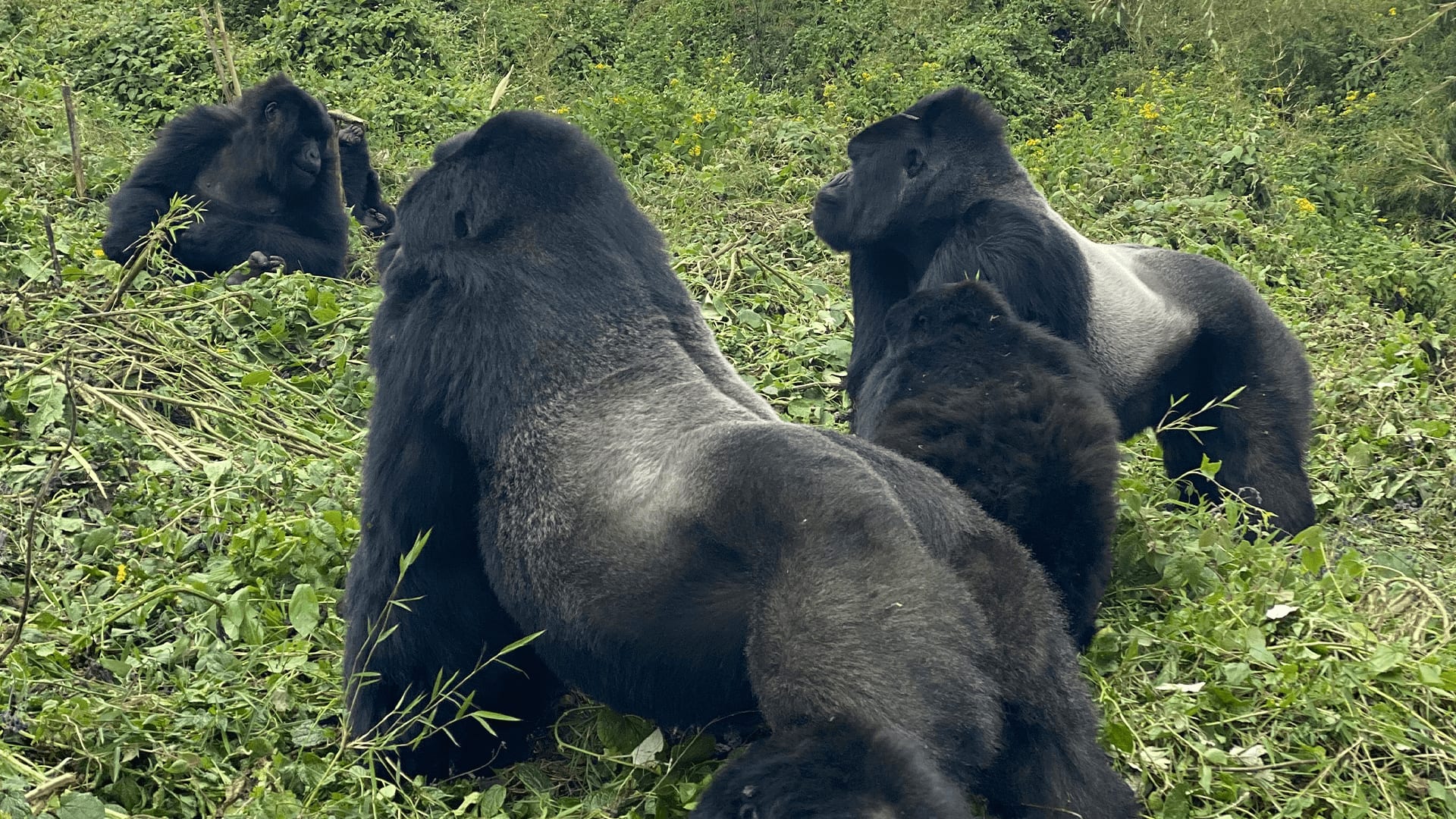
Mountain gorillas are the clearest example of wildlife you can see better on a Uganda route because the entire encounter is habitat-driven. Bwindi Impenetrable National Park is not a backdrop. It is a dense, ancient forest where the trekking itself builds anticipation.
A standard gorilla trek begins with a briefing, then a ranger-led hike to one of the habituated gorilla families. Trekking time varies widely. Some groups may be reached in under two hours, while others require a longer and steeper hike. Once the gorillas are located, visitors usually spend one regulated hour with them.
That hour is powerful because the details are so close: a silverback’s stillness, juveniles playing, soft feeding sounds, and the complex social rhythm of the family. Travelers comparing destinations for gorillas should understand that Uganda offers both Bwindi and Mgahinga, giving itinerary designers more flexibility. For deeper planning, see PawMac Safaris’ guide on where to see gorillas in Africa and why Uganda leads.
For 2026 planning, foreign non-resident gorilla trekking permits in Uganda are commonly budgeted at USD 800 per person under the Uganda Wildlife Authority tariff cycle. This fee is separate from accommodation, transport, guiding, and park logistics. Because permits are limited by sector and date, serious travelers should treat them as the first anchor of the itinerary.
Chimpanzees in Kibale Forest
Chimpanzee tracking is more dynamic than gorilla trekking. Gorillas often feel calm and grounded. Chimpanzees can be fast, loud, political, and theatrical. In Kibale Forest, you may hear pant-hoots echoing above you before you see the group moving through the trees.
Kibale is often considered Uganda’s premier chimpanzee tracking destination because of its primate density and established visitor experience. The forest is also home to other primates, including red colobus, black-and-white colobus, grey-cheeked mangabey, and red-tailed monkeys, although sightings vary.
For 2026 budget planning, Kibale chimpanzee tracking permits for foreign non-residents are commonly estimated around USD 250 per person. Some alternative chimpanzee experiences in Uganda can cost less, but Kibale remains a top choice for travelers prioritizing reliability, forest quality, and strong guiding infrastructure.
Tree-climbing lions and classic savannah wildlife
Queen Elizabeth National Park gives Uganda its classic savannah safari feel, especially when combined with the Ishasha sector. Ishasha is known for tree-climbing lions, a behavior that gives photographers and wildlife lovers a distinctive Uganda moment. Lions may rest on fig tree branches during warmer hours, though sightings are never guaranteed.
The broader Queen Elizabeth ecosystem also supports elephants, buffalo, Uganda kob, warthogs, hippos, crocodiles, leopards, hyenas, and abundant birdlife. The advantage is contrast. You can spend one day exploring open savannah and another on a boat safari, then continue toward Bwindi for gorillas.
This is where route design matters. Rushing through Queen Elizabeth with only one short game drive may reduce your chances of seeing predator behavior. A stronger plan gives you at least two wildlife activities in the park, typically a morning game drive and an afternoon boat cruise.
Hippos, crocodiles, elephants, and birds by boat
Uganda’s boat safaris are among the country’s most underrated advantages. The Kazinga Channel in Queen Elizabeth National Park and the Nile boat routes in Murchison Falls National Park can bring you close to animals that are harder to appreciate from a vehicle.
Hippos are often seen in large pods. Nile crocodiles bask near the waterline. Elephants may come to drink or bathe. Buffalo stand in the shallows, while fish eagles, kingfishers, herons, pelicans, storks, and bee-eaters add constant movement around the riverbanks.
Boat safaris also help photographers. The angle is lower, the background is often cleaner, and animal behavior around water can be more expressive. For families or travelers who prefer less strenuous activities, boat safaris add comfort without weakening the wildlife quality.
Rhinos and the Big Five route
Uganda’s Big Five experience is route-based. Lions, leopards, elephants, and buffalo are found in national parks, while rhino tracking is typically added at Ziwa Rhino Sanctuary between Kampala or Entebbe and Murchison Falls.
This creates a logical northern circuit. Start from Entebbe, drive to Ziwa for rhino tracking, continue to Murchison Falls for game drives and a Nile boat safari, then connect onward to Kibale, Queen Elizabeth, and Bwindi if time allows.
The key point is expectation management. Uganda can offer a Big Five route, but leopards remain elusive and rhinos are part of a sanctuary-based conservation experience rather than a free-ranging national park sighting. A professional guide will explain those distinctions clearly, which helps travelers appreciate the route without unrealistic promises.
A Uganda route that improves your wildlife viewing
A strong Uganda safari should not simply connect famous park names. It should build momentum by matching each destination to a specific wildlife purpose. For most first-time premium travelers, 10 to 12 days is a strong length because it allows gorillas, chimpanzees, savannah, boat safaris, and rhino tracking without making every day feel rushed.
| Day range | Destination | Main wildlife focus | Why it improves the route |
|---|---|---|---|
| Day 1 | Entebbe | Arrival, rest, optional botanical or Mabamba extension | Reduces fatigue before long drives and tracking days |
| Days 2 to 3 | Ziwa and Murchison Falls | Rhinos, elephants, giraffes, lions, buffalo, Nile wildlife | Adds Big Five depth and strong river scenery |
| Days 4 to 5 | Kibale Forest | Chimpanzees and forest primates | Introduces Uganda’s primate strength before gorillas |
| Days 6 to 7 | Queen Elizabeth | Lions, elephants, hippos, crocodiles, birds | Combines game drives with the Kazinga Channel boat safari |
| Days 8 to 10 | Bwindi or Mgahinga | Mountain gorillas | The emotional highlight and most permit-sensitive activity |
| Days 11 to 12 | Lake Mburo or Entebbe | Zebras, impalas, elands, optional walking safari | Breaks the return journey and adds a gentler finale |
This route can be adjusted for pace and budget. Luxury travelers may prefer fewer lodge changes, fly-in segments where available, and longer stays at premium properties. More active travelers may add golden monkey tracking in Mgahinga, a second gorilla trek, or extra birding time around wetlands.

For travelers who want a deeper itinerary perspective, PawMac Safaris has outlined wildlife tours in Uganda worth adding to your itinerary, including how different activities can be combined without overloading the trip.
Best timing for wildlife viewing in Uganda
Uganda is a year-round safari destination, but your experience changes by season. The drier months, commonly June to September and December to February, are popular for gorilla trekking, chimpanzee tracking, and savannah game viewing because trails can be more manageable and animals may concentrate around water sources.
The wetter months can still be excellent, especially for birding, lush landscapes, and travelers who prefer fewer visitors. Forest trekking may be muddier, but the scenery can be spectacular. Photographers often appreciate the richer greens, dramatic skies, and softer light after rain.
Season affects cost as well. Peak travel periods can raise lodge rates and reduce availability, especially around gorilla sectors with limited high-quality accommodation. Shoulder seasons may offer better value, but permit availability and road conditions should still be planned carefully.
If gorillas are the main reason for travel, choose dates around permit availability first, then shape the rest of the safari around that anchor. If photography is the priority, discuss light, vehicle positioning, and time in each park before finalizing the route.
What it costs to build this route in 2026
Uganda can work for budget-conscious travelers, but the strongest wildlife routes are not built on permits alone. Costs include private transport, fuel, driver-guide services, park entry, ranger activities, accommodation, meals, boat cruises, and the level of lodge comfort.
The figures below are realistic planning ranges, not fixed PawMac Safaris prices. Final costs depend on travel season, group size, lodge category, permit availability, routing, and whether domestic flights are included.
| Cost item | Typical 2026 planning range | Notes |
|---|---|---|
| Gorilla trekking permit | About USD 800 per person | Usually the largest single activity cost for foreign non-residents |
| Kibale chimpanzee permit | About USD 250 per person | Premium forest tracking experience with strong demand |
| National park entry | Often USD 40 to 45 per person per 24 hours | Varies by park and residency category under Uganda Wildlife Authority tariffs |
| Boat safari | Often USD 30 to 40+ per person | Private or special boat options may cost more |
| Rhino tracking | Often around USD 50 per person | Confirm current sanctuary rates when booking |
| Budget accommodation | About USD 60 to 150 per person per night | Simple comfort, often best for flexible travelers |
| Midrange accommodation | About USD 180 to 450 per person per night | The most common comfort level for private safaris |
| Luxury accommodation | About USD 500 to 1,500+ per person per night | Premium lodges, locations, service, and exclusivity drive the price |
| 10 to 12 day private safari | About USD 4,000 to 8,500+ per person | Assumes permits, vehicle, guiding, parks, and midrange to upper-midrange lodging |
| High-end private safari | About USD 8,000 to 15,000+ per person | Luxury lodges, added nights, private experiences, and flights can increase costs |
Safari comfort is practical, not abstract. Space, rest quality, bathroom standards, food, road access, and lodge location all affect how well you enjoy early starts and long tracking days. Many travelers evaluate safari value with the same disciplined thinking they would use for major comfort and lifestyle decisions at home, such as comparing affordable manufactured homes in San Antonio by layout, budget, and long-term convenience. On safari, that same attention to total value helps you choose the lodge category that truly matches your expectations.
The biggest budgeting mistake is spending heavily on one luxury component while underfunding the route. A beautiful lodge cannot compensate for too little time in a key park or a missed permit. PawMac Safaris helps travelers balance comfort, wildlife priorities, and realistic travel flow so the budget supports the experience rather than distorting it.
How to choose the right safari style
The best safari style depends on what you most want to see better. A gorilla-focused traveler should prioritize Bwindi or Mgahinga sectors, trekking fitness, permit timing, and lodge proximity to the briefing point. A photographer should prioritize time of day, private vehicle flexibility, and patient guiding. A family may need shorter drive days, reliable lodge comfort, and a balanced mix of active and relaxed experiences.
Budget travelers can still have outstanding wildlife encounters in Uganda, especially if they protect the essential activities: gorilla trekking, chimpanzee tracking, at least one strong savannah park, and a boat safari. The trade-off usually appears in accommodation category, vehicle exclusivity, and route pace.
Luxury travelers should look beyond thread count and views. The most valuable premium safari upgrades often include better locations, fewer transfers, stronger guiding continuity, private vehicle use, and enough nights in each ecosystem. A high-end Uganda safari should feel calm and deeply planned, not simply expensive.
Guiding details that make sightings better
In Uganda, guiding quality has a direct effect on wildlife quality. A skilled local guide does more than drive between parks. They read weather, road conditions, animal behavior, park rules, ranger updates, and guest energy levels. This is especially important on a route that includes forests, savannah, wetlands, and boat activities.
Small decisions matter. Starting a game drive early can improve predator chances. Choosing the right gorilla sector can reduce unnecessary drive time. Timing a boat safari for afternoon light can improve photography. Knowing when to wait, and when to move, can change the outcome of a sighting.
PawMac Safaris builds Uganda safari experiences around expert local knowledge, professional planning, comfortable 4×4 vehicles, and flexible routing. That is especially valuable for travelers who want to see the best wildlife in Africa through Uganda’s most rewarding routes, not through a generic itinerary copied from another destination.
Frequently Asked Questions
Is Uganda good for first-time safari travelers? Yes. Uganda is excellent for first-time safari travelers who want variety. A well-designed route can include gorilla trekking, chimpanzee tracking, savannah game drives, boat safaris, rhino tracking, and cultural experiences in one country.
Can I see the Big Five in Uganda? Yes, but the route must be planned correctly. Lions, leopards, elephants, and buffalo can be seen in national parks, while rhinos are typically tracked at Ziwa Rhino Sanctuary. Leopards are elusive, so no ethical operator should guarantee them.
What wildlife is Uganda best known for? Uganda is best known for mountain gorillas, chimpanzees, tree-climbing lions in Ishasha, Nile wildlife in Murchison Falls, the Kazinga Channel’s hippos and birds, and rare wetland species such as the shoebill.
How many days do I need for a strong Uganda wildlife route? Seven days can work for gorillas plus one or two additional highlights, but 10 to 12 days is stronger for travelers who want gorillas, chimpanzees, Big Five routing, boat safaris, and a comfortable pace.
Are Uganda safaris expensive in 2026? They can be, mainly because gorilla and chimpanzee permits add significant fixed costs. A private 10 to 12 day safari often requires a serious budget, especially with midrange or luxury lodges, but careful planning can match the route to your comfort level.
When should I book gorilla permits? Book as early as possible once your travel dates are serious, especially for peak months and preferred Bwindi sectors. Permit availability can shape the entire route.
Plan a route designed around the wildlife you value most
The best way to see wildlife in Africa through Uganda is to build the safari around encounters, not just destinations. If gorillas are your priority, secure the right trekking sector. If big cats matter, give Queen Elizabeth, Murchison Falls, or Kidepo enough time. If photography is central, design the route around light, patience, and private guiding flexibility.
PawMac Safaris can help you create a personalized Uganda safari for 2026 that balances wildlife priorities, lodge comfort, permit timing, road logistics, and budget transparency. Whether you want a premium gorilla trekking journey, a Big Five route, or a varied wildlife safari across Uganda’s national parks, plan your Uganda Safari 2026 with PawMac Safaris and travel with local experts who understand how to make every day count.


