


- 150 Views
- 10 Min Read
- (0) Comment
TL;DR:
- Proper gear, light, and timing are essential for capturing Uganda’s dynamic wildlife moments.
- Ethical distance, behavior prediction, and expert guides ensure responsible and successful photography.
- Focus on storytelling and common subjects to create memorable images beyond just rare species.
Uganda’s wildlife moves fast, hides deep, and rarely waits for you to adjust your settings. Whether you’re tracking mountain gorillas through Bwindi Impenetrable Forest or watching elephants wade across the Kazinga Channel, capturing those moments demands smart preparation, not just good luck. This guide lays out 10 focused tips to help you master wildlife photography on a Uganda safari, covering everything from gear selection and golden hour timing to ethical distance rules and post-processing habits. Each tip is grounded in practical field experience and expert guidance so you can turn fleeting encounters into images worth keeping.
Table of Contents
- Choose the right lenses and gear
- Master timing and light for Uganda’s wildlife
- Optimize your camera settings for action
- Practice ethical wildlife photography in Uganda
- A realistic approach: Why story matters more than rare species
- Plan your safari photography adventure with PawMac
- Frequently asked questions
Key Takeaways
| Point | Details |
|---|---|
| Use telephoto zoom | A 200-400mm or 70-200mm f/2.8 lens gives you flexibility and reach for Uganda’s wildlife. |
| Shoot at golden hour | Sunrise and dusk offer ideal light and active animals for captivating shots. |
| Prioritize ethical shooting | Always maintain distance and follow guidelines for primates; respect local wildlife rules. |
| Optimize camera settings | Fast shutter, wide aperture, high ISO, continuous AF, and burst mode ensure quality action shots. |
| Tell compelling stories | Focus not just on rare animals, but on the narratives and moments that define your safari. |
Choose the right lenses and gear
Now that you know what to expect, let’s get into the equipment you’ll need to succeed. Gear selection is the single biggest factor separating sharp, compelling wildlife photos from blurry disappointments.
Here are 10 essential tips for wildlife photography on a Uganda safari:
-
Carry both a wide-angle and a telephoto lens. A wide-angle captures sweeping savanna landscapes at Murchison Falls, while a telephoto zoom lens (200-400mm or 70-200mm f/2.8) brings distant lions and habituated gorilla families close without disturbing them.
-
Shoot during golden hour light. The golden hour at sunrise and dusk produces warm, directional light that sculpts animal fur and feathers beautifully. Wildlife is also most active during these windows, especially in Uganda’s open savannas.
-
Predict animal movement before pressing the shutter. Watch behavior patterns. A lion crouching low, a chimp scanning the canopy, or a buffalo shifting its weight all signal what comes next. Anticipating the action puts you a full second ahead.
-
Stabilize your shots from the vehicle. A beanbag draped over the window ledge of your 4×4 van absorbs vibration far better than a tripod on a moving vehicle. Pair this with proper safari packing that includes rain covers for Uganda’s high humidity.
-
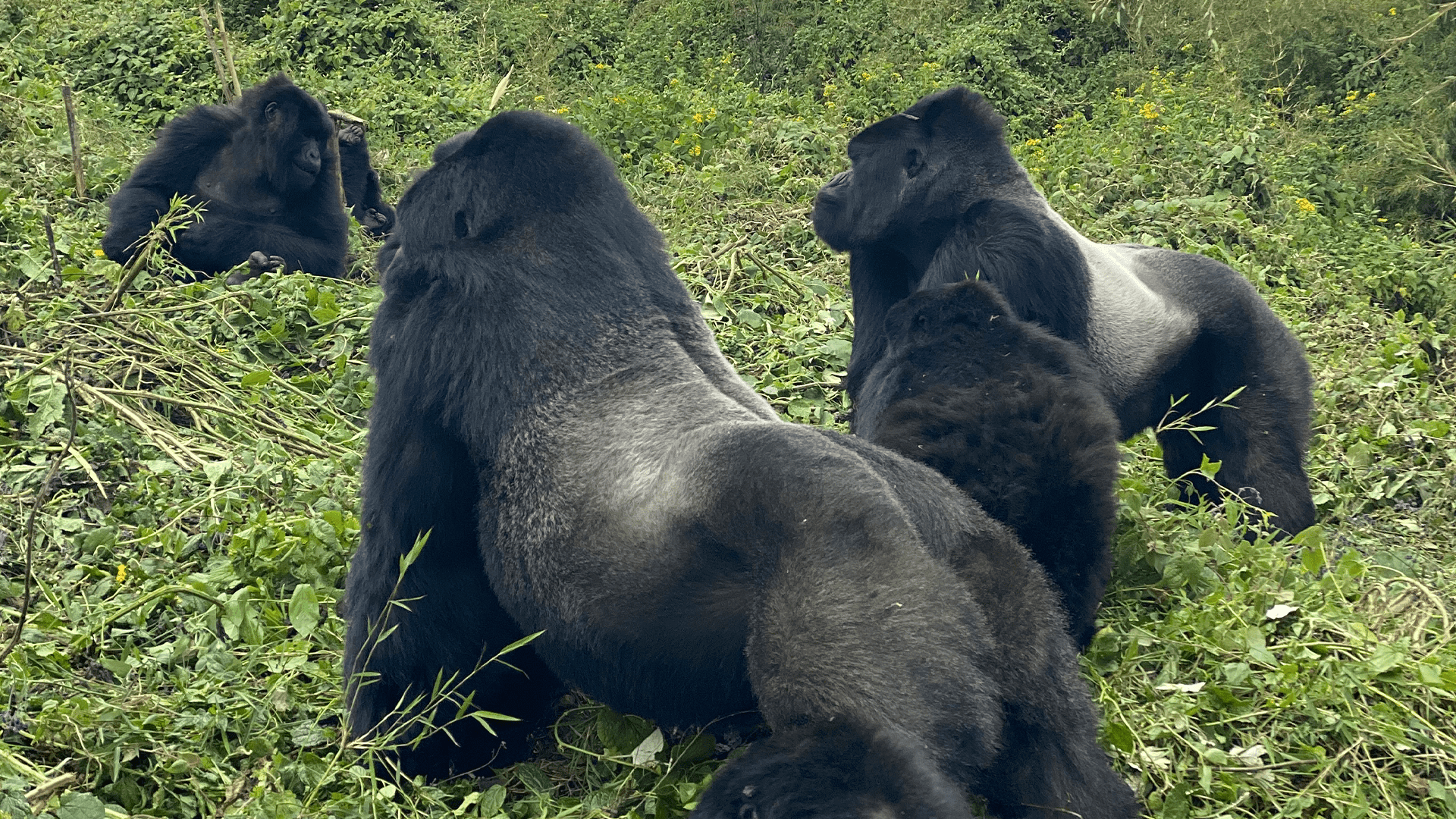
Use burst mode for gorillas and fast subjects. Mountain gorillas in Bwindi move suddenly. Burst mode fires multiple frames per second, giving you the best chance of capturing a sharp image mid-gesture or mid-charge.
-
Prepare for weather. Uganda’s equatorial climate means rain arrives without much warning. Keep a waterproof camera cover accessible at all times, and store spare lenses in sealed bags. Check out the safari packing advice from PawMac Safaris for a full gear checklist.
-
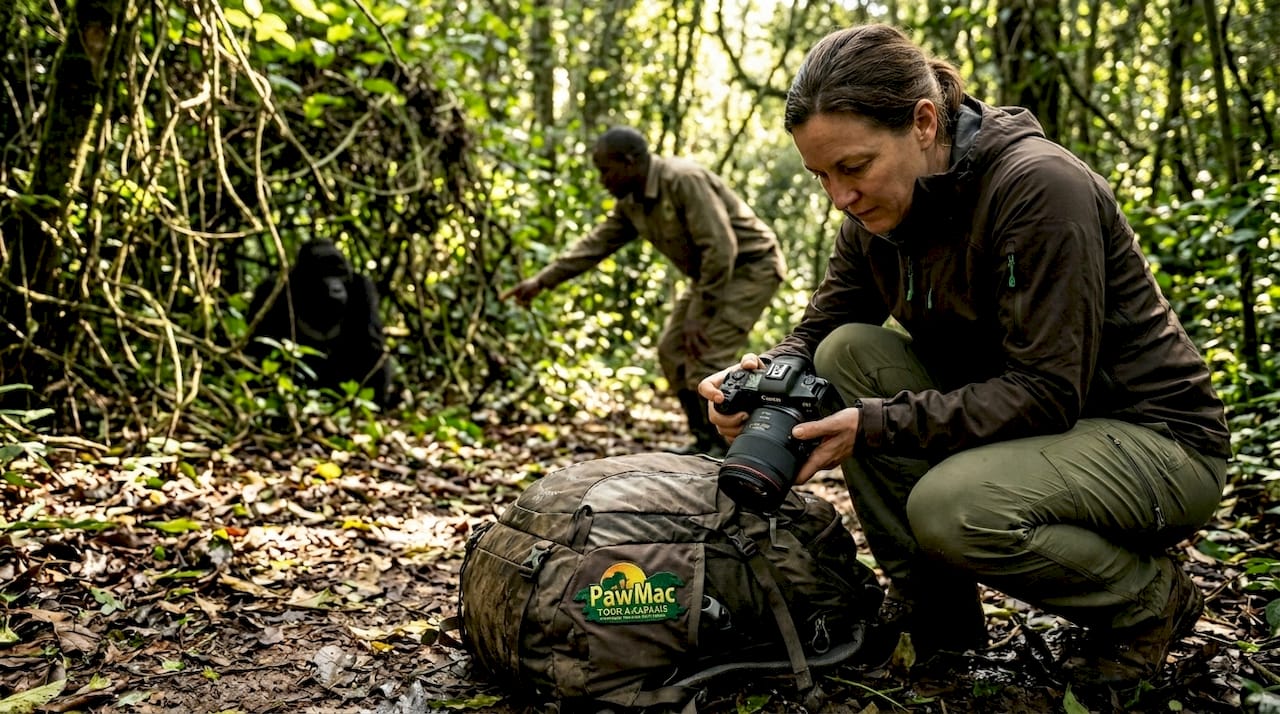
Maintain ethical distance from wildlife. Keep at least 7 meters from gorillas and chimpanzees at all times. Ethical shooting is not optional. It protects both the animals and your permit access.
-
Shoot RAW format for maximum editing flexibility. RAW files retain far more tonal data than JPEGs, which is critical when recovering shadows in Uganda’s dense forest environments. Post-processing a RAW file from a dim chimp encounter can reveal detail that a JPEG would simply lose.
-
Carry backup batteries and extra memory cards. Cold mornings and long game drives drain batteries faster than expected. A dead battery during a gorilla trek is a real risk. Pack at least two fully charged spares and review the Uganda permits and gear guide before your trek.
-
Listen to your guide. Experienced local guides read animal behavior in real time. They know which direction a leopard is likely to move and where the light will fall best in 20 minutes. Their input is worth more than any camera setting.
| Common mistake | Fix |
|---|---|
| Motion blur on moving animals | Use shutter speed 1/1000s or faster |
| Overexposed midday shots | Shoot at golden hour, use exposure compensation |
| Missed gorilla moments | Switch to burst mode before the trek begins |
| Gear failure in rain | Always carry a waterproof camera cover |
| Flat, lifeless forest shots | Use overcast light for even tones on close-ups |
Pro Tip: Switch your camera to silent shutter mode before entering gorilla or chimpanzee habitats. The click of a mechanical shutter can startle primates and disrupt the group’s behavior.
Master timing and light for Uganda’s wildlife
Once your gear is ready, timing and lighting become the next critical factors. Uganda’s light changes dramatically across the day, and understanding that rhythm helps you plan every outing.
The golden hour at sunrise and dusk is the most productive window for both light quality and animal activity. At Murchison Falls and Queen Elizabeth National Parks, predators hunt at dawn and herds move to water at dusk. These moments are visually rich and behaviorally dynamic.
Here’s a simple schedule to align your day with Uganda’s wildlife patterns:
- 5:30 a.m. Wake and prepare gear before light breaks.
- 6:00 a.m. Begin game drive to catch first light on open savanna.
- 9:00 a.m. Return to camp as midday heat begins and animals seek shade.
- 11:00 a.m. Review images, charge batteries, and plan afternoon positions.
- 3:30 p.m. Head back out for the late afternoon session.
- 5:30 p.m. Shoot the golden dusk light as animals return to water sources.
Midday light is harsh and flat, creating unflattering shadows on animal faces. However, overcast skies flip this dynamic entirely. Soft cloud cover acts like a giant diffuser, producing even tones that work beautifully for close-up portraits of primates or birds. Don’t pack up just because the sun disappears.
For gorilla trekking in Bwindi, morning starts are mandatory since treks begin at 8:00 a.m. The forest canopy filters light differently at different elevations, so your Uganda safari guide can help you understand what to expect at each altitude. Planning a multi-park itinerary? The 7-day safari itinerary from PawMac Safaris shows how to balance forest and savanna shooting across a full week.
Plan Your Uganda Safari with Local Experts
 WhatsApp Us
Optimize your camera settings for action
With a plan for light and activity, it’s time to set up your camera for Uganda’s unpredictable wildlife. The right settings remove hesitation and let you react instantly.
For fast-moving subjects, use shutter priority or manual mode with a shutter speed of at least 1/500s. For leaping impalas or charging buffalo, push to 1/1000s or beyond. A wide aperture between f/2.8 and f/5.6 isolates your subject against a blurred background and lets in more light in shaded forest areas.
High ISO is your friend in Uganda’s forests. A sharp, slightly noisy image at ISO 3200-6400 is always more valuable than a perfectly clean but blurry one. Modern camera sensors handle high ISO well, so don’t be afraid to push it when chimps disappear into the canopy.
Key settings summary:
- Shutter speed: 1/500s minimum, 1/1000s for fast action
- Aperture: f/2.8 to f/5.6 for subject isolation and light
- ISO: 800 to 6400 depending on forest density
- Autofocus: Continuous AF locked on the animal’s eye
- Drive mode: Burst for movement sequences
- Flash: Never, especially around primates
For a deeper breakdown of settings tailored to Uganda’s parks, the Uganda safari photography guide covers each habitat in detail.
Practice ethical wildlife photography in Uganda
Knowing your settings, the final and arguably most important step is practicing ethical wildlife photography. Uganda’s primates are endangered, and irresponsible behavior around them causes lasting harm.
The Uganda Wildlife Authority (UWA) enforces strict rules during gorilla and chimpanzee treks. Maintain at least 7 meters between yourself and any primate at all times. Never use flash, never offer food or bait, and sanitize your hands and gear before entering any primate habitat to prevent disease transmission.
Ethical dos and don’ts:
- Do follow your guide’s positioning instructions at all times
- Do keep voices low and movements slow
- Do prioritize observation over getting the shot
- Don’t use flash or artificial light near primates
- Don’t step off the designated trail to get a better angle
- Don’t share images that reveal exact gorilla nest locations
“Minimize disturbance and prioritize observation over shots. The best wildlife photographers know when to lower the camera.”
Your guide plays a central role here. Beyond ethics, they position you for the best angles while keeping the group compliant with UWA rules. Understanding the role of safari guides in Uganda explains why local expertise is irreplaceable. The benefits of guided safaris go well beyond navigation.
A realistic approach: Why story matters more than rare species
Beyond techniques, the way you choose subjects and stories sets your work apart from thousands of other safari photographers. There’s a tendency to fixate on the rarest animal in the park, to measure success by whether you photographed a shoebill stork or a tree-climbing lion. That mindset often produces technically competent but emotionally empty images.
Uganda’s common subjects like birds and insects alongside its famous primates offer extraordinary narrative depth. A weaver bird constructing a nest, a dung beetle navigating a dusty track, or a child from a local community watching elephants from a hillside all tell stories that resonate far beyond a standard gorilla portrait.
“Some of the greatest wildlife photos aren’t about the most dangerous animal. They’re about the moment.”
Capture what’s unique to Uganda, not just what’s rare:
- The mist lifting off Bwindi at 6:00 a.m.
- A hippo yawning at the Kazinga Channel
- The texture of a silverback’s knuckles in soft forest light
- A flock of African grey parrots crossing a clearing
Patience and storytelling, guided by local insight, are what separate memorable safari photography from a collection of snapshots. Read more stories and field insights on the PawMac Safaris travel blog.
Plan your safari photography adventure with PawMac
Putting these strategies into practice is far easier when you have expert support on the ground. PawMac Safaris designs Uganda wildlife tours specifically for photographers who want more than a standard game drive. From positioning in the right light to timing your Uganda gorilla trekking permit for optimal forest conditions, every detail is handled with photography goals in mind.

Our guides know where the shoebill storks feed at dawn and which Murchison Falls riverbank puts the sunrise directly behind the hippos. For photographers who want to diversify their portfolio, the bird watching safari Uganda adds over 1,000 species to your shooting list. Contact PawMac Safaris today and let us build a photography itinerary around your vision.
Frequently asked questions
What is the best lens for wildlife photography in Uganda?
A 200-400mm or 70-200mm f/2.8 telephoto zoom lens is the top choice for both open savanna game drives and gorilla treks in dense forest environments.
How do I protect my camera gear from rain on a Uganda safari?
Always carry a dedicated waterproof camera cover and store spare lenses in sealed bags. Uganda’s equatorial climate brings sudden downpours year-round, so rain protection is non-negotiable.
When is the best time to photograph animals during a Ugandan safari?
Sunrise and dusk offer the best combination of soft golden light and active wildlife behavior, particularly at Murchison Falls and Queen Elizabeth National Parks.
How should I set my camera for fast-moving animals?
Use shutter priority or manual mode at 1/500s or faster, set aperture to f/2.8-f/5.6, push ISO to 800-6400 as needed, enable continuous autofocus on the animal’s eye, and always shoot in burst mode without flash.
What ethical rules should I follow for primate photography in Uganda?
Maintain at least 7 meters from gorillas and chimpanzees, never use flash or bait, sanitize your gear before treks, and follow all Uganda Wildlife Authority guidelines to protect the animals and your permit.
Recommended
- African wildlife photography tour guide Uganda safaris 2026
- Wildlife photography tours Uganda 2026: permits & gear guide
- Uganda Safari Packing Guide for Gorilla Treks and Big Five
- 8 Family Safari Packing Checklist Must-Haves for Uganda


