


- 231 Views
- 5 Min Read
- (0) Comment
TL;DR:
- Gorilla permits in Uganda cost $800, while in Rwanda they are $1,500 in 2026.
- Uganda offers more permit availability and lower overall travel costs than Rwanda.
- The trekking experience varies, with Uganda’s trails being longer and more physically demanding.
Most travelers assume gorilla trekking in Uganda and Rwanda delivers the same experience at roughly the same price. That assumption can cost you hundreds, sometimes over a thousand dollars. In 2026, Uganda’s gorilla trekking permit sits at $800, while Rwanda charges $1,500 for the same one-hour encounter with a habituated gorilla family. The price gap is real, and so are the differences in trail difficulty, accessibility, and overall trip value. This guide breaks down every key factor so you can make an informed buying decision, spend wisely, and walk away with an extraordinary wildlife encounter.
Official Booking Notice & Permit Policy: All gorilla trekking permits and park fees in Uganda are strictly regulated by the Uganda Wildlife Authority (UWA). To guarantee permit availability and maintain our high standards of ground logistics, PawMac Safaris is currently prioritizing serious booking inquiries for the 2026 and autumn 2027 seasons. We are disregarding inquiries without specific dates to focus entirely on concrete travel plans.
Table of Contents
- Overview: Gorilla trekking in Uganda and Rwanda
- Cost breakdown: Uganda vs Rwanda gorilla trekking
- Permits: How availability, process, and rules compare
- On the trail: Trekking experience in Uganda vs Rwanda
- Planning tips: How to choose the right destination for you
- What most guides miss about trekking in Uganda vs Rwanda
- Plan your East African gorilla adventure with the experts
- Frequently asked questions
Key Takeaways
| Point | Details |
|---|---|
| Uganda Offers Lower Costs | Permits ($800 vs $1,500) and in-country expenses are significantly cheaper in Uganda compared to Rwanda. |
| Booking Flexibility | Uganda’s larger permit pool across 4 sectors allows better availability than Rwanda. |
| Experience Varies by Country | Uganda’s treks are often longer in dense rainforest, while Rwanda’s are shorter but at higher altitude. |
Overview: Gorilla trekking in Uganda and Rwanda
Gorilla trekking means hiking through dense, mist-shrouded rainforest to find and spend one hour with a wild, habituated gorilla family. East Africa holds the last remaining mountain gorillas on Earth, and both Uganda and Rwanda offer gorilla trekking in their national parks, making the region the global center of this extraordinary experience.
In Uganda, the main trekking destinations are Bwindi Impenetrable Forest National Park and Mgahinga Gorilla National Park. Bwindi alone is home to nearly half the world’s mountain gorilla population. In Rwanda, all treks take place in Volcanoes National Park, a compact but dramatic landscape of volcanic peaks. Every permit purchased directly funds habitat protection, anti-poaching efforts, and local community programs managed by UWA and RDB.
Cost breakdown: Uganda vs Rwanda gorilla trekking
Let’s look at the numbers directly. The permit fee is the single biggest cost in any gorilla trekking trip, and the gap between the two countries affects the entire buying decision.
| Aspect | Uganda (PawMac Safaris) | Rwanda |
|---|---|---|
| Official Permit Fee | $800 USD | $1,500 USD |
| Trek Length | 2 to 7 hours | 4 to 8 hours |
| Estimated 3-Day Total Cost | ~$1,500 – $2,500 USD | ~$4,500+ USD |
| Lodging Options | Wide range (Budget, Mid-range, Luxury) | Heavily skewed toward ultra-luxury |
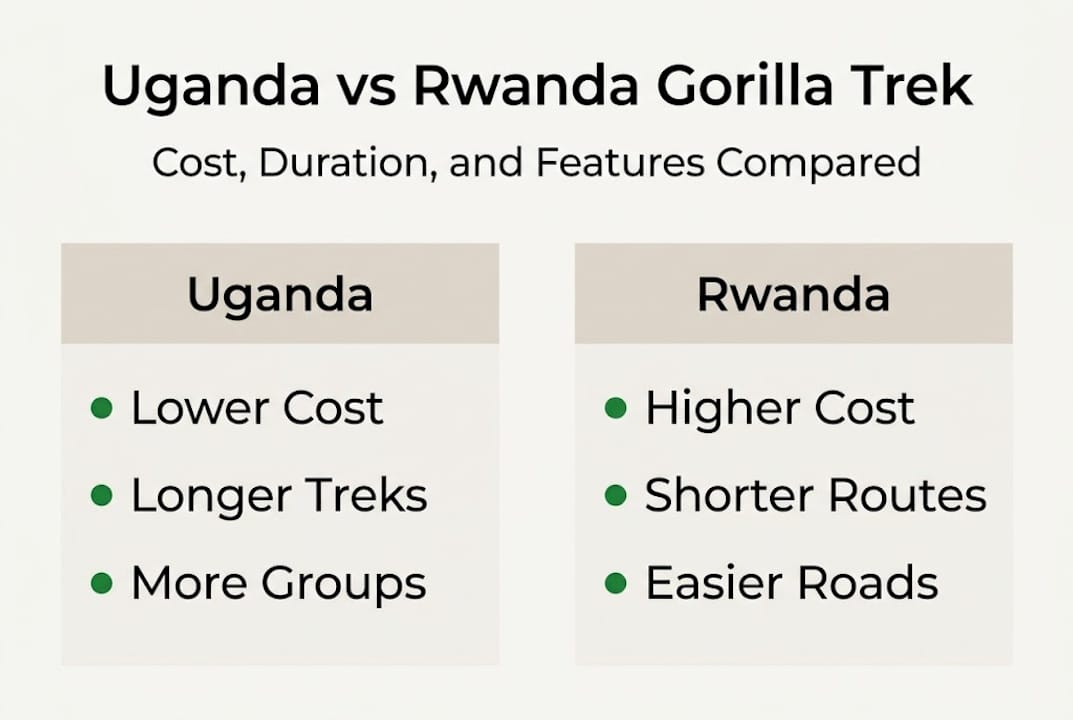
The Uganda permit costs $800 in 2026, compared to Rwanda’s $1,500, saving you $700 on the permit alone. Additionally, Uganda generally offers lower in-country travel and lodging costs. Booking through a local tour operator like PawMac Safaris bundles official UWA permits, comfortable 4×4 land cruisers, and hand-picked mid-range or luxury lodges seamlessly.
Permits: How availability, process, and rules compare
Uganda allocates more daily permits per park across its four distinct trekking sectors (Buhoma, Ruhija, Rushaga, and Nkuringo), making permit availability more reliable than in Rwanda. Because the Uganda Wildlife Authority requires full payment upfront to lock in a permit, working with a licensed ground handler is essential to guarantee your sector aligns perfectly with your lodge choice.
On the trail: Trekking experience in Uganda vs Rwanda
Gorilla treks in Uganda can be longer and physically demanding, while Rwanda’s routes are generally shorter but at higher altitude. Bwindi’s terrain is steep and densely forested, rewarding adventure seekers with an authentic jungle expedition. Volcanoes National Park in Rwanda sits at higher elevations (above 2,500 meters), which can affect breathing and stamina differently.
| Feature | Uganda (Bwindi/Mgahinga) | Rwanda (Volcanoes NP) |
|---|---|---|
| Trail Difficulty | Moderate to very challenging (Steep rainforest) | Moderate (High altitude volcanic slopes) |
| Time with Gorillas | Strictly 1 hour (4 hours for Habituation) | Strictly 1 hour |
| Wildlife Add-ons | Chimpanzees (Kibale), Big Five wildlife safaris | Golden monkeys |
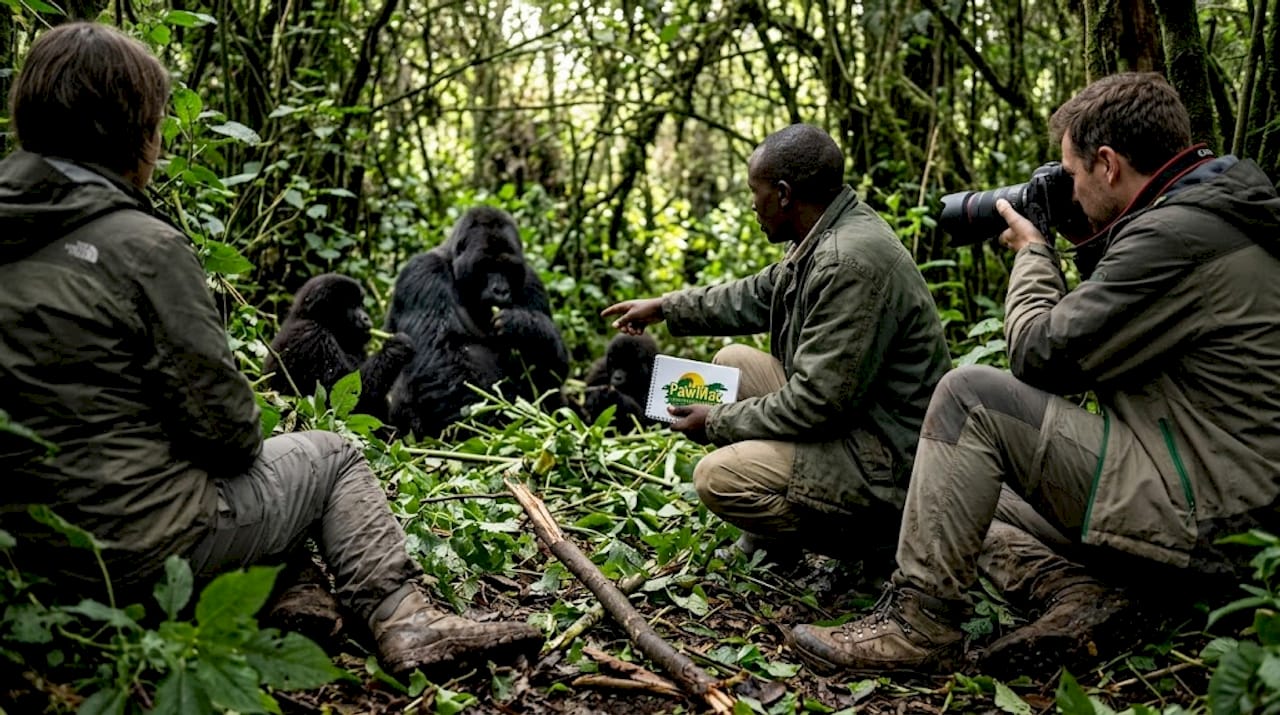
For the trekking preparation checklist, packing the right gear makes a real difference. Ensure you bring sturdy waterproof boots, long trousers to tuck into your socks, and gardening gloves to handle the dense vegetation safely.
Planning tips: How to choose the right destination for you
Uganda generally appeals to travelers looking for exceptional trip value, rich biodiversity, and multi-park combinations. If you want to pair primate tracking with a classic savanna game drive, Uganda’s Queen Elizabeth and Murchison Falls National Parks offer world-class opportunities. Explore our dedicated Uganda safari packages to see how effortlessly these itineraries blend.
Plan your East African gorilla adventure with the experts
Choosing between Uganda and Rwanda doesn’t have to be stressful. At PawMac Safaris, we specialize in custom gorilla trekking experiences tailored to your exact budget, schedule, and fitness level.
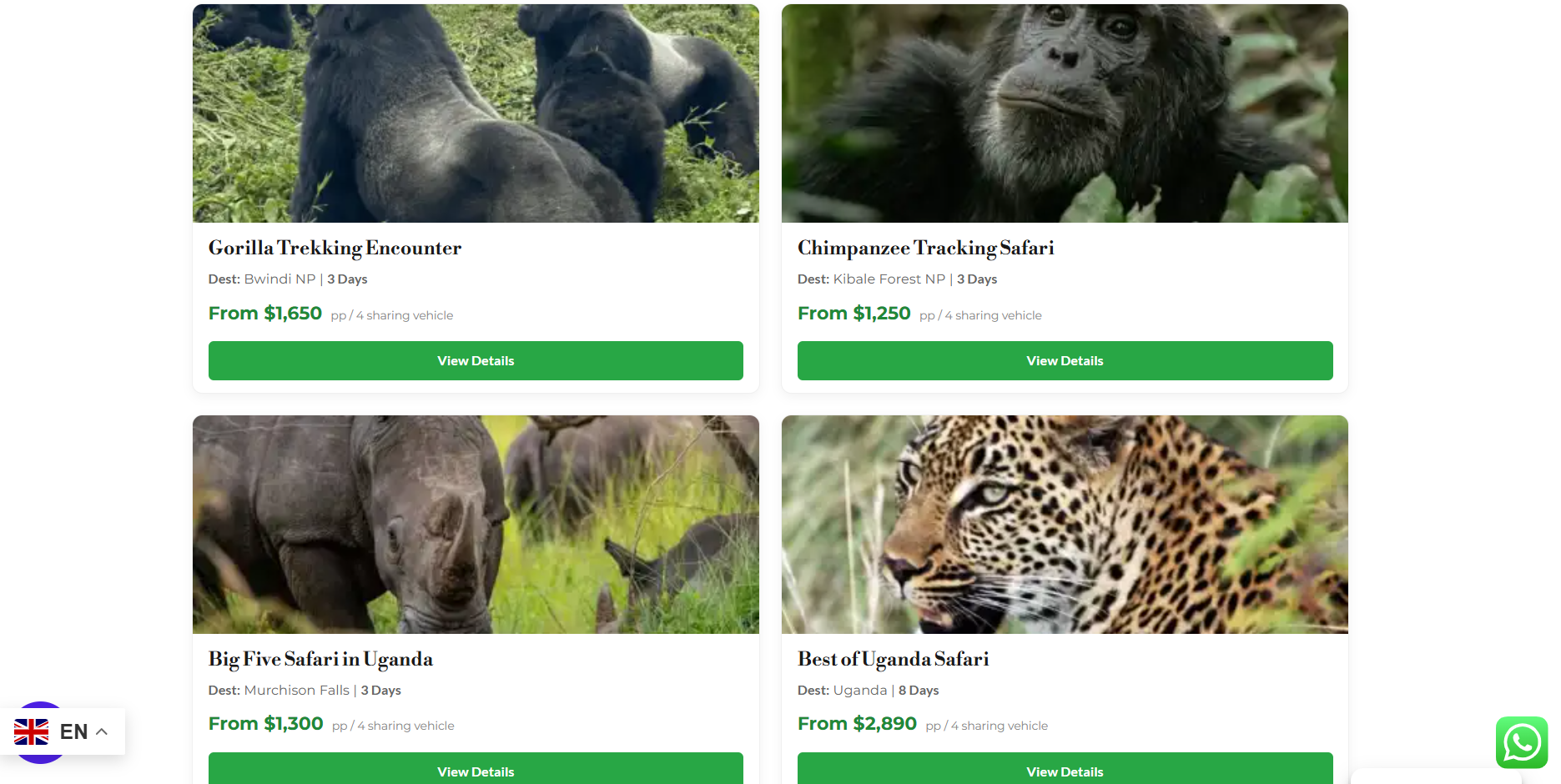
Browse our Uganda safari tours to start mapping out your journey. Contact us today for a personalized, straightforward quote, and let our local expertise handle the UWA permit procurement seamlessly.
Plan Your Uganda Safari with Local Experts
 WhatsApp Us
Frequently asked questions
How much does gorilla trekking cost in Uganda vs Rwanda in 2026?
In 2026, the official Uganda gorilla permit costs $800 USD, while the Rwanda permit is $1,500 USD. Uganda is significantly more affordable across lodging, meals, and transport infrastructure as well.
Is the trekking experience harder in Uganda or Rwanda?
Uganda’s Bwindi forest features steeper, thicker, and muddier terrain, demanding more physical endurance. Rwanda’s trails are often shorter but take place at a much higher altitude, which impacts breathing and stamina differently.
Can I combine gorilla trekking with classic safaris?
Uganda is the premier destination for multi-activity trips. You can easily combine a Bwindi gorilla trek with chimpanzee tracking in Kibale and a Big Five wildlife safari in Queen Elizabeth or Murchison Falls National Park.


