


- 100 Views
- 10 Min Read
- (0) Comment
TL;DR:
- Wildlife photography safaris focus on storytelling, technical mastery, and ethical animal interactions.
- Planning requires early permit booking, strategic location choices, and proper gear preparation.
- Respect for wildlife and ecosystems is essential for responsible and impactful photography.
Most photographers arriving in Uganda for their first safari believe the hardest part is spotting a mountain gorilla through dense foliage. In reality, the greater challenge is being fully prepared to capture that moment with skill, ethics, and intention. A wildlife photography safari is a fundamentally different experience from a standard game drive. Uganda raises the stakes further, offering mist-shrouded rainforests, open savannas, and primate encounters that demand both technical mastery and creative vision. This guide breaks down exactly what a wildlife photography safari means, how to plan one in Uganda, and what separates a forgettable trip from a portfolio-defining journey.
Table of Contents
- What defines a wildlife photography safari?
- Planning your Uganda wildlife photography adventure
- Choosing the right equipment and techniques
- Ethics, challenges, and responsible practices
- A photographer’s take: Why Uganda is the ultimate storytelling canvas
- Ready to book your Uganda wildlife photography safari?
- Frequently asked questions
Key Takeaways
| Point | Details |
|---|---|
| Specialized safari approach | Wildlife photography safaris are tailored with flexible schedules, photo priorities, and expert guidance. |
| Preparation is essential | Early permit booking, robust gear, and planning for Uganda’s unique conditions are critical for success. |
| Gear and ethics go hand-in-hand | Choosing the right equipment and following ethical rules are both vital for amazing photos and responsible tourism. |
| Uganda’s unique canvas | The country’s diverse ecosystems offer rare photographic opportunities and creative inspiration. |
What defines a wildlife photography safari?
Before you plan a single detail, it’s crucial to understand what sets a photographic adventure apart from a standard wildlife trip. A wildlife photography safari is purpose-built around image-making. Every decision, from departure times to group size to vehicle positioning, serves the goal of capturing compelling, story-driven photographs. This is not simply a game drive with a camera in your lap.
The differences are significant and practical. Regular safaris prioritize animal sightings and general education. Photography safaris prioritize light quality, subject behavior, and creative angles. Your guide isn’t just pointing out species; they’re helping you anticipate movement, find the best backdrop, and position the vehicle for optimal framing.
| Feature | Regular safari | Wildlife photography safari |
|---|---|---|
| Primary goal | Animal viewing | Story-driven image capture |
| Schedule | Fixed itinerary | Flexible, light-driven |
| Group size | 6-12 guests | 2-4 photographers |
| Flexibility | Low | High |
| Gear needs | Binoculars | Telephoto lenses, tripods, RAW storage |
The mechanics of a photography safari are demanding. Wildlife photography tips confirm that preparation includes pre-researching destinations and species, using telephoto lenses in the 70-400mm range, shooting in RAW format, maintaining shutter speeds above 1/500s, and working with high ISO settings for Uganda’s low-light forest environments. Golden hours at sunrise and dusk are non-negotiable shooting windows.
Key qualities that define a true wildlife photography safari include:
- Intentional scheduling around golden hour light
- Small group sizes that reduce disturbance and allow vehicle flexibility
- Expert local guides with species behavior knowledge
- Ethical standards that protect animals from stress or disease
- Post-processing workflow built into the trip’s storytelling goals
“The best wildlife photographs aren’t taken. They’re earned through patience, preparation, and deep respect for the subject.”
Uganda’s ecosystems add a layer of complexity that makes photography tours in Africa here uniquely rewarding. You might photograph tree-climbing lions in Queen Elizabeth National Park at dawn, then spend the afternoon in Bwindi’s cathedral-like forest with a habituated gorilla family. No two days look alike, and that variety demands adaptability from every serious shooter.
Planning your Uganda wildlife photography adventure
Once you grasp what makes these safaris distinct, smart preparation becomes your next critical step. Uganda’s most sought-after photography experiences, including mountain gorilla treks in Bwindi Impenetrable Forest and chimpanzee tracking in Kibale, require permits that sell out months in advance. Planning is not optional. It is the foundation of a successful trip.
Here is a practical 6-step checklist to set you up for success:
- Book permits early. Gorilla trekking permits and chimpanzee tracking permits should be secured at least 6 to 12 months before your planned travel date, especially for peak seasons between June and September.
- Choose your locations strategically. Bwindi and Mgahinga for primates, Queen Elizabeth for savanna wildlife, Murchison Falls for dramatic Nile landscapes. Each location demands different gear and techniques.
- Plan around golden hours. Build your itinerary so you’re in position at sunrise and dusk, not driving between parks.
- Pack weather-sealed gear. Uganda’s humidity and unpredictable rain require camera bodies and lenses rated for moisture resistance.
- Carry backup power. Remote lodges may have limited electricity. Extra batteries and solar chargers are essential.
- Hire a private guide or small-group tour. The permit and gear guide confirms that private photo safaris consistently yield better results for serious photographers, offering flexibility that shared group tours simply cannot match.
Pro Tip: Gorilla trekking permits in Uganda cost $800 per person as of 2026. Booking through a reputable operator like PawMac Safaris ensures your permit is secured, your trek is optimally timed for morning light, and your guide understands your photographic priorities.
Success on a Uganda photography safari is measured not by the number of images you take, but by the quality and narrative power of the ones you keep. The Uganda photography tour guide reinforces this: sharp, story-driven images come from disciplined preparation, not from shooting thousands of frames in panic. Private safaris give you the time and space to slow down and work a scene properly.
Plan Your Uganda Safari with Local Experts
 WhatsApp Us
Choosing the right equipment and techniques
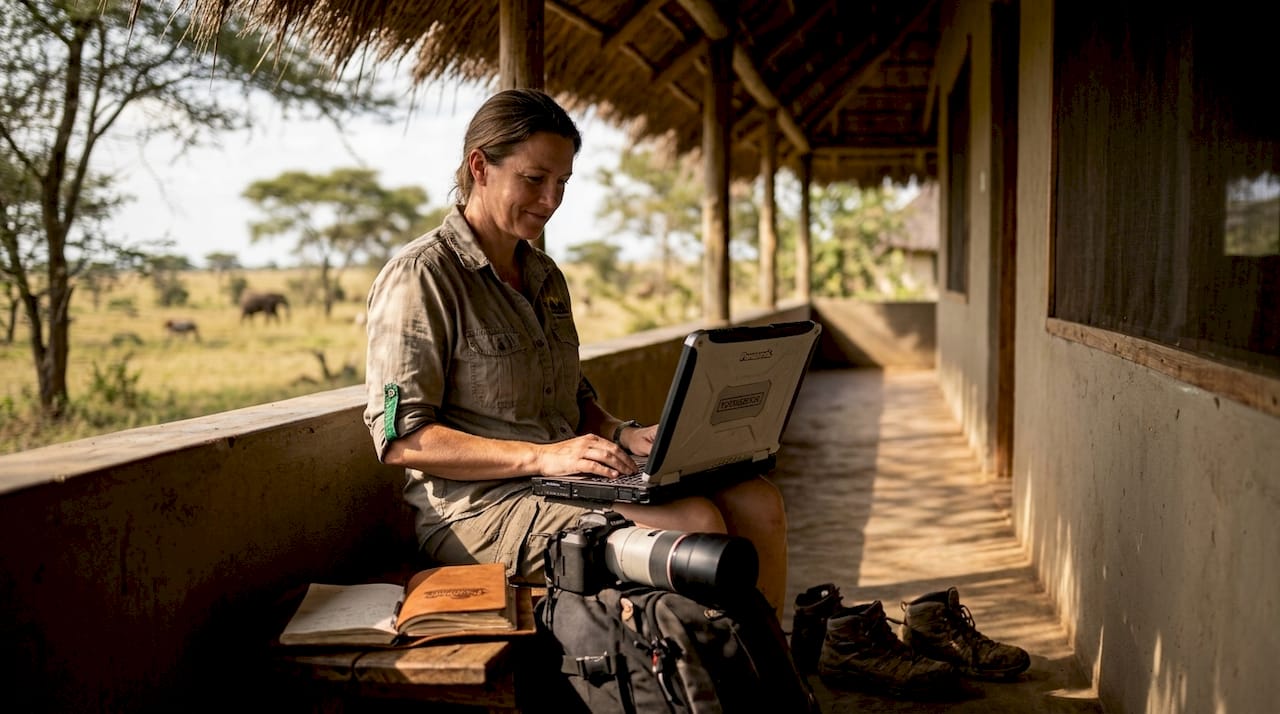
Equipped with your plans and permits, it’s time to focus on assembling a kit and skillset that’s right for Uganda’s wild diversity. Uganda is not a single environment. You’ll move between open savanna, dense rainforest, swampy wetlands, and high-altitude montane forest. Your gear must perform across all of them.
| Condition or subject | Recommended gear | Key settings |
|---|---|---|
| Open savanna, large mammals | 100-400mm telephoto | 1/1000s, f/5.6, ISO 400 |
| Dense forest, primates | 70-200mm f/2.8, fast prime | High ISO 3200-6400, f/2.8 |
| Birds in flight | 500mm+ telephoto | Continuous AF, 1/2000s |
| Low-light forest floor | 50mm f/1.8 or 85mm f/1.4 | ISO 6400+, image stabilization |
| Landscape, golden hour | Wide 16-35mm | Tripod, f/8, low ISO |
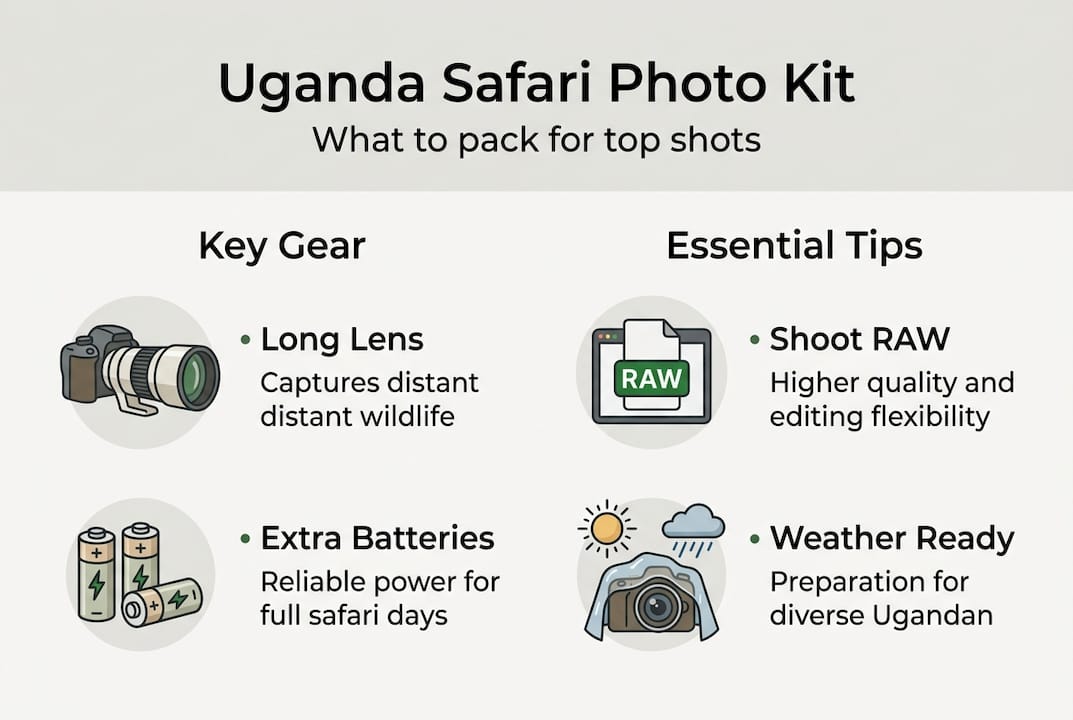
For gorilla and chimpanzee photography specifically, the equipment recommendations are clear: dense rainforest low light demands fast lenses at f/2.8 to f/4 combined with high ISO capability. Flash is strictly prohibited during primate treks, so your ability to expose correctly in available light is critical.
Essential items you should never leave behind:
- Weather-sealed camera body (two bodies if possible, for redundancy)
- Telephoto zoom lens, 70-400mm range
- Fast prime lens, f/1.8 or f/2.8 for forest interiors
- Extra batteries and dual charger
- Waterproof camera bag or rain cover
- High-capacity memory cards in RAW format
- Lightweight carbon fiber tripod or monopod
- Lens cleaning kit for humidity and dust
Pro Tip: Always shoot in RAW format, not JPEG. Uganda’s forest light is complex and often mixed. RAW files give you the latitude to recover shadows, correct white balance, and build a finished image that truly tells the story of what you witnessed.
Post-processing is part of the storytelling process, not an afterthought. Build time into your trip to review and cull images each evening, so you arrive home with a curated, purposeful collection rather than thousands of unedited files.
Ethics, challenges, and responsible practices
Even the best gear and plans aren’t enough without a strong respect for the wildlife and landscapes you’ll photograph. Uganda’s wildlife, especially its endangered mountain gorillas, exists within fragile ecosystems. Every photographer who enters these spaces carries a responsibility that goes beyond getting the shot.
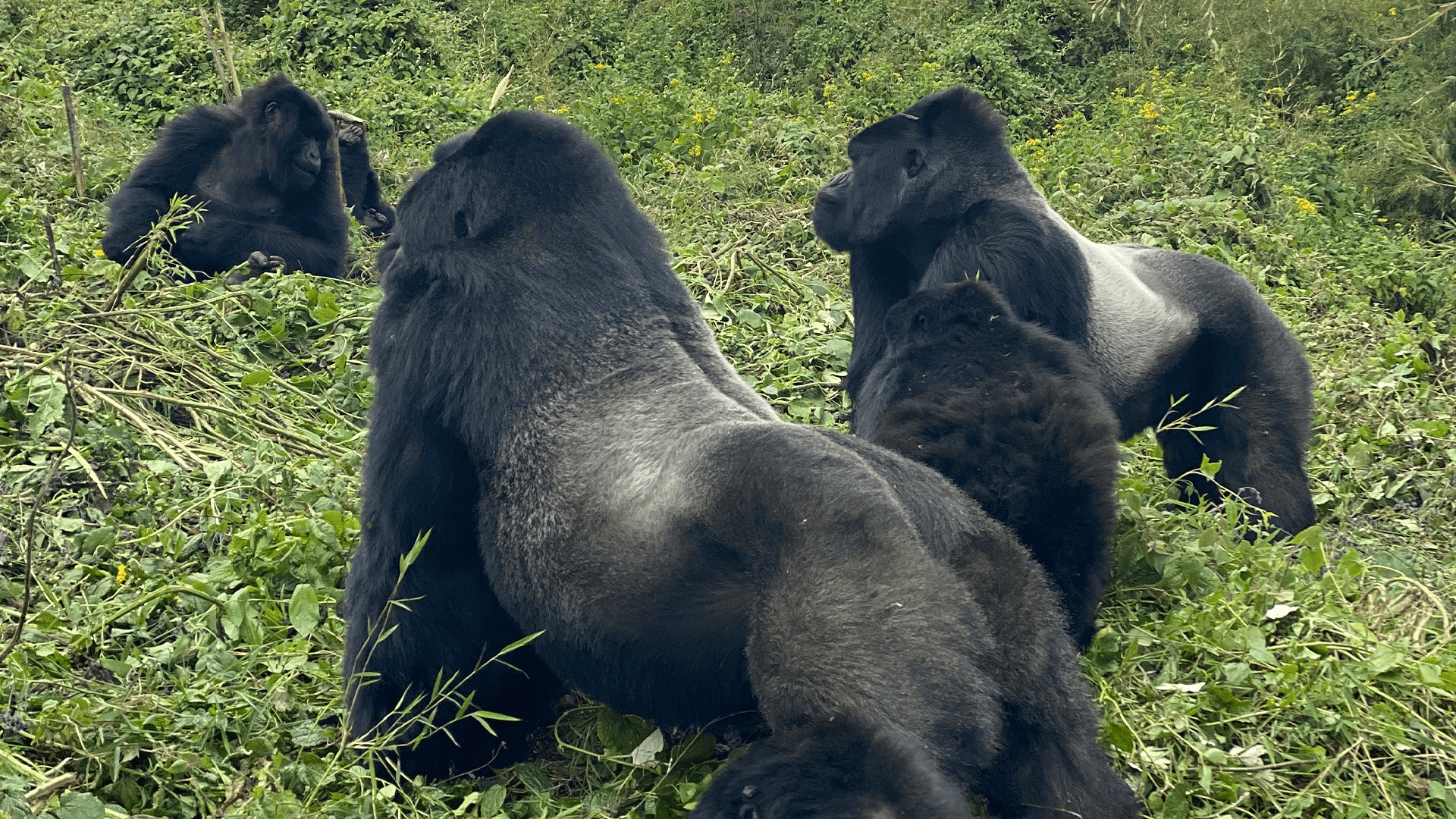
The rules for gorilla trekking are firm and non-negotiable. Gorilla trek guidelines require maintaining a minimum distance of 7 meters from gorillas at all times, limiting standard visits to 1 hour, and never using flash photography. The Gorilla Habituation Experience (GHEX) allows 4 hours with a gorilla family, but the same ethical rules apply. Flash photography causes stress and can disrupt natural behavior, while close contact risks disease transmission between humans and great apes.
Ethical dos and don’ts for Uganda wildlife photography:
- Do follow your guide’s instructions at all times
- Do maintain required distances from all wildlife
- Do stay on designated paths to protect vegetation
- Do keep noise levels low to avoid disturbing animals
- Don’t use flash in any primate encounter
- Don’t eat or drink within 7 meters of gorillas
- Don’t pursue animals for a better angle
- Don’t share images that reveal sensitive gorilla family locations
“Responsible wildlife photography is not a constraint on creativity. It is the foundation of it. The most powerful images come from trust, patience, and presence, not pressure.”
Uganda’s rainy seasons, from March to May and October to November, present real logistical challenges. Muddy trails, reduced vehicle access, and moisture-damaged gear are genuine risks. However, these seasons also produce lush, vibrant green landscapes and dramatic skies that reward prepared photographers with extraordinary images. Explore ethical safari practices to understand how responsible travel protects these ecosystems long-term.
A photographer’s take: Why Uganda is the ultimate storytelling canvas
All the technical advice aside, there’s a deeper reason so many photographers return to Uganda with their cameras. Uganda does not offer a single, predictable wildlife experience. It offers contradiction, complexity, and surprise. You might spend a morning photographing a silverback gorilla in near-silence, then spend the afternoon watching hippos crash through papyrus swamps at Murchison Falls. The light shifts constantly. The ecosystems collide. And that instability is precisely what forces photographers to grow.
The real value of a Uganda photography safari isn’t the images themselves. It’s what the process demands of you: patience, humility, and the ability to find beauty in imperfect conditions. Photographers who embrace Uganda’s unpredictability return home with work that feels alive, not polished and sterile. The country rewards those who are present, not just prepared.
Choosing the right local guide or lodge can transform a good trip into an unforgettable creative journey. The right safari lodges for photographers position you close to key wildlife areas, so you lose no time traveling during golden hours. Uganda, above all other East African destinations, rewards the photographer who comes not just to capture, but to understand.
Ready to book your Uganda wildlife photography safari?
Planning a photography safari in Uganda requires more than great gear. It requires a partner who understands the permits, the ecosystems, the ethics, and the light. PawMac Safaris specializes in exactly this kind of experience, building customized itineraries around your photographic goals, whether you’re chasing gorillas in Bwindi or birds along the Nile.

Explore our full range of Uganda safari options designed for serious photographers and wildlife enthusiasts. Browse our best wildlife tours to find the itinerary that matches your vision, or review detailed pricing for Uganda safaris to plan your budget with confidence. When you’re ready to turn inspiration into action, PawMac Safaris is ready to guide you.
Frequently asked questions
What is the difference between a regular safari and a wildlife photography safari?
A wildlife photography safari prioritizes photo opportunities, flexible schedules, and expert guidance for photographers, unlike a regular safari focused mainly on animal viewing. The photography-focused approach includes pre-researching species, shooting during golden hours, and using RAW format for storytelling images.
How early should I book permits for Uganda wildlife photography safaris?
Booking at least 6 to 12 months ahead is vital for securing gorilla or chimpanzee trekking permits and top spots during peak seasons. The early booking benchmark also gives you time to plan your itinerary around optimal light conditions.
What camera gear works best for a Uganda wildlife photography safari?
Weather-sealed bodies, telephoto lenses in the 70-400mm range, fast lenses at f/2.8, and ample backup batteries are critical for Uganda’s varied conditions. The dense forest requirements demand high ISO capability and image stabilization for reliable low-light performance.
Are there special rules for photographing mountain gorillas in Uganda?
Yes. You must stay at least 7 meters away, limit your visit to 1 hour for standard treks or 4 hours for GHEX, and never use flash. These gorilla photography rules exist to protect the animals from stress and disease transmission.
Recommended
- Wildlife photography tours Uganda 2026: permits & gear guide
- Essential wildlife photography tips for safaris in Uganda
- African wildlife photography tour guide Uganda safaris 2026
- Uganda Safari Guide: Gorilla Trekking, Wildlife & Planning


