


- 199 Views
- 9 Min Read
- (0) Comment
Picture this: you’re deep in Bwindi Impenetrable Forest, tracking a habituated gorilla family through dense undergrowth, when a sudden fall leaves you with a serious leg injury. The nearest hospital capable of treating you is hours away, and an emergency air evacuation could cost upward of $50,000. Without the right insurance, that dream safari becomes a financial crisis. This guide walks you through every layer of safari travel insurance, from core coverage types to common pitfalls, so you can explore East Africa’s wild landscapes with genuine confidence.
Table of Contents
- What does safari travel insurance cover?
- How to select the best policy for your safari
- Common mistakes and edge cases in safari insurance
- Verifying your coverage before departure
- Plan your safari with confidence
- Frequently asked questions
Key Takeaways
| Point | Details |
|---|---|
| Medical evacuation is essential | Always ensure your policy covers emergency evacuations for safaris in remote locations. |
| Declare your valuables | Safaris require you to specify high-value gear like cameras to ensure full protection. |
| Avoid reliance on credit cards | Credit card insurance rarely offers the comprehensive coverage needed for safari travel. |
| Edge cases need attention | Adventure activities and multi-country trips demand special add-ons and careful verification. |
| Annual plans can save money | If you plan multiple safaris in a year, compare the cost of annual travel insurance versus single-trip coverage. |
What does safari travel insurance cover?
Safari travel insurance is not a one-size-fits-all product. Standard travel policies often leave significant gaps that only become visible when something goes wrong in the field. Understanding what each coverage type actually protects you from is the first step toward building a solid safety net.
The single most critical component for any East Africa safari is medical evacuation coverage. Remote parks like Kidepo Valley in Uganda or the Serengeti in Tanzania are far from advanced medical facilities. Evacuation by air ambulance can cost between $20,000 and $100,000 depending on your location and destination. No other coverage type carries that kind of financial exposure.
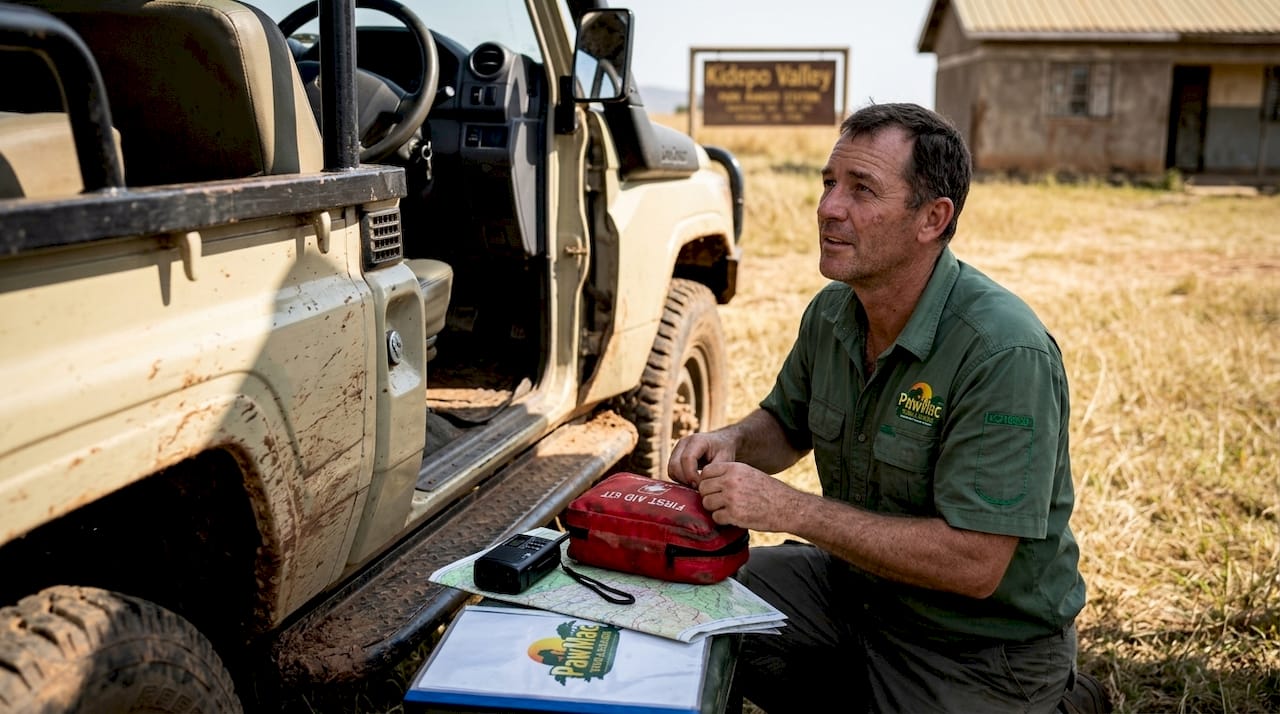
Personal liability is equally important and often underestimated. If you accidentally damage a vehicle, disturb wildlife, or cause property damage, you could face serious legal and financial consequences. Policies with personal liability coverage of $1 million or more are strongly recommended for wildlife environments.
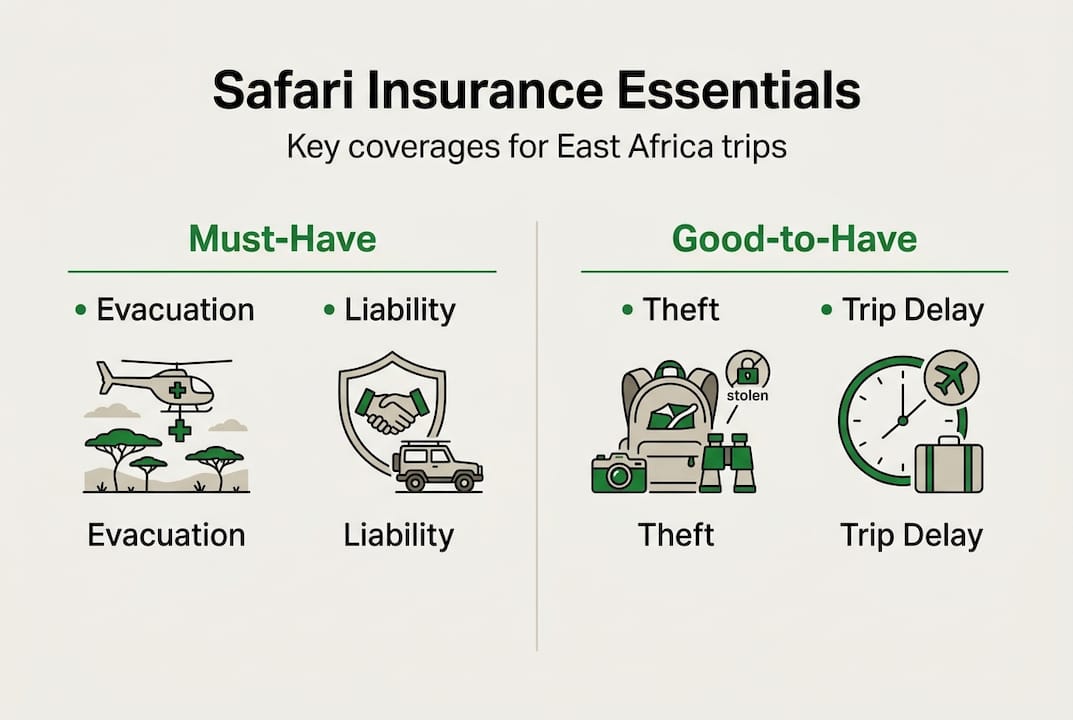
Here is a breakdown of the core coverage types relevant to East Africa safaris:
| Coverage type | What it protects | Recommended minimum |
|---|---|---|
| Medical evacuation | Emergency air transport to hospital | $100,000 |
| Personal liability | Wildlife/property damage claims | $1,000,000 |
| Trip cancellation | Non-refundable costs if trip is canceled | Full trip cost |
| Baggage and gear | Lost, stolen, or damaged equipment | Declared value |
| Adventure activity add-on | Gorilla trekking, hiking, game drives | Per activity |
Several important exclusions apply across most standard policies:
- Unattended valuables: Cameras, lenses, and binoculars left in a vehicle or tent are typically not covered if stolen.
- Extreme sports: Activities like gorilla trekking, white-water rafting, and bungee jumping often require specific add-ons.
- Pre-existing conditions: These require disclosure and sometimes a waiver to be covered at all.
- Night driving incidents: Some policies exclude incidents that occur during unsanctioned night game drives.
For travelers planning multi-country itineraries across Uganda, Kenya, Rwanda, and Tanzania, confirm that your policy covers all destinations. Some plans restrict coverage to a single country or region. Reviewing safari insurance essentials before purchasing can help you identify those gaps early. You can also explore the range of East Africa safari options to understand which destinations require the most robust coverage.
How to select the best policy for your safari
Choosing the right policy requires more than a quick price comparison. Your itinerary, gear, health history, and travel frequency all shape what you actually need. Follow these steps to make a well-informed decision.
- List your activities: Write down every planned activity, including gorilla trekking, chimpanzee tracking, boat safaris, and hiking. This list determines which add-ons you need.
- Assess your gear value: Total the replacement cost of your camera equipment, lenses, and electronics. Declare this value explicitly in your policy.
- Review pre-existing conditions: Disclose any medical history that could affect a claim. Undisclosed conditions are a leading cause of denied claims.
- Compare single-trip vs. annual plans: If you travel more than twice a year, annual plans are more economical and often include broader adventure coverage.
- Check Cancel For Any Reason (CFAR) availability: CFAR benefits must typically be purchased within 14 to 21 days of your initial trip deposit.
- Read the exclusions section carefully: This is where most surprises hide. Look specifically for language around wildlife encounters, remote locations, and gear theft.
Here is a quick comparison of single-trip vs. annual policies for safari travelers:
Plan Your Uganda Safari with Local Experts
 WhatsApp Us
| Factor | Single-trip policy | Annual policy |
|---|---|---|
| Best for | One safari per year | Multiple trips per year |
| Cost | Lower upfront | More economical over time |
| CFAR availability | Usually available | Less common |
| Adventure add-ons | Customizable per trip | May be fixed or limited |
| Gear declaration | Per trip | Declared once annually |
Pro Tip: Purchase your policy the same day you make your first trip deposit. This is the only way to qualify for CFAR coverage and ensures pre-existing condition waivers are available. Waiting even a few days can eliminate these options entirely.
For travelers heading to Uganda specifically, the Uganda safari insurance guide covers local nuances in detail. If you’re bringing professional photography equipment, the advice on insuring photography gear is worth reading before you finalize your policy. Travelers planning gorilla trekking should also review [gorilla trekking insurance tips](https://pawmacsafaris.com/blog/uganda safari guide) to understand permit-related coverage considerations.
Common mistakes and edge cases in safari insurance
Even experienced travelers make costly insurance errors. The most dangerous mistakes are the ones you don’t realize you’ve made until you’re filing a claim in the field.
Here are the most common pitfalls to avoid:
- Relying on credit card coverage: Credit card travel benefits cover basic trip delays and some baggage loss, but they are not sufficient for safaris involving medical evacuation or wildlife incidents.
- Skipping adventure add-ons: Standard policies exclude extreme sports without explicit add-ons. Gorilla trekking, white-water rafting, and even some guided hikes may fall into this category.
- Leaving gear unattended: A camera left on a vehicle seat during a bush walk is typically not covered if stolen. Always keep high-value items with you or locked in a secure safe.
- Ignoring multi-country gaps: A policy purchased for Uganda may not automatically extend to Kenya or Rwanda. Verify each destination is listed.
- Underestimating liability exposure: Wildlife encounters can result in property damage or injury to others. Policies with less than $1 million in liability coverage may leave you exposed.
Always read the full exclusions section of your policy before purchasing. The fine print around unattended valuables, night driving, and adventure activities is where most safari claims are denied.
Pro Tip: When protecting camera gear on safari, photograph your equipment with serial numbers visible before departure. This documentation speeds up claims significantly and reduces disputes over declared value.
For travelers booking personalized safari experiences, discussing your itinerary with your operator before finalizing insurance can reveal activity-specific risks you may not have considered.
Verifying your coverage before departure
Buying a policy is only half the job. Verifying and documenting your coverage before you leave home is what actually protects you when something goes wrong in the field.
Follow these steps in the final two weeks before departure:
- Print and save your policy documents: Store digital copies in cloud storage and email them to yourself. Keep a printed copy in your travel bag.
- Note your insurer’s 24-hour emergency line: This number should be saved in your phone and written on a card in your wallet.
- Confirm all declared valuables are listed: Cross-check your gear list against the policy’s declared items. Missing items will not be covered.
- Review your medical evacuation limits: Confirm the dollar limit and the process for authorizing an evacuation. Some insurers require pre-authorization before transport.
- Check your exclusions one final time: Look specifically for language around the activities on your itinerary. If anything is unclear, call your insurer before you fly.
- Verify destination coverage: Confirm every country on your itinerary is explicitly covered, not just your primary destination.
Buying early also matters beyond CFAR eligibility. Early purchase improves claim eligibility for pre-existing conditions and ensures you’re covered for any trip disruptions that arise between booking and departure. Declaring high-value gear at the time of purchase, rather than after an incident, is equally critical.
For broader travel preparation advice, the PawMac Safaris travel blog offers destination-specific tips that complement your insurance planning.
Plan your safari with confidence
You’ve done the hard work of understanding your coverage. Now it’s time to pair that preparation with an operator who knows East Africa’s terrain, regulations, and logistics inside out.

At PawMac Safaris, every itinerary is built around your safety, comfort, and the kind of wildlife encounters that stay with you for life. From gorilla trekking in Bwindi’s mist-shrouded forests to Big Five game drives across the savanna, our team handles the logistics so you can focus on the experience. Explore our gorilla trekking experiences or browse our full range of African safari destinations to find the journey that fits your plans. Reach out to us directly and let’s build your safari together.
Frequently asked questions
What is the minimum recommended liability coverage for wildlife or property damage?
For East Africa safaris, at least $1 million in personal liability coverage is strongly advised to protect against wildlife-related incidents or accidental property damage.
Are adventure activities, like gorilla trekking, typically included in standard travel insurance?
No. Adventure activities like gorilla trekking require specific add-ons to your policy, as standard plans typically exclude them under extreme sports clauses.
Can I rely on my credit card insurance for safari coverage?
Credit card policies are not sufficient for safaris because they rarely cover medical evacuation, wildlife incidents, or the high liability exposure that comes with remote wildlife environments.
How can I ensure my camera gear is fully insured during safari?
Declare the full replacement value of your gear at the time of purchase and never leave it unattended, as most policies exclude theft of items left unsupervised.
What are the benefits of buying insurance early before a safari?
Purchasing early unlocks CFAR benefits and annual plan advantages, improves pre-existing condition waiver eligibility, and ensures you’re covered for disruptions that occur between booking and departure.
Recommended
- Safari Travel Insurance Guide for Uganda Adventures 2026
- African Safari Destinations | PawMac Safaris
- Explore Adventure Stories and Tips on the PawMac Safaris Blog
- Role of safari guides in Uganda: 50% safer wildlife encounters
- Warum Reiseversicherungen für Disneyreisen unverzichtbar sind – 2000-reisen


