


- 119 Views
- 10 Min Read
- (0) Comment
TL;DR:
- The Big Five are iconic African animals originally named for their danger to hunters.
- Sightings of all five species in Uganda are a rare and meaningful safari achievement.
- Conservation efforts and eco-tourism are vital for protecting these species and sustaining local communities.
Africa’s most iconic wildlife group is not what most travelers think it is. The Big Five were not named for their size or speed. Lions have declined 30% continent-wide in a single decade, and black rhinos have lost 97.6% of their population since 1960. These numbers make every sighting feel urgent, rare, and deeply meaningful. Uganda sits at a remarkable intersection of conservation progress and raw wilderness, offering travelers a genuine chance to encounter all five species across some of Africa’s most dramatic landscapes. This guide breaks down exactly who the Big Five are, what makes each one extraordinary, and how to plan a strategic safari in Uganda to see them all.
Table of Contents
- What is the Big Five? Defining Africa’s safari legends
- Profiles of the Big Five: Unique traits and safari encounters
- Why the Big Five matters: Conservation, culture, and safari appeal
- Planning your Big Five safari in Uganda: Destinations and practical tips
- Our perspective: The Big Five are just the beginning of Uganda’s wild magic
- Experience the Big Five and beyond with PawMac Safaris
- Frequently asked questions
Key Takeaways
| Point | Details |
|---|---|
| Big Five definition | The Big Five are Africa’s lion, leopard, elephant, buffalo, and rhinoceros, once considered the hardest to hunt. |
| Conservation efforts | Rhinos are being reintroduced and protected in Uganda to counteract decades of steep decline. |
| Safari significance | Big Five sightings remain the centerpiece of luxury Uganda safaris for travelers and photographers. |
| Planning tips | Visit Murchison Falls, Queen Elizabeth, and Ziwa Rhino Sanctuary for the best Big Five experiences. |
What is the Big Five? Defining Africa’s safari legends
The phrase “Big Five” gets used constantly in safari marketing, but its origins are far more rugged than a travel brochure suggests. The term was coined by big-game hunters, not conservationists or biologists. Early hunters in colonial Africa identified these five animals as the most dangerous and difficult to pursue on foot. The distinction had nothing to do with body mass and everything to do with the threat each animal posed to a hunter’s life.
The five animals that earned this reputation are:
- Lion — apex predator, highly social, and capable of coordinated group attacks
- Leopard — solitary, nocturnal, and notoriously difficult to spot even in open terrain
- African elephant — the world’s largest land animal, with complex social intelligence and unpredictable temperament
- African buffalo — responsible for more hunter fatalities than any other Big Five species
- Rhinoceros — thick-skinned, fast-charging, and fiercely territorial
Over time, the role of these animals shifted dramatically. Trophy hunting gave way to photography and eco-tourism, and the Big Five became symbols of conservation rather than conquest. Today, spotting all five on a single safari is considered a milestone achievement for wildlife enthusiasts. Their fame drives billions of dollars in tourism revenue across Africa each year.
For a deeper look at what makes these animals so significant, explore the Big Five mammals overview and Big Five safari insights from PawMac Safaris.
Pro Tip: Do not confuse the Big Five with the “African Big Seven” or other expanded lists. The original five remain the gold standard for serious safari travelers, and Uganda offers access to all of them within a single well-planned itinerary.
Profiles of the Big Five: Unique traits and safari encounters
Now that we know who the Big Five are, here’s how each species stands out and what makes seeing them on safari in Uganda truly remarkable.
| Species | Conservation status | Best Uganda location | Estimated population |
|---|---|---|---|
| Lion | Vulnerable | Queen Elizabeth NP | ~20,000 (Africa-wide) |
| Leopard | Vulnerable | Murchison Falls NP | Unknown (elusive) |
| African elephant | Vulnerable | Murchison Falls NP | ~5,000 (Uganda) |
| African buffalo | Least concern | Queen Elizabeth NP | ~30,000 (Uganda) |
| Black rhinoceros | Critically endangered | Ziwa Rhino Sanctuary | ~6,500 (Africa-wide) |
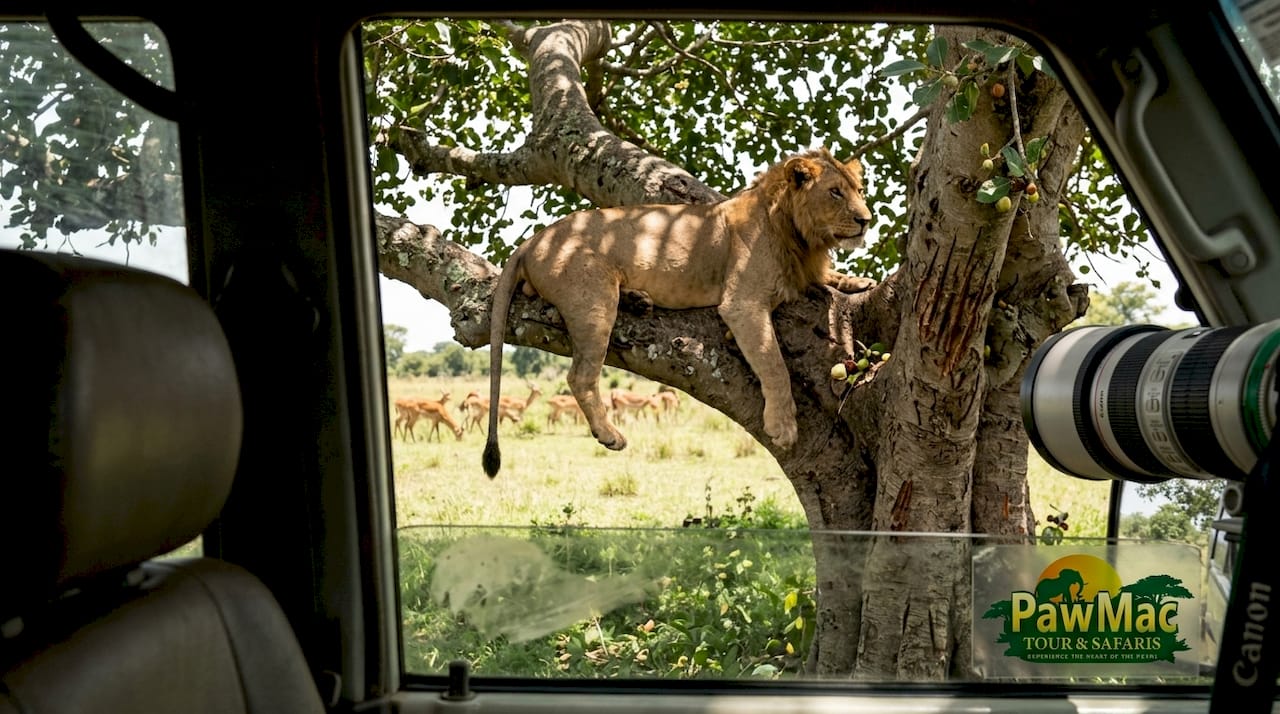
Lion: Uganda’s lions are not ordinary. The Ishasha sector of Queen Elizabeth National Park is home to the famous tree-climbing lions, a behavior seen in only two places on earth. Watching a pride draped across fig tree branches is one of the most surreal wildlife encounters on the continent. Lions live in structured prides and use coordinated hunting strategies, often targeting buffalo or Uganda kob at dusk.
Leopard: Leopards are the hardest of the Big Five to find. They are solitary, largely nocturnal, and experts at disappearing into dense vegetation. Murchison Falls National Park offers some of Uganda’s best leopard habitat, with experienced guides using track patterns and prey behavior to locate them. Patience is essential, and a sighting feels genuinely earned.
African elephant: Uganda’s elephant population thrives in Murchison Falls, where herds move through open savanna and riverine forest. Elephants are highly intelligent, with complex family structures led by matriarchs. They also serve as ecosystem engineers, shaping the landscape for dozens of other species.
Plan Your Uganda Safari with Local Experts
 WhatsApp Us
African buffalo: Do not underestimate the buffalo. Massive herds move across Queen Elizabeth’s plains, and lone bulls are notoriously aggressive. Their unpredictability made them feared by hunters and fascinating for photographers.
Rhinoceros: Uganda’s rhino population is being restored at Ziwa Rhino Sanctuary, where a carefully managed program has produced viable breeding groups. This is currently the only place in Uganda to see rhinos, and guided walking encounters bring you within remarkable proximity to these critically endangered animals.
Book a 3-day Big Five Uganda safari or read more about game drives in Uganda to understand what each park experience delivers.
Why the Big Five matters: Conservation, culture, and safari appeal
Understanding the individual animals, we can now explore why they mean so much to locals, travelers, and the future of Africa’s wild spaces.
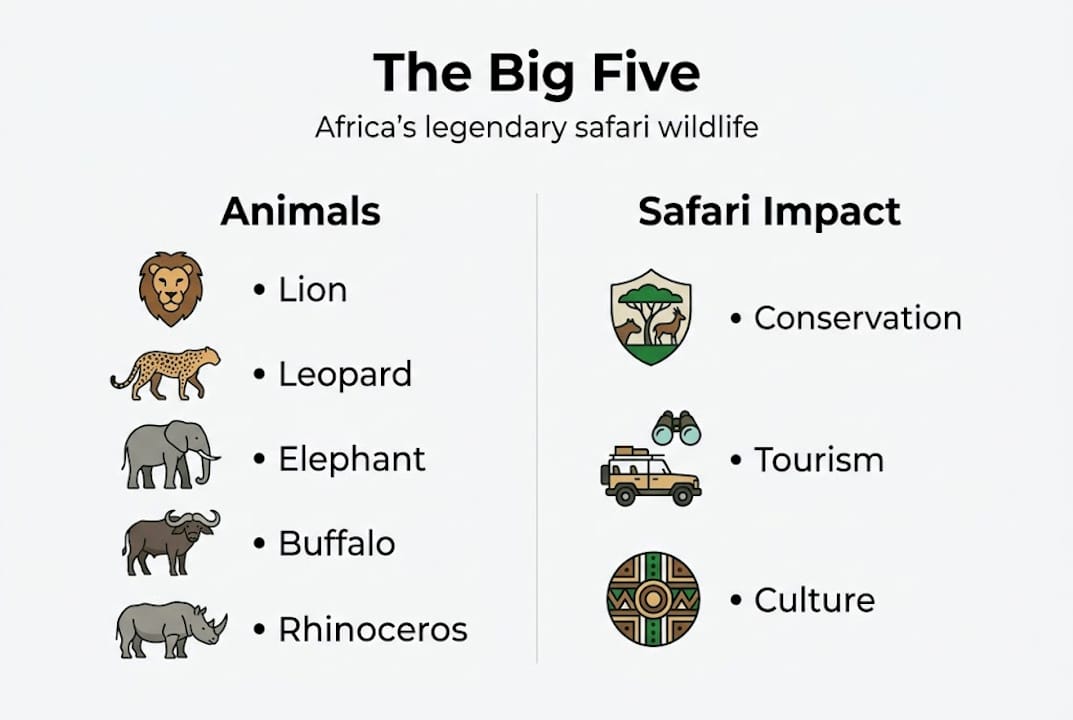
The shift from trophy hunting to eco-tourism changed everything. Today, a living lion generates far more economic value than a hunted one. Big Five safaris sustain local communities through employment, park fees, and tourism infrastructure. In Uganda, national parks are managed with a direct revenue-sharing model that channels funds back to surrounding villages. This creates a powerful incentive for communities to protect wildlife rather than compete with it.
Conservation outcomes are real and measurable. Uganda’s reintroduction of rhinos at Ziwa stands as one of East Africa’s most successful rewilding stories. Scientific management, anti-poaching units, and international partnerships have produced a growing population from near-zero.
The emotional draw of the Big Five is equally important. These are not zoo encounters. Watching a leopard materialize from tall grass or standing within earshot of a lion’s roar at dawn creates a visceral connection to the natural world that no screen can replicate.
“The Big Five are not just animals. They are the reason entire ecosystems are protected, and the reason millions of travelers choose Africa over any other destination on earth.”
Key reasons the Big Five matter today:
- They anchor conservation funding for entire national park systems
- Their presence signals a healthy, functioning ecosystem
- They generate the highest tourism revenue of any wildlife category in Africa
- Their stories inspire global awareness of endangered species
For travelers seeking a refined experience, explore what a luxury Uganda safari looks like in practice, and review our safari packing tips before you go.
Planning your Big Five safari in Uganda: Destinations and practical tips
Inspired to see these icons yourself? Here’s how to plan the ultimate Big Five safari in Uganda.
Uganda’s Big Five are geographically dispersed, which means a strategic route is essential. You cannot see all five in one park. The optimal circuit connects three key destinations:
| Destination | Target species | Drive time from Kampala |
|---|---|---|
| Murchison Falls NP | Lion, leopard, elephant, buffalo | 4 to 5 hours |
| Queen Elizabeth NP | Lion (tree-climbing), buffalo, elephant | 5 to 6 hours |
| Ziwa Rhino Sanctuary | Rhinoceros | 3 hours (en route north) |
Uganda’s approach to protecting the Big Five supports both tourism and sustainable wildlife populations, making this circuit one of the most rewarding in East Africa.
2026 dry season timing: The best windows for wildlife viewing are December through February and June through September. Vegetation thins out, animals concentrate near water sources, and tracks become easier to read for guides.
Here is a practical step-by-step approach to planning your safari:
- Choose your circuit. Combine Murchison Falls, Ziwa Rhino Sanctuary, and Queen Elizabeth for full Big Five coverage.
- Book expert guides. Leopard and lion tracking requires professional 4×4 ground logistics and field-experienced naturalists who know animal movement patterns.
- Allocate enough time. A minimum of five to seven days gives you realistic odds of seeing all five species.
- Pack strategically. Neutral-toned clothing, quality binoculars, and a telephoto lens are non-negotiable for serious wildlife photography.
- Add the Ishasha sector. Specifically request tree-climbing lion game drives in Queen Elizabeth’s southern zone. This is a Big Five Plus experience that very few travelers know to ask for.
Pro Tip: Compare destination options before committing. The Uganda vs Kenya safari comparison reveals why Uganda often delivers more intimate, crowd-free encounters. For accommodation, review luxury camp selection to match your comfort level with the right base.
Our perspective: The Big Five are just the beginning of Uganda’s wild magic
With planning steps in hand, let’s consider why Uganda’s Big Five story doesn’t end with just ticks on a checklist.
At PawMac Safaris, we have watched travelers arrive with a single goal: photograph all five species. Many achieve it. But the ones who leave most transformed are those who slowed down long enough to notice everything else. Uganda holds over 1,000 bird species. It is home to mountain gorillas in Bwindi’s ancient forest. Chimpanzees call from the canopy in Kibale. The Nile cuts through Murchison Falls with a force that stops conversation entirely.
The Big Five are a magnificent entry point. They give structure to a safari and create unforgettable moments. But treating them as a checklist misses the deeper texture of what Uganda offers. The most rewarding safaris we design are the ones built around curiosity, not completion. When you give yourself permission to follow an unexpected track or spend an extra hour watching elephants at a waterhole, Uganda reveals itself in ways no itinerary can fully predict.
For travelers ready to go further, the ultimate Uganda safari is where the full picture comes into focus.
Experience the Big Five and beyond with PawMac Safaris
Ready to go from dreaming to exploring? PawMac Safaris specializes in building personalized Big Five itineraries that match your pace, interests, and travel style.

Our team combines deep local knowledge with professional 4×4 logistics, expert field guides, and carefully selected accommodations to deliver a safari that feels crafted, not generic. From the tree-climbing lions of Ishasha to a walking encounter with rhinos at Ziwa, every element is chosen with intention. We also offer gorilla trekking in Bwindi and chimpanzee experiences in Kibale for travelers who want the full Uganda story. Browse our Uganda wildlife tours, explore Uganda safari tours, or start building your custom Uganda safari today.
Frequently asked questions
Which animals are included in the Big Five?
The Big Five consists of the lion, leopard, African elephant, African buffalo, and rhinoceros. These five species were originally grouped together for their danger and difficulty during the era of big-game hunting.
Why are they called the Big Five?
The term was coined by hunters who considered these five the most challenging and lethal animals to pursue on foot in Africa. The name has nothing to do with body size.
Where can you see the Big Five in Uganda?
You can see lions, leopards, elephants, and buffalo in Murchison Falls and Queen Elizabeth National Parks, while Uganda’s rhinos are being restored exclusively at Ziwa Rhino Sanctuary. A multi-park circuit covers all five.
Are the Big Five endangered?
Lions have declined 30% continent-wide and black rhinos have lost 97.6% of their population since 1960, but Uganda’s active conservation programs are producing measurable recovery, especially at Ziwa.
Recommended
- Big Five Animals in Uganda: 5 Key Safari Insights (2026)
- Uganda vs Kenya safari: choosing the best wildlife destination
- African Safari Destinations | PawMac Safaris
- 15 Days Ultimate Uganda Safari | PawMac Safaris


